Price Breakdown & Availability
Here's how current offers compare across retailers.
You Might Also Like
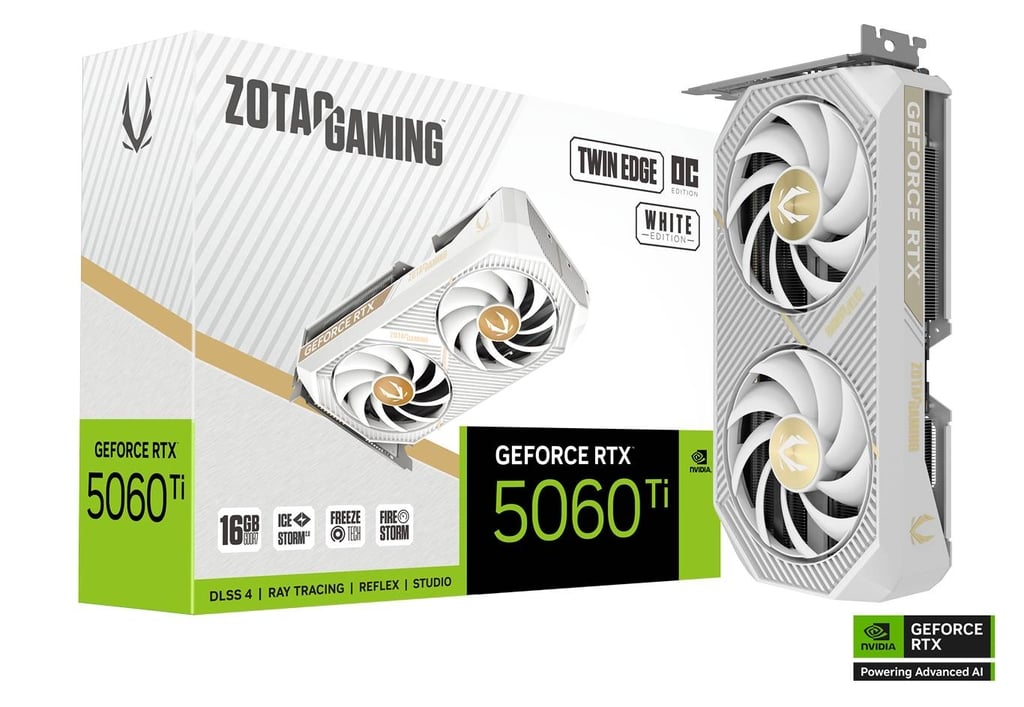
This Twin Edge OC White Edition is built for visual harmony. The white shroud and compact dual fan layout look premium, white theme mein bilkul match hota hai, while your build stays neat and intentional. The design is positioned as a compact card ready for small form factor setups, so desk side cases mein asaani se fit ho jata hai without awkward overhang. The platform is based on NVIDIA’s Blackwell architecture, which keeps the feature set current for new games and AI assisted rendering workflows. The card is marketed with DLSS 4 support on the RTX 50 Series stack, meaning performance scaling can be smarter than brute force settings. The overall sizing stays compact at about 220.5mm length, choti cases walon ke liye yeh practical advantage hai, especially when front radiators and cable bends fight for space. The factory overclock positioning is clearly stated as “Twin Edge OC,” so out of box tuning mil jati hai without needing manual sliders on day one. The result is a GPU that looks curated, performs in the mainstream high refresh class, aur build ki aesthetics compromise nahi hoti
The display I/O is designed for modern monitors. The card includes three DisplayPort 2.1b outputs with UHBR20 support, so high refresh setups ko future friendly headroom milta hai for newer panels. The HDMI connector is listed as HDMI 2.1b, which helps when living room screens or capture devices matter for your setup. The specs also call out quad display capability, meaning work plus game workflows become straightforward with multiple screens. The practical benefit is cleaner cable routing, kyun ke aap ek hi GPU se monitors drive kar lete ho, and the desktop stays organized. The high refresh intent is also reinforced by the listed capability for very high resolution and high Hz output modes with DSC on DisplayPort, which aligns with esports and creator monitor trends. The experience feels smoother when the GPU can push consistent frames, aur jab screen tearing kam ho to motion clarity naturally better lagti hai. The connectivity choices keep the card relevant even if your current monitor is basic, because upgrade time par ports ka bottleneck nahi banta
At the heart of this GPU, 4,608 CUDA cores handle the heavy lifting. The Twin Edge OC White Edition is listed with a 2602 MHz engine clock, so everyday gaming mein snappy feel aati hai when scenes get busy. The graphics processor is identified as GB206 on spec databases, which anchors the card in the Blackwell 2.0 family for this tier. The bus interface is PCIe 5.0 x8 on the official listing, meaning the card is electrically aimed at efficient lane usage rather than oversized connectors. The benefit is simple installation in most modern boards, aur slot placement mein flexibility rehti hai when you are building compact or airflow focused rigs. The tuning approach feels “set and play,” kyun ke factory OC already targets stable boosts for mainstream high refresh without chasing extreme power spikes. The overall performance identity fits 1080p high settings and tuned 1440p play, where frame pacing matters more than peak spikes in short benchmarks. The card’s positioning stays balanced for gamers who want smooth motion and modern features, aur saath hi creators jo occasional edits ya AI tools run karte hain
The ray tracing stack is clearly defined for this tier. The RTX 5060 Ti class is listed with 36 RT cores, which supports more realistic shadows and reflections when you enable RT features. The AI acceleration side is listed with 144 Tensor cores, so DLSS and neural features ko strong hardware backing milti hai for upscaling and frame generation workflows. The DLSS 4 stack introduces Multi Frame Generation that can generate up to three additional frames per rendered frame on GeForce RTX 50 Series, which can help keep motion fluid in supported games. The same DLSS 4 updates also emphasize a transformer based model for Ray Reconstruction, Super Resolution, and DLAA, so detail in motion aur ghosting control better feel ho sakta hai depending on the title. The real benefit shows up when you want RT on but hate the usual FPS drop, kyun ke DLSS can trade raw pixels for smarter reconstruction while keeping the scene sharp. The experience remains most convincing when settings are tuned with intent, meaning ultra everything ki zid ke bajaye balanced presets zyada satisfying lagte hain. The overall takeaway is modern lighting with practical playability, aur yeh combo competitive and cinematic games dono mein useful ban jata hai
Power planning stays refreshingly straightforward for most builds. The card’s power consumption is listed at 180W, which sits in a manageable range for mainstream PSUs and airflow setups. The power input is listed as a single 8 pin connector, so cable management asaan ho jata hai and you avoid bulky adapter situations in many cases. The recommended power supply is shown as 600W on the product specs, which gives practical overhead for modern CPUs and typical peripherals. The cooling feature list includes FREEZE Fan Stop, meaning light desktop work par fans ruk sakte hain for quieter idle behavior. The result is a build that feels calmer in daily use, rozana browsing ya editing mein noise ka pressure kam rehta hai, while gaming ramps up airflow when it actually matters. The single connector approach also helps small cases, kyun ke tight bends aur cable clutter less stressful ho jata hai. The overall efficiency story is not just about watts, but about predictable behavior and stable thermals that keep performance consistent
Cooling is treated as a core part of this design. The card lists IceStorm 2.0 cooling along with BladeLink fans, so heat management theek rehta hai when sessions go long. The feature set also includes a metal backplate, which adds rigidity and helps the card feel solid during installation. The slot size is listed as a 2 slot design, so most mid towers and compact cases maintain space for airflow and add in cards. The dimensions are specified around 220.5mm length, 120.25mm width, and 41.6mm height, meaning SFF builders ko predictable clearance milti hai without guesswork. The product positioning also calls it SFF Ready, which supports the idea that compact builds are a real target here. The practical outcome is fewer thermal surprises, kyun ke airflow needs are realistic and the cooler is designed around the card’s power envelope. The overall feel stays focused on stability, not flashy bulk, which suits gamers who want consistent boosts and creators who need quiet focus windows
Memory behavior shapes real world smoothness more than most expect. The official listing shows 8GB of GDDR7 paired with a 128 bit memory bus, so bandwidth and VRAM limits dono ko samajh kar settings choose karna smart rehta hai. The memory clock is listed at 28 Gbps, which helps the card feed textures and frame buffers quickly in many mainstream scenarios. Spec databases also cite 448 GB/s of memory bandwidth for the RTX 5060 Ti configuration, which supports strong 1080p performance and sensible 1440p tuning. For everyday gaming, this means crisp textures and responsive swaps, rozana ke titles mein stutter ka chance kam hota hai when you avoid extreme ultra texture packs. For creator tasks, this memory setup helps with timeline scrubbing and GPU accelerated effects, especially when projects are optimized and not overloaded with huge assets. The card remains most comfortable when settings match the VRAM reality, kyun ke modern games sometimes push beyond 8GB at higher resolutions with ray tracing. The best approach is balanced presets, where clarity stays high and frame pacing stable, aur aapko constant tweaking ki zarurat nahi parti. The final feel is quick, clean, and disciplined, which is exactly what a mainstream performance GPU should deliver
The interface choice matters for platform compatibility. The card is specified as PCI Express 5.0 x8, which is part of its compact, efficiency driven board design. Industry coverage notes that RTX 5060 Ti designs are electrically intended to operate at x8 speeds, and board partners have shipped x8 connector implementations without changing core performance behavior on the right platforms. For modern PCIe 5.0 systems, this usually feels transparent, yani plug karo aur kaam start, because bandwidth is ample for typical gaming workloads. For older PCIe 4.0 systems, testing coverage has shown the RTX 5060 Ti 8GB can lose measurable performance in some games, so legacy upgrades mein expectation setting zaroori hai. The takeaway is not panic, but planning, kyun ke the right motherboard and settings can keep the experience smooth. The best match is a modern platform with solid PCIe signaling and enough VRAM aware tuning, so frametimes stable rehte hain and 1% lows do not dip unpredictably. The card’s design encourages compact builds, but it also rewards balanced system choices where storage, CPU, and memory are not bottlenecks
This GPU makes the most sense for targeted upgrades. The RTX 5060 Ti spec set centers on 4,608 CUDA cores, 36 RT cores, and 144 Tensor cores, which defines its mainstream high refresh identity. The Twin Edge OC implementation adds a listed 2602 MHz engine clock and a compact dual fan form factor, so performance aur size dono ka balance milta hai in everyday builds. Review coverage highlights how the RTX 5060 Ti’s core counts represent a modest generational bump over the prior class, which fits buyers who want steady gains instead of extreme power leaps. The 180W power draw and single 8 pin input keep upgrades simple, wiring clean rehti hai, and many mid range PSUs can support the move with proper headroom. The DLSS 4 feature set can extend the card’s useful life in supported games, especially when you value smooth motion more than raw native rendering. The best buyer profile is a 1080p high settings gamer, a tuned 1440p player, or a hybrid creator who wants a compact white GPU that stays stable under real sessions, bilkul daily routine ke hisaab se. The decision feels strongest when your system is modern enough to complement PCIe 5.0 x8 behavior, so you get the performance you expect without avoidable bottlenecks
Here's how current offers compare across retailers.
Review current prices and specifications side by side.
Nvidia
NVIDIA RTX A2000From Rs. 217,000
Local price
Lowest current price2 offers
Updated 1 day ago