









Price Breakdown & Availability
Here's how current offers compare across retailers.
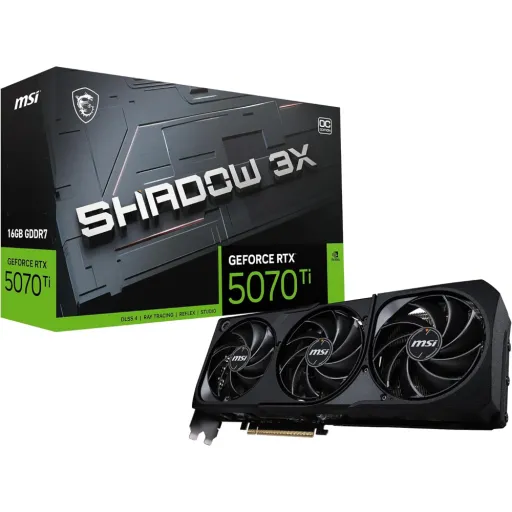
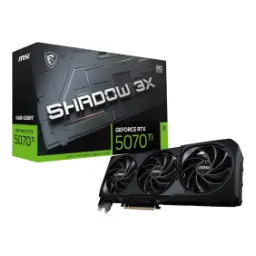
MSI GeForce RTX 5070 Ti Shadow 3X OC


You Might Also Like
This MSI GeForce RTX 5070 Ti SHADOW 3X OC targets builders who want high FPS gaming with controlled thermals and a clean, practical footprint. The card uses the NVIDIA GeForce RTX 5070 Ti chipset, is liye compatibility predictable rehti hai, and modern game features remain supported across new releases. The NVIDIA Blackwell platform positioning keeps the experience current for AI assisted graphics and advanced rendering pipelines. The MSI listing explicitly highlights DLSS 4 support, to compatible titles mein AI driven rendering options milte hain, helping you chase smoother motion without only relying on raw settings cuts. The Shadow 3X OC naming signals a cooling first approach, so long sessions feel more stable when the room is warm and the match is intense. The core configuration stays consistent with the RTX 5070 Ti class, so upgrades from older tiers feel immediate in responsiveness and frametime behavior. The software ecosystem stays familiar through MSI Center and Afterburner, jis se monitoring aur tuning asaani se ho jati hai, without forcing complex workflows. The overall goal is simple daily confidence, where games launch fast and the GPU stays composed under load
This graphics card connects through PCI Express 5.0 x16, so modern platforms get full link bandwidth with minimal build friction. The MSI spec confirms PCI Express Gen 5 support, jis ka matlab yeh hai ke new boards ke saath pairing bilkul straightforward rehti hai, especially for fresh builds. The output layout gives you 3x DisplayPort 2.1b and 1x HDMI 2.1b for a flexible monitor mix. The HDMI 2.1b note includes up to 4K 480Hz or 8K 120Hz with DSC, to high end TV ya next gen monitor plan karna easy ho jata hai without second guessing ports. The card supports up to four displays, so work + game layouts stay tidy without adapter juggling. The maximum digital resolution is listed as 7680 x 4320, which keeps high resolution productivity viable alongside gaming. The DisplayPort 2.1b standard helps when you want high refresh on modern panels, aur desktop scrolling bhi zyada smooth feel hoti hai on high Hz monitors. The practical win is fewer compromises, because your GPU ports match where monitor standards are heading
This model comes with 16GB of GDDR7 memory, which keeps modern textures and large game assets comfortable at higher resolutions. The memory interface is 256 bit, to bandwidth wali feel aati hai jab scenes heavy hon, and it helps reduce the sense of sudden dips when a level streams in. The MSI and partner specs list 28 Gbps memory speed, so high throughput workloads like big texture packs or creator timelines have more breathing room. The GDDR7 choice matters in practice because it supports high bandwidth without needing extreme bus widths, jis se overall platform balance better rehta hai for everyday rigs. The 16GB capacity also helps when you keep multiple apps open, so alt tabbing between a game and a browser feels less fragile. The 256 bit bus is a proven sweet spot for this tier, so you get a strong balance of throughput and efficiency for 1440p and beyond. The main benefit is practical stability, kyun ke VRAM headroom se micro stutters aur sudden texture fallback ki tension kam hoti hai in heavier scenes. The result is a GPU that feels ready for the next wave of games without turning your settings into a constant compromise
This RTX 5070 Ti class GPU is configured with 8960 CUDA cores, so raster performance and compute heavy effects have the resources to stay smooth under pressure. The same 8960 core count is also reflected on MSI listings, jis se buyer ko clarity milti hai ke yeh full RTX 5070 Ti stack mein proper position rakhta hai. The NVIDIA spec table calls out 5th generation Tensor Cores and 4th generation Ray Tracing Cores for the RTX 5070 Ti, which helps newer titles scale better with AI and RT pipelines. The listed AI performance figure reaches 1406 TOPs on partner spec pages, to AI driven features aur creative tools mein quick acceleration mil sakti hai when apps take advantage of it. The practical gaming advantage comes from stronger minimums, because more compute headroom often keeps busy scenes from feeling jittery. The ray tracing hardware generation support matters because it improves feature compatibility, is liye future titles mein settings options zyada meaningful rehte hain instead of being locked out. The DLSS 4 positioning on MSI pages complements this core configuration, so supported games can trade AI uplift for smoother motion without only chasing raw wattage. The overall effect is a GPU that stays responsive in real use, from competitive shooters to heavier single player scenes
This SHADOW 3X OC variant is tuned for higher clocks out of the box, which helps you hit stable boost behavior without manual trial and error. The MSI spec lists a Boost clock of 2482 MHz, to day one performance thori zyada snappy feel hoti hai in games that respond to frequency. The same page shows an Extreme Performance clock of 2497 MHz through MSI Center, so you can toggle a pre defined profile instead of chasing unstable OC settings. The MSI store listing emphasizes MSI Center for monitoring and quick tuning, jis se temps, clocks, aur fan behavior dekhna asaan ho jata hai during long sessions. The same product page also highlights MSI Afterburner support, which is useful if you want granular control for undervolting or custom fan curves. The key is consistency rather than bragging numbers, because stable boost under real heat is what keeps frame pacing feeling smooth. The memory speed remains in the 28 Gbps class alongside the OC clocks, so bandwidth stays aligned with the GPU core when games lean on big texture streaming. The overall tuning approach feels practical, kyun ke aapko settings ke saath roz roz fight nahi karni parti to keep it fast and stable
This Shadow 3X design is built around a cooling first layout, so sustained gaming loads feel less sensitive to room temperature swings. The MSI store page calls out TORX Fan 5.0 airflow engineering, jis se pressure airflow stable rehta hai, helping the card avoid that sudden warm and throttle feeling. The same listing highlights a nickel plated copper baseplate to capture heat from the GPU and memory quickly, which supports more consistent boost behavior during long matches. The product positioning also mentions heat pipes for efficient transfer, to heat spread asaani se hoti hai, and the cooler can do its job without needing loud fan spikes. The metal backplate with vents and thermal pads is part of the build, so structural rigidity improves while heat can exit more cleanly. The physical size is listed at 303 x 121 x 49 mm, which helps you judge case clearance and airflow planning realistically. The slot thickness stays in the 2.5 slot class on similar MSI RTX 5070 Ti variants, so most mid towers can handle it without awkward compromises. The end benefit is quieter confidence, kyun ke cooling theek ho to performance bohat stable rehti hai and the whole rig feels more refined
This RTX 5070 Ti Shadow 3X OC is rated at 300 W power consumption, which keeps it in a predictable performance per watt zone for this tier. The power connector is a single 16 pin input, to cable routing thori cleaner ho jati hai, especially in compact builds that hate clutter. The MSI store listing recommends an ATX 3.1 PSU pairing, so transient handling and connector support stay aligned with modern power standards. The suggested system PSU requirement is 750 W on MSI and retail pages, jis se planning simple ho jati hai when you are also budgeting for CPU upgrades. The 300 W envelope pairs well with strong cooling, because when heat stays controlled, boost behavior typically feels less erratic across long sessions. The PCIe 5.0 x16 link keeps data flow clean, to overall system response better feel hoti hai, even though gaming is usually GPU limited. The practical takeaway is fewer surprises, because you can size your PSU once and focus on airflow and cable management. The final result is an upgrade that feels planned, not patched together at the last minute
This GPU supports DirectX 12 Ultimate, so modern game engines can use today’s feature set without awkward compatibility limitations. The same MSI product details list OpenGL 4.6 support, jis se older tools aur lighter creative apps bhi comfortably run kar leti hain alongside games. The platform supports NVIDIA Game Ready and Studio driver options in partner software notes, so you can choose stability first workflows or day one game profiles based on your routine. The 16GB GDDR7 configuration helps content timelines and multi app workflows breathe, to multitasking asaan ho jati hai when you are exporting while keeping reference tabs open. The output set of DP 2.1b and HDMI 2.1b keeps high refresh displays in scope, so esports motion can look clear and responsive on compatible panels. The MSI Center and Afterburner tooling supports monitoring and tuning, jis se frametimes aur temps check karna easy ho jata hai during streaming or long raids. The DLSS 4 positioning adds optional AI assisted rendering paths, so supported titles can trade smart scaling for smoother experience while keeping image quality sensible. The overall experience feels well rounded, because the specs support both play and productivity without forcing you into niche use cases
This MSI Shadow 3X OC variant focuses on practical ownership, where setup is straightforward and daily use stays consistent across months. The card is listed as SFF Ready on MSI pages, to compact case planning simple ho jati hai if you want a smaller build without sacrificing a serious GPU class. The physical dimensions are 303 x 121 x 49 mm, so you can match clearance with your case and front radiator plans before you commit. The core platform fundamentals stay strong with 8960 CUDA cores and 16GB GDDR7, is liye aapko “upgrade again soon” wali feeling kam hoti hai, especially if you are moving from older midrange tiers. The port selection of 3x DisplayPort 2.1b plus 1x HDMI 2.1b keeps modern monitors and TVs in reach, so your setup can evolve without needing adapters. The 300 W power rating and single 16 pin connector keep power planning predictable, to PSU selection aur cable management mein headache kam hota hai. The MSI Center and Afterburner support helps you keep tabs on temps and clocks, so performance stays stable instead of drifting over time. The final decision logic is simple: you get a modern RTX 5070 Ti foundation with a cooling forward MSI variant that is designed to stay easy to live with
Here's how current offers compare across retailers.
Review current prices and specifications side by side.