


Price Breakdown & Availability
Here's how current offers compare across retailers.
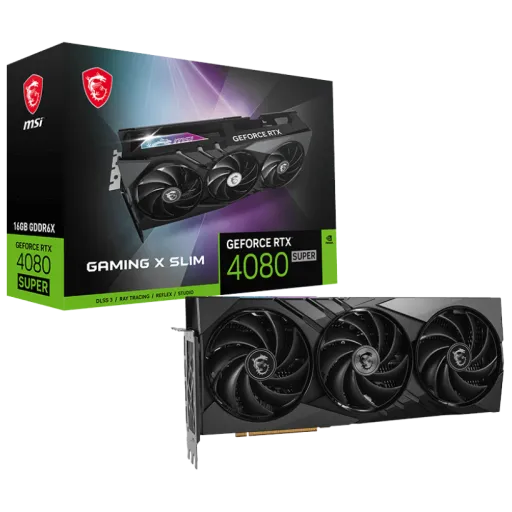
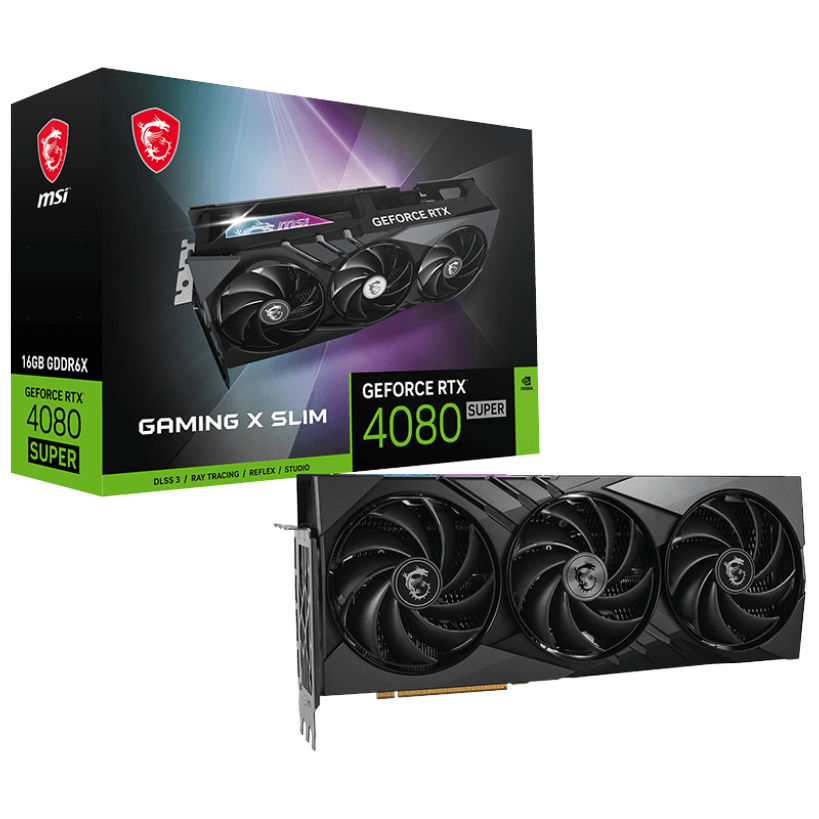
MSI GeForce RTX 4080 Super

You Might Also Like
This MSI GeForce RTX 4080 SUPER is built for high refresh 1440p and true 4K gaming, jahan consistent frametimes matter just as much as peak FPS. The official NVIDIA spec lists 10240 CUDA cores for RTX 4080 SUPER, giving modern engines strong shader throughput for detailed worlds. The Ada Lovelace foundation adds next gen rendering tools, is liye heavy scenes mein stability zyada feel hoti hai, even when you enable advanced lighting. The standard memory configuration is 16GB of GDDR6X, so large texture packs and creator projects fit with less cache churn. A 256 bit memory interface keeps bandwidth healthy, textures asaani se stream hotay hain, and 4K assets feel less cramped in motion. Typical board power is rated at 320W, so airflow planning and PSU headroom become practical buying criteria. MSI’s published specs also confirm PCI Express Gen 4 and 16GB GDDR6X on its RTX 4080 SUPER variant, bilkul as expected for this tier. DirectX 12 Ultimate support keeps you aligned with modern game feature paths, so you avoid awkward fallback settings in new releases. OpenGL 4.6 support adds flexibility for older apps, tou sirf games nahi balkay mixed workflows bhi comfortably cover ho jatay hain. When you want one GPU for years, this RTX 4080 SUPER class focuses on premium smoothness and capability without turning your build into a heater
The Ada Lovelace architecture is designed around modern AI acceleration, jis se gaming aur creative dono sides par uplift milta hai in real workflows. NVIDIA’s RTX 4080 SUPER spec table highlights 3rd generation Ray Tracing cores and 4th generation Tensor cores, which is the core reason ray traced scenes stay more playable. NVIDIA positions the RTX 4080 SUPER at 836 AI TOPS, so AI assisted features feel less like a toggle and more like a daily advantage. The fourth generation Tensor Cores introduce FP8 and structured sparsity support, matlab AI tasks ke liye throughput zyada aur memory pressure comparatively kam. NVIDIA also notes Ada based CUDA cores improve FP32 processing, which matters for 3D workflows and compute heavy desktop tasks. This architecture emphasis helps sustained sessions feel consistent, heat control ke liye aapko case airflow aur fan curves par basic focus rakhna hota hai. The result is a GPU experience that feels refined under load, instead of only looking impressive in short benchmarks. For buyers moving from older generations, Ada’s feature set is often the bigger win than raw FPS alone. When your library mixes raster and ray tracing, yeh platform balanced output deta hai without forcing you into constant settings compromises
The RTX 4080 SUPER ships with 16GB GDDR6X, which gives you breathing room for high res textures and large project caches. The memory interface width is 256 bit on NVIDIA’s own spec sheet, so bandwidth stays in the right zone for premium 4K pipelines. TechPowerUp lists 23 Gbps effective memory speed and about 736.3 GB/s bandwidth, jis ka faida yeh hota hai ke texture streaming aur high detail scenes zyada composed feel karte hain. MSI’s RTX 4080 SUPER EXPERT specification page also states 16GB GDDR6X on a 256 bit bus at 23 Gbps, so the core memory story stays consistent across reputable listings. This capacity matters when games push bigger texture packs, rozana ke use mein stutter risk kam hota hai because swapping pressure stays lower. The same headroom benefits creators working with layered timelines and heavy assets, especially when your apps keep multiple buffers in VRAM. You also get more flexibility for higher resolution render previews, while keeping background apps responsive. When a GPU feels “smooth,” memory behavior is usually the hidden reason, aur yeh combo us stability ko support karta hai. For long term builds, this 16GB class can be the difference between comfortable and constantly managing settings
The RTX 4080 SUPER is specified with 10240 CUDA cores, which is the backbone for shader workloads and CUDA accelerated applications. NVIDIA also quotes 52 TFLOPS for RTX 4080 SUPER shader performance, so heavy scenes and complex effects have strong theoretical headroom. When your day mixes gaming and creation, yeh CUDA core count multitasking ko zyada practical banata hai because compute doesn’t immediately choke the graphics queue. NVIDIA explains that Ada based CUDA cores improve FP32 processing, which directly maps to many graphics and simulation workflows. TechPowerUp’s database also lists the same 10240 shader units for the RTX 4080 SUPER, confirming the core configuration across sources. In practical terms, this means higher settings can stay steady while you keep high resolution effects enabled, bilkul without constant dips that break immersion. It also helps when you run a second monitor for chat, docs, or tools, because headroom remains available. For creators, the same throughput supports faster previews, smoother viewport navigation, and quicker iterations on large scenes. If your current GPU struggles with modern engines, this core count is a straight upgrade in responsiveness
NVIDIA lists RTX 4080 SUPER support for DLSS 3.5 features, so you can use neural rendering tools instead of relying only on raw horsepower. NVIDIA’s DLSS 3.5 explanation describes Ray Reconstruction replacing multiple hand tuned denoisers with an AI network, jis se ray traced image quality cleaner aur more stable feel hoti hai in motion. NVIDIA also details how DLSS 3 introduces Frame Generation on GeForce RTX 40 Series using 4th gen Tensor Cores and an Optical Flow Accelerator, which is especially useful when CPU limits start showing. The RTX 4080 SUPER spec table explicitly calls out 3rd gen RT cores and 4th gen Tensor cores, so the hardware path for ray tracing and AI is native, not software only. This is where the premium feel shows up, kyun ke you can keep richer lighting and still maintain a smooth, responsive camera. NVIDIA’s DLSS technology page also summarizes Ray Reconstruction and Super Resolution roles, which helps explain why image clarity improves even when rendering from a lower input resolution. For buyers aiming at high end visuals, DLSS becomes a practical tool for staying in the “max settings” zone more often. When you pair that with ray tracing, yeh GPU cinematic look ko playable banata hai without constant compromise. The end benefit is simple: more detail stays on, while motion stays clean
The GeForce RTX 40 Series includes eighth generation NVENC with AV1 support, which can improve livestream quality at the same bitrate. NVIDIA’s RTX 40 Series announcements also note that RTX 4090 and RTX 4080 cards feature two eighth generation NVENC encoders with AV1, so high end Ada boards are built with serious creator throughput in mind. When your setup includes OBS, Discord, or frequent video calls, AV1 support can feel like a real upgrade, kyun ke quality zyada crisp rehti hai without pushing bandwidth too hard. NVIDIA also describes Ada as advancing video and vision AI acceleration and highlighting an optimized AV1 stack, which supports modern streaming and transcoding workflows. This matters if you record gameplay, encode clips, or publish content regularly, rozana ke workflow mein time saving aur stability dono improve hotay hain. The best part is the workflow stays inside the GPU ecosystem, so your CPU can focus on the game or the timeline. For hybrid users, this is where a premium GPU becomes more than just “FPS,” because output quality and turnaround time both improve. If your current card struggles while streaming, yeh upgrade immediate smoothness deta hai with cleaner capture options. For creators who value consistency, the RTX 4080 SUPER class is designed to keep quality predictable under load
The RTX 4080 SUPER connects over a PCI Express 4.0 x16 interface, so it fits naturally into modern gaming and creator motherboards. NVIDIA’s own spec table also confirms PCI Express Gen 4 support, which keeps platform compatibility straightforward for most recent builds. PCIe 4.0 doubles the transfer rate over PCIe 3.0 to 16 GT/s, matlab x16 bandwidth headroom zyada hota hai for data heavy scenarios. That extra lane bandwidth is helpful when your system is moving large assets, even though many games remain primarily GPU limited. Tom’s Hardware’s bandwidth table also shows PCIe 4.0 x16 approaching 31.508 GB/s per direction, which explains why Gen 4 feels future safe for high end GPUs. NVIDIA lists Resizable BAR support on the RTX 4080 SUPER, so compatible systems can let the CPU access the full GPU frame buffer for potential performance gains. In daily use, yeh sab mil kar installation ko easy banata hai and reduces the chance you’ll feel “platform bottleneck” anxiety. If you are upgrading an existing rig, PCIe Gen 4 also keeps the GPU aligned with fast storage and modern CPUs. For clean builds, this is the kind of spec that prevents regret later. The overall experience stays plug in friendly, yet properly high end
The RTX 4080 SUPER power draw is commonly listed around 320W, so it sits in a strong performance bracket without the highest end power penalty. MSI’s spec page for its RTX 4080 SUPER EXPERT shows a 320W power consumption figure and a 16 pin power connector, which helps you plan cabling and PSU compatibility up front. TechPowerUp’s database similarly notes a 16 pin connector and a 320W rated power draw, so the electrical baseline is consistent across listings. MSI also lists an 850W suggested PSU with a minimum of 750W for that specific card, tou high end builds mein headroom rakhna sensible ho jata hai especially with strong CPUs. This is not just a numbers game, because stable power delivery helps boosts stay consistent during long gaming marathons. Good airflow matters too, kyun ke sustained performance depends on keeping heat under control rather than chasing short spikes. If your case has solid intake and exhaust, this tier can feel surprisingly composed for its output class. For upgrade buyers, these power details prevent last minute surprises during installation. Once power and cooling are planned, the day to day experience becomes set and forget. That is exactly what premium GPU ownership should feel like
The RTX 4080 SUPER is listed with DirectX 12 Ultimate support, which keeps you aligned with modern rendering pipelines in current and upcoming PC games. DirectX 12 Ultimate feature sets include DXR 1.1 ray tracing, mesh shaders, sampler feedback, and variable rate shading, jis se developers visuals aur performance ko smarter balance karte hain. MSI’s own specifications also label the card as “12 Ultimate,” reinforcing that this is not a partial feature claim. On the OpenGL side, TechPowerUp lists OpenGL 4.6 support for RTX 4080 SUPER, which helps with older engines and certain specialized tools. Khronos describes OpenGL 4.6 as adding the ability to ingest SPIR V shaders into the core specification, so the API stays relevant for cross tool shader workflows. This combo of DirectX and OpenGL support matters when your library includes new AAA titles plus legacy favorites, rozana ke use mein compatibility issues kam ho jatay hain. It also reduces friction if you move between games and creative applications in the same week. For buyers who want longevity, API coverage is a hidden but critical value point. When developers push newer features, this GPU is already in the correct lane. When older tools still matter, OpenGL 4.6 keeps the door open
TechPowerUp categorizes the RTX 4080 SUPER as an enthusiast class card aimed at 1080p through 4K gaming, which aligns perfectly with high refresh monitors and cinematic single player setups. NVIDIA positions the RTX 4080 SUPER with DLSS 3.5 support, so you can chase higher image quality while keeping performance practical. NVIDIA also highlights VR immersion and G SYNC benefits for the RTX 4080 family, is liye smooth high refresh delivery becomes part of the overall premium feel. The same spec table confirms 16GB GDDR6X and a 256 bit bus, which is a strong match for 4K textures and heavier creator timelines. If you are upgrading from older RTX or GTX tiers, yeh jump you more than raw FPS because it modernizes your feature toolkit for ray tracing and AI rendering. NVIDIA’s listing of Resizable BAR support is another small but useful detail, because it rewards a well balanced platform build. For creators who also game, AV1 capable RTX 40 Series encoding makes the card feel like a workstation tool on weekdays and a gaming monster on weekends. This is the kind of GPU you pick when you want fewer compromises, bilkul more consistency, and a setup that stays “current” longer. If your goal is premium performance with modern features, the MSI GeForce RTX 4080 SUPER class fits that brief cleanly
Here's how current offers compare across retailers.
Review current prices and specifications side by side.