


Price Breakdown & Availability
Here's how current offers compare across retailers.
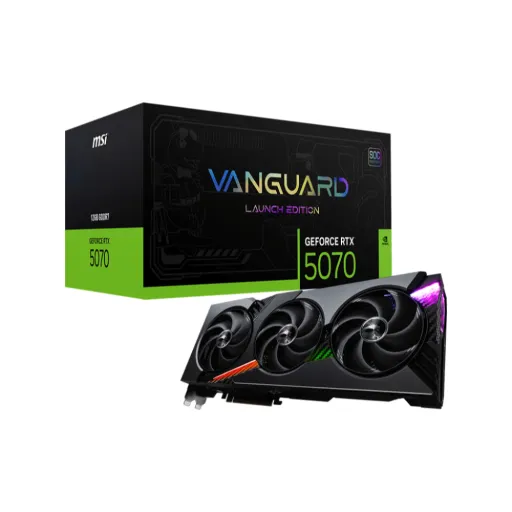
MSI GeForce RTX 5070 Gaming Trio OC


You Might Also Like
The MSI GeForce RTX 5070 GAMING TRIO OC is made for builders who want modern performance that stays consistent in real use. This Gaming Trio OC edition focuses on strong cooling and quiet control, rozana ke long sessions mein, so the card feels stable instead of temperamental. The platform is anchored in NVIDIA Blackwell for GeForce RTX 50 Series, jahan AI graphics aur efficiency dono aage jate hain, giving you a new gen baseline for games and creative apps. The MSI overview explicitly pairs this card with DLSS 4 support, meaning you’re buying into the latest NVIDIA upscaling and frame generation direction. The official spec confirms a PCI Express Gen 5 interface, asaani se motherboard ke sath fit ho jata hai, while still remaining practical for mixed generation builds. The core configuration includes 12GB GDDR7 VRAM, jo high detail textures aur creator layers ko, a bit more breathing room deti hai. The OC tuning is presented through MSI Center clock profiles, bilkul convenient approach, so you can choose performance behavior without living in manual tweaks
The output layout is designed for modern monitor setups, multi screen workflow ho ya high refresh gaming, without forcing adapters everywhere. The card provides three DisplayPort 2.1b ports and one HDMI 2.1b, jo desks par mixed displays ko asaani se handle karta hai, while keeping ports current for newer panels. The HDMI port is specified for HDMI 2.1b capabilities like up to 4K 480Hz or 8K 120Hz with DSC, so TV style big screen gaming and high end monitors both stay on the table. The HDMI Forum has published HDMI Specification Version 2.1b, jo interoperability ko clarify karta hai, which matters when you’re chasing stable handshake behavior. The DisplayPort side also lands in the DisplayPort 2.1b era, and VESA has discussed DP 2.1b updates tied to improved UHBR cable behavior in the ecosystem. The VESA announcement highlights UHBR20 reaching a maximum throughput of 80 Gbps, which is the kind of headroom high resolution, high refresh panels can benefit from. The MSI specification lists support for up to four displays and a maximum resolution of 7680 x 4320, rozana work + play ke liye, making the GPU a sensible centerpiece for a productivity plus gaming desk
The RTX 5070 core here carries 6144 CUDA cores, jo parallel workloads mein noticeable smoothness detay hain, especially when games and creative apps start stacking effects. The Gaming Trio OC clocks are listed up to 2625 MHz in Extreme Performance and 2610 MHz Boost, so you get a clear factory tuned target without guessing. The interface is PCI Express Gen 5, asaani se install hota hai, and it keeps the card aligned with newer platforms and chipsets. The PCI SIG notes that PCIe 5.0 adds support for 32.0 GT/s per lane per direction, which helps explain why Gen 5 is a forward looking motherboard and GPU pairing. The same PCI SIG guidance also frames how lane counts scale bandwidth, jo x16 slot ke context mein, reinforces why top slots remain the best practice for GPUs. The Intel overview explains PCIe generational speeds and compatibility, so older boards can still run newer devices with the link negotiating down as needed. The real benefit for buyers is simple, rozana ke use mein, you get a modern interconnect baseline with fewer “platform mismatch” compromises
The 12GB GDDR7 memory pool is aimed at keeping modern games comfortable, textures heavy hon tab bhi, and helping creators keep more assets active before swapping to system RAM. The MSI spec also lists a 192 bit memory interface and 28 Gbps memory speed, jo bandwidth ko strong banata hai, for higher detail settings and high refresh frame delivery. Theoretical bandwidth works out to about 672 GB/s from 28 Gbps across a 192 bit bus, asaani se samajh aata hai, and that number helps explain why motion can feel less “starved” under load. The JEDEC GDDR7 standard (JESD239) is positioned as a big step in bandwidth over GDDR6, which aligns with why new GPUs are moving to this memory generation. The JEDEC release also highlights GDDR7’s PAM interface approach, jo high frequency par efficiency ko improve karta hai, rather than only brute forcing clocks. The Micron GDDR7 page describes the generation as targeting high bandwidth and efficiency, and it notes speeds reaching up to 32 Gb/s in their ecosystem messaging. The practical takeaway for buyers is focused, rozana gaming + editing mein, you get a VRAM and bandwidth mix that’s built for today’s heavier assets
The cooling system is where Gaming Trio OC earns its name, kyun ke stable thermals ke baghair, clocks ka benefit quickly fade ho jata hai. The MSI product listing calls out TRI FROZR 4 thermal design, which is framed as upgraded fans, airflow control, and quieter operation for long sessions. The STORMFORCE fan is described with seven blades and claw texturing, haan yeh detail choti lagti hai, but it’s meant to raise air pressure while keeping noise disciplined. The same MSI page explains a nickel plated copper baseplate that captures GPU and memory heat quickly, so hot spots don’t linger. The core pipes are detailed as a square contact area design, jo heat transfer ko efficient banata hai, helping the heatsink spread load more evenly. The Wave Curved 4.0 fin shaping is described as reducing turbulence, which is a practical way to keep airflow smooth instead of chaotic. The result you notice day to day is straightforward, heat kam rehta hai, and the card is built to hold performance without sounding like a small vacuum cleaner
The MSI software angle matters when you actually live with the GPU, kyun ke kabhi performance chahiye hoti hai, kabhi silence. The MSI store listing highlights MSI Center for monitoring and real time tweaks, asaani se modes switch ho jate hain, so you can align behavior with your day. The same family listing also points to MSI Afterburner support, which is the familiar path for users who want manual fan curves and OC tuning. The spec page confirms an “Extreme Performance” clock profile exposed via MSI Center, so the OC experience is packaged rather than hidden. The MSI spec also lists DirectX 12 Ultimate and OpenGL 4.6 support, jo game engines aur creative viewports ko, modern feature access deti hai. The same MSI listing includes VR Ready and multi display support up to four monitors, so a streaming setup or productivity stack stays practical. The real benefit is workflow control, rozana ke routine mein, because you can tune acoustics and thermals without losing the factory stability baseline
The Blackwell generation is closely tied to DLSS 4 advances, jo aaj kal ke heavy games mein, are often the easiest way to keep motion smooth at higher settings. The NVIDIA DLSS 4 announcement explains Multi Frame Generation generating up to three additional frames per rendered frame, which is designed to multiply performance beyond classic rendering. The DLSS technology page reinforces the Multi Frame Generation idea for GeForce RTX 50 Series, asaani se higher smoothness milti hai, especially when you prefer high refresh over brute force native rendering. The NVIDIA DLSS 4 news also describes transformer based model upgrades for Super Resolution and Ray Reconstruction, which targets better temporal stability and reduced artifacts. The MSI overview explicitly positions this card as “Powered by the NVIDIA Blackwell architecture and DLSS 4,” so the feature story matches the product’s own official messaging. The responsiveness side also matters in real play, competitive titles mein, and NVIDIA Reflex is described as reducing PC latency through GPU/CPU synchronization. The combined experience is practical rather than abstract, kyun ke smoother frames plus tighter latency often feels like cleaner control, not just a bigger number
The MSI spec lists a 250W power consumption, jo planning ko straightforward banata hai, if you are matching your PSU and airflow to the GPU. The same spec calls for a single 16 pin power header with an ATX 3.1 PSU recommendation, so cable choice and PSU standard alignment stay important. The minimum PSU recommendation is shown as 650W, rozana ke stability ke liye, giving you a clear baseline before you commit to the build. The physical dimensions are listed as 338 x 140 x 50 mm, so you can check front radiator clearance and side panel cable bend space early. The PCIe Gen 5 interface keeps the card aligned with new motherboards, lekin older systems mein bhi, PCIe link negotiation remains a normal part of compatibility. The PCI SIG notes PCIe 5.0 signaling rates at 32.0 GT/s per lane, which helps explain why board makers treat Gen 5 routing and slot quality as a serious engineering area. The best install outcome comes from small habits, asaani se, like ensuring full connector seating and leaving airflow room so the cooler can do its job
This MSI Gaming Trio OC model is a focused choice for buyers who want performance plus refinement, kyun ke daily use mein noise aur temps bhi matter karte hain. The OC clock targets and the 6144 CUDA core count create a clear baseline, so you know you are getting a factory defined uplift without mystery bins. The 12GB GDDR7 setup on a 192 bit interface, rozana heavy textures aur creator assets ke liye, aims for a balanced memory feel rather than a cramped VRAM profile. The shift to GDDR7 is backed by JEDEC’s published standard direction, which frames why this memory generation is positioned for higher bandwidth graphics workloads. The I/O stack with DisplayPort 2.1b and HDMI 2.1b keeps your display upgrade path open, haan cables aur monitor capability matter karti hai, but the ports are not the bottleneck. The DisplayPort 2.1b ecosystem discussion from VESA highlights how UHBR cable improvements are part of the forward motion, which suits high end monitor ambitions. The Blackwell + DLSS 4 narrative is also officially framed by NVIDIA as a major AI rendering push, bilkul modern approach, which is why this generation feels built for what games are becoming. The overall takeaway is clean and practical, asaani se decide ho jata hai, if you want a high refresh ready, creator friendly GPU that stays composed under load
Here's how current offers compare across retailers.
Review current prices and specifications side by side.