
Price Breakdown & Availability
Here's how current offers compare across retailers.

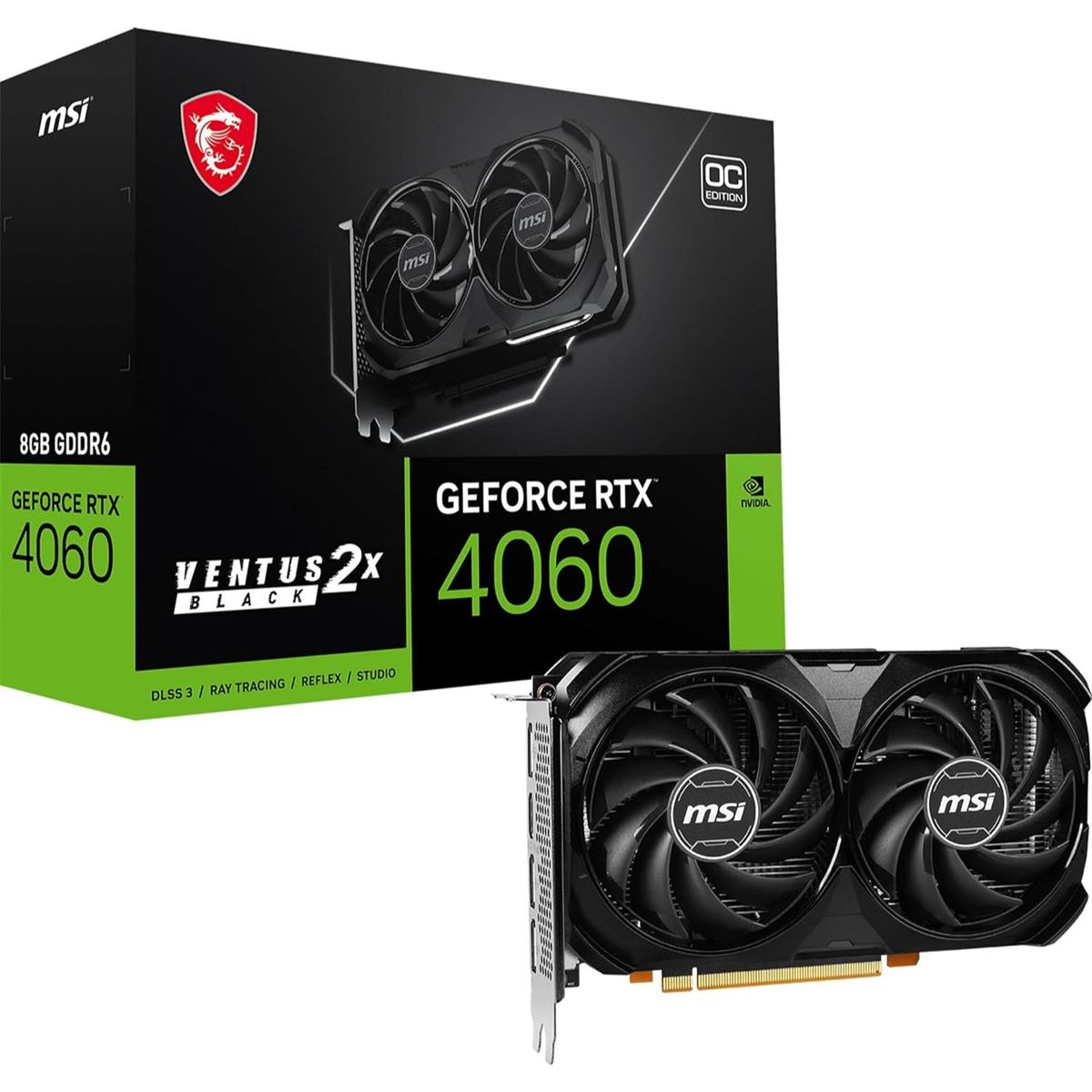
MSI GeForce RTX 4060


You Might Also Like
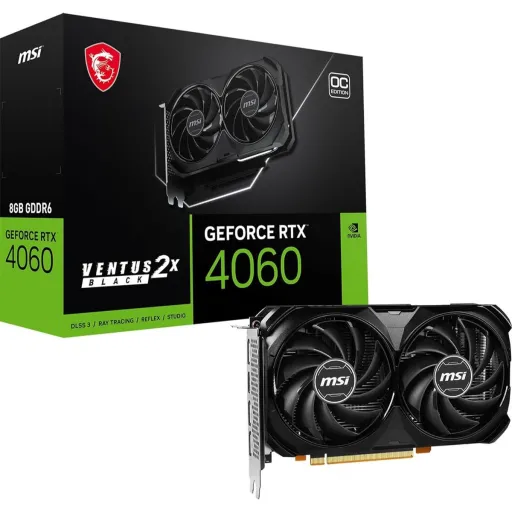
The MSI GeForce RTX 4060 lands in a sweet spot for buyers who want fresh generation graphics features, cleaner efficiency, and a more practical upgrade path, aur isi wajah se yeh build ko modern feel deta hai without becoming overkill. NVIDIA positions the RTX 4060 family around its Ada Lovelace architecture for gaming, streaming, and creating, while MSI says its RTX 4060 lineup is aimed at mainstream gamers and creators targeting 1080p at high frame rates with ray tracing and DLSS 3. That overall direction matters in everyday use because smoother motion, better AI support, and stronger display flexibility are cheezen jo rozana zyada feel hoti hain than flashy numbers alone. Instead of feeling like a one trick purchase, this GPU sits comfortably in that balanced mid range class jahan gaming, streaming, media, aur light creative work ek hi rig par smoothly manage ho sakte hain
With 3072 CUDA cores available here, the MSI GeForce RTX 4060 carries enough parallel muscle for modern engines, everyday rendering, and responsive game scenes, aur performance bohat stable feel hoti hai when workloads shift quickly. The Ada Lovelace foundation also brings third generation RT Cores and fourth generation Tensor Cores, so the card is not relying on brute force alone but on smarter acceleration for lighting and AI workloads, jo supported titles mein seedha farq dikha deta hai. NVIDIA also lists 15 shader TFLOPS, 35 RT TFLOPS, and 242 AI TOPS for the RTX 4060, which helps explain why supported tasks feel quick even though this card stays in a sensible class. In practical day to day use, this combination keeps menus, maps, textures, and effect heavy moments feeling cleaner, bilkul especially when a game leans on newer RTX features rather than old school raster speed alone
For high refresh 1080p gaming sessions, this RTX 4060 class is officially positioned by MSI for high frame rates with ray tracing and DLSS 3, jo esports se story games tak dono sides ko suit karta hai. NVIDIA's official RTX 4060 spec page also lists DLSS 3.5 features including Super Resolution, DLAA, Ray Reconstruction, and Frame Generation support, so supported titles can feel much smoother without asking the GPU to brute force every pixel natively. NVIDIA explains that DLSS 3 uses fourth generation Tensor Cores and the Optical Flow Accelerator to create additional high quality frames, aur yeh cheez CPU limited ya heavier scenes mein especially useful hoti hai. NVIDIA says DLSS 3 also incorporates Reflex to synchronize GPU and CPU for lower system latency, is liye on screen reactions zyada direct feel hoti hain in supported games
For heavier lighting effects in newer games, Ada's third generation RT Cores deliver over 2x RT TFLOP performance and twice the ray triangle intersection throughput versus the previous generation, jo reflections aur shadows ko zyada believable banata hai. NVIDIA also details Opacity Micromap and Displaced Micro Mesh engines inside Ada, features that help ray tracing handle alpha tested textures and complex geometry more efficiently, matlab visual richness ke sath waste kam hota hai. Shader Execution Reordering further reorganizes inefficient workloads, and NVIDIA says it can improve shader performance for ray tracing by up to 3X while lifting in game frame rates by up to 25%. In visual terms, that technical work shows up as scenes that feel deeper and less flat, khaas tor par jab lighting, particles, foliage, and reflective surfaces all show up together on screen
Behind the scenes, MSI's RTX 4060 specifications pair 8GB of GDDR6 with a 128 bit memory bus and 17 Gbps memory speed, so the card is tuned for clean 1080p delivery rather than wasteful excess. NVIDIA's launch material adds that the RTX 4060 carries 24MB of L2 cache, and it specifically says this larger cache reduces demands on the memory interface while improving performance and power efficiency, jo rozana gaming mein bohat meaningful cheez ban jati hai. That design choice is important because a 128 bit path yahan tanha kaam nahi karta; the cache helps the GPU move common game data more intelligently instead of brute forcing every transaction across the bus. In real play, this usually translates into steadier texture handling, smoother asset streaming, and less of that stretched feeling jo weaker memory behavior kabhi kabhi fast scenes mein show karti hai
On the connectivity side, MSI equips its GeForce RTX 4060 with three DisplayPort 1.4a outputs and one HDMI 2.1a port, giving you modern flexibility for gaming monitors, TVs, and creator displays. MSI also states that the HDMI 2.1a output supports 4K at 120Hz HDR and 8K at 60Hz HDR with Variable Refresh Rate, jo lounge setup se desk setup tak dono ko future friendly banata hai. The official MSI specifications further list support for up to four displays, G SYNC technology, and a digital maximum resolution of 7680 x 4320, so multi screen productivity and high resolution experimentation stay comfortably on the table. Whether your plan is dual monitor work, a fast primary panel, or an occasional big screen session, yeh output mix awkward dongle drama ke baghair strong compatibility deta hai
Beyond gaming alone, the Ada architecture includes an eighth generation NVIDIA Encoder with AV1 encoding, and NVIDIA says AV1 is 40% more efficient than H.264 for streaming scenarios. That efficiency becomes easy to appreciate because cleaner footage at the same bitrate means less mushy motion, behtar text clarity, and a more polished stream without inflating upload demands. NVIDIA also says the GeForce RTX 4060 family is backed by the Studio platform, supercharges over 110 creative apps, and pairs with Studio Drivers that are designed for stability in creator workflows. On the broader Studio page, NVIDIA describes faster video editing, smoother 3D rendering, seamless livestreaming, and creator focused driver tuning, so this GPU makes sense for users jo game bhi karte hain aur content bhi banate hain. For hybrid PC owners especially, that overlap feels valuable because one card can handle play after work and practical acceleration during work
Inside a modern desktop build, the MSI RTX 4060 keeps installation straightforward with PCI Express 4.0 x8 connectivity, while NVIDIA's official spec table also confirms PCIe Gen 4 and Resizable BAR support. MSI's RTX 4060 listings also show 115W power consumption, a single 8 pin power connector, and a 550W recommended PSU, jo upgraders ke liye planning ko simple bana deta hai. That lower power target matters more than many buyers expect because less demand on the power supply usually means a calmer system, lower case heat, and easier component matching. In real ownership terms, this efficiency angle often feels smarter than chasing oversized wattage, especially when the goal is stable daily gaming rather than constant spec flexing
Taken together, the official MSI and NVIDIA specifications point to a GPU built for sensible RTX buying: 3072 CUDA cores, Ada Lovelace architecture, a 128 bit memory path, DLSS support, PCIe 4.0 x8 integration, and modern display outputs. That combination makes the MSI GeForce RTX 4060 a strong fit for players who want smoother competitive gaming, richer single player visuals, and enough creator headroom to stream, edit, or multitask asaani se on one machine. MSI officially frames this class around mainstream 1080p high frame rate use, so it is more accurate to read this card as a focused 1080p and everyday creator option than a brute force 4K play; that fit is an inference from the official positioning and specs. For buyers upgrading from older mid range hardware, yeh GPU sab se pehle fluidity, compatibility, and responsiveness mein farq dikhata hai, which is usually the upgrade feeling that matters most. If your priority is balanced RTX performance instead of unnecessary excess, this MSI option enters the shortlist very comfortably and stays there on merit
Here's how current offers compare across retailers.
Review current prices and specifications side by side.