







Price Breakdown & Availability
Here's how current offers compare across retailers.
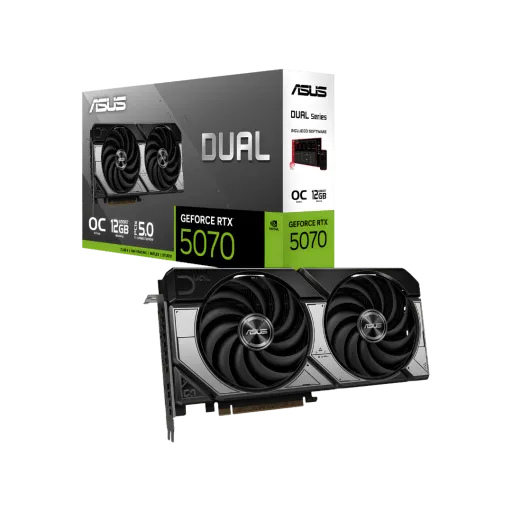
ASUS GeForce RTX 5070 Dual


Current Price
-
Lowest (30d)
-
Highest (30d)
-
30-Day Change
-
Showing daily prices
You Might Also Like
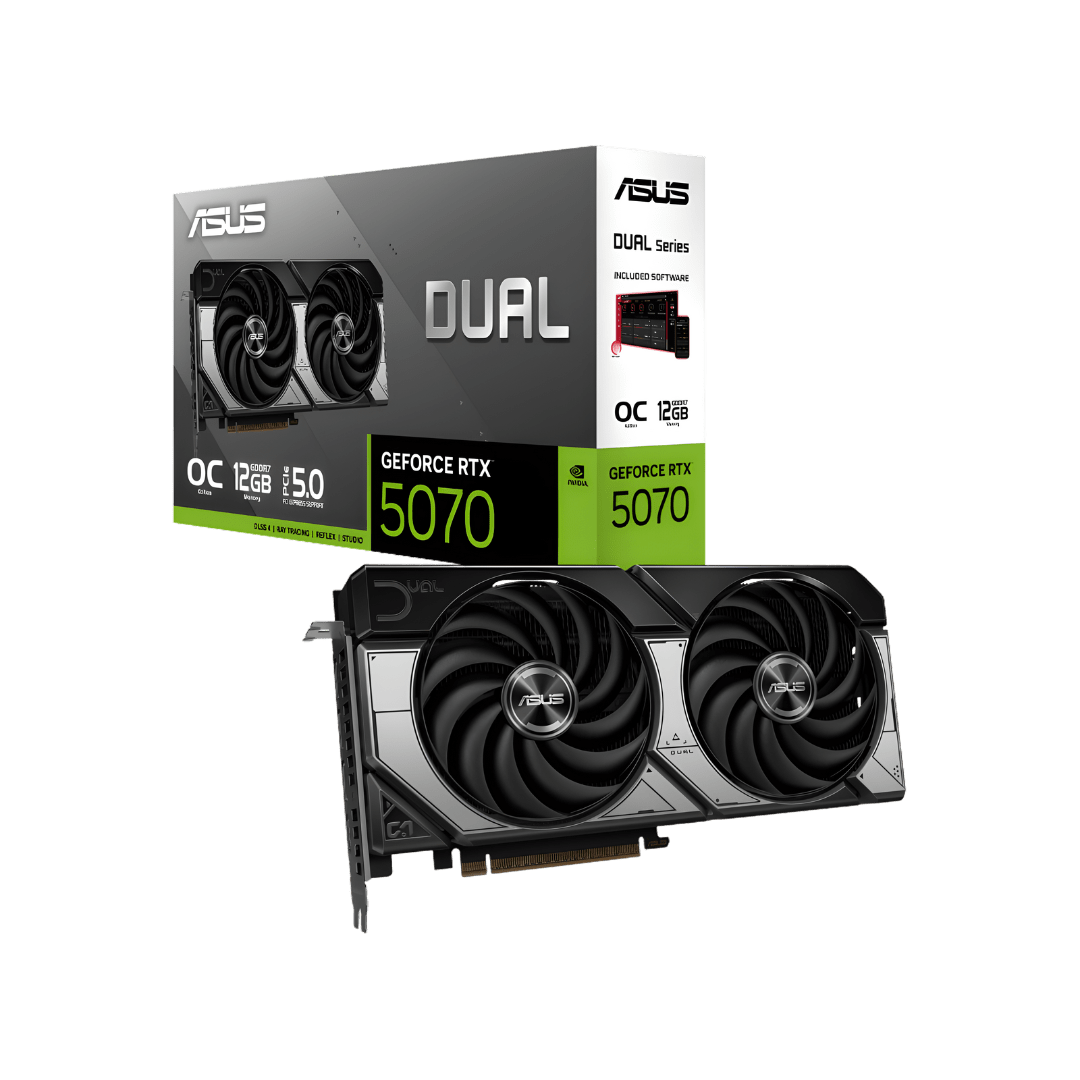
This ASUS GeForce RTX 5070 Dual targets builders who want flagship tier features without a giant triple fan footprint, aur compact cases mein bhi confidence rehta hai. The Dual shroud is intentionally space conscious, lekin cooling ko compromise nahi karta, because ASUS positions it as “Dual Fans, Perfect Fit” for broad compatibility. The core configuration stays properly modern for 1440p class play, with 6144 CUDA cores driving strong parallel throughput for games and creator apps. The GPU platform is NVIDIA Blackwell, jis ka matlab yeh hai ke AI backed rendering features front and center rehte hain, not bolted on later. The AI rating is also clearly stated, with ASUS listing 988 AI TOPS for this model, jo AI workflows aur supported game features ko headroom deta hai. The overall identity feels practical and upgrade friendly, haath mein build plan set hota hai, because you get a compact dual fan card backed by current gen platform capabilities
This RTX 5070 Dual comes with 12GB GDDR7, jo modern texture packs aur high resolution assets ko comfortably hold karne mein help karta hai. The memory runs at 28 Gbps on a 192 bit interface, so bandwidth pressure kam hota hai when you push higher settings at 1440p. The effective bandwidth lands at 672.0 GB/s, which is the kind of headroom that can reduce texture pop in and keep frametimes more consistent, rozana ke gaming sessions mein. The “12GB on 192 bit” balance matters because it keeps the card in a sensible efficiency lane, meaning performance stable rehta hai without instantly forcing a bigger cooler class. The GDDR7 direction is also part of NVIDIA’s Blackwell story, jahan faster memory is used to feed neural rendering and heavy RT workloads more smoothly. The practical takeaway feels simple, ke you get a modern memory subsystem that supports sharp visuals and responsive play, and it does it in a compact Dual edition
This Blackwell generation RTX platform centers on Fifth Gen Tensor Cores, aur ASUS specifically calls out FP4 support alongside DLSS 4 for this series positioning. The real benefit shows up when games get heavy, kyun ke DLSS 4 Multi Frame Generation can multiply perceived frame rate while keeping motion feeling more fluid. The transformer based DLSS models are also part of the pitch, jo stability, ghosting control, aur fine detail retention ko improve karte hain compared to older AI upscaling approaches. The point is not just “more FPS,” balkay cleaner image under motion, so fast camera pans and dense foliage stay readable in real play. The RTX 5070 class is marketed as a strong 1440p experience with DLSS 4, meaning you can target high refresh monitors without dropping every setting, asaani se. The overall experience feels more “set and enjoy,” kyun ke DLSS 4 is designed to deliver uplift while maintaining responsiveness through Reflex integration
This RTX 5070 generation focuses on Fourth Gen Ray Tracing Cores, jo heavy geometry scenes mein lighting aur reflections ko more practical banate hain. The “Mega Geometry” messaging matters because modern games are pushing denser worlds, aur RT ka overhead tabhi manageable hota hai when the hardware pipeline is built for it. The Dual RTX 5070 pairing works best when you treat ray tracing as a quality tool, yani selective RT effects plus DLSS 4 can keep your gameplay smooth. The neural rendering angle is also emphasized by NVIDIA, which positions Blackwell as a platform where AI helps deliver true to life graphics without brute force cost. The responsiveness story stays important in competitive titles, is liye Reflex 2 with Frame Warp is presented as a latency focused feature for the RTX 50 stack. The end result is more flexible settings control, jahan visuals premium rehte hain and input feel stays crisp
This Dual edition uses two Axial tech fans, jo longer blades aur barrier ring pressure ke through heatsink par airflow ko zyada focused banate hain. The compact shroud and heatsink layout is designed to leverage side panel ventilation, so heat kam rehti hai even when the card sits close to case panels. The 0dB technology stops the fans under lighter loads, and ASUS states the fans halt when GPU temperature drops below 50°C with low power draw. The dual ball fan bearings are positioned for longevity, aur ASUS notes they can last up to twice as long as sleeve bearing designs. The vented backplate adds a practical thermal escape path, jis se sustained boosts maintain rehne mein help milti hai during longer sessions. The Dual BIOS switch is a meaningful touch because you can pick Performance or Quiet behavior, yani noise profile ko apni preference ke mutabiq tune kar sakte ho. The overall thermal story feels balanced for everyday users, kyun ke cooling, noise, aur durability ek saath target kiye gaye hain
This ASUS RTX 5070 Dual stays build friendly with a 2.53 slot design, jis se mid tower aur many compact layouts mein fit planning easy ho jati hai. The physical dimensions are listed as 249 x 126 x 50.6 mm, so you can measure clearances properly before you commit to a case, asaani se. The card is also marked SFF Ready compatible, jo small form factor builders ke liye reassurance deta hai when every millimeter matters. The bus standard is PCI Express 5.0, which keeps the platform current and avoids “last gen” bottleneck anxiety for modern builds. The GPU database listings also show this class running on PCIe 5.0 x16, meaning compatibility stays straightforward on current and recent motherboards. The Dual form factor is especially useful when you want clean airflow paths, kyun ke oversized coolers sometimes crowd front intakes and cable runs. The net effect is a more predictable build experience, jahan performance goals meet practical fit and airflow realities
This ASUS Dual RTX 5070 provides one native HDMI 2.1b port and three native DisplayPort 2.1b ports, jo modern monitors aur TVs ke saath easy pairing banata hai. The maximum digital resolution is listed as 7680 x 4320, so high resolution capture, playback, and future display upgrades stay on the table. The card supports up to four displays, multitasking asaan hoti hai for work plus gaming, and it keeps desk setups flexible. The HDCP support is specified as 2.3, jo protected content playback scenarios mein compatibility maintain karta hai across common streaming devices. The broader Blackwell platform also highlights DisplayPort 2.1b alongside PCIe Gen5 as part of the generation’s display and connectivity direction. The real benefit shows up in daily use, kyun ke high refresh panels, VRR workflows, and multi monitor layouts feel less constrained by older I/O standards. The connectivity package feels especially complete for a compact card, because you get modern ports without needing a physically massive cooler
This RTX 5070 class is marketed as a gamers and creators platform, jis ka matlab yeh hai ke rendering, editing, and AI assisted apps ko equal priority milti hai. The NVIDIA positioning highlights video processing improvements, including hardware accelerated 4:2:2 support through NVENC and claims of much faster 4:2:2 export compared to the RTX 4070 in supported workflows. The same NVIDIA update frames this generation around DLSS 4 Multi Frame Generation and Blackwell efficiency, so creative tools can share the same acceleration path as games, asaani se. The ASUS software bundle lists GPU Tweak III plus access to GeForce Game Ready and Studio Drivers, jo tuning aur stability options ko simple banata hai for everyday users. The broader RTX 50 platform messaging also calls out NVIDIA Studio and Broadcast as part of the ecosystem, meaning creators can lean on driver profiles and AI effects where supported. The practical advantage is smoother iteration speed, kyun ke timelines, previews, and exports can become less “wait heavy” when hardware encode and AI tools kick in. The result is a compact GPU that still behaves like a serious work companion, without forcing you into an oversized build
This ASUS RTX 5070 Dual makes the most sense for 1440p players who want modern ray tracing tools, aur jo compact builds mein clean thermals aur noise prefer karte hain. The board power class is commonly listed around 250 W for the RTX 5070, so it sits in a range where cooling and PSU planning stays manageable for most mainstream systems. The ASUS recommendation calls for a 750W PSU, jo headroom provide karta hai for fully loaded systems and avoids random stability issues under spikes. The power connector is listed as a single 16 pin, and ASUS includes an adapter cable (1 to 2) in the box, so upgrades can be simpler if your PSU cables differ. The core specs stay aligned with what buyers usually want in this tier, including 6144 CUDA cores and 12GB GDDR7 at 28 Gbps on 192 bit for strong bandwidth behavior. The generational value comes from the feature stack, kyun ke Blackwell brings DLSS 4 Multi Frame Generation plus neural rendering emphasis that can extend a card’s useful life across new titles. The final buying logic is straightforward, ke you pick this Dual edition when you want modern ports, compact fit, and current gen AI features in one stable daily driver
Here's how current offers compare across retailers.
Review current prices and specifications side by side.