






Price Breakdown & Availability
Here's how current offers compare across retailers.
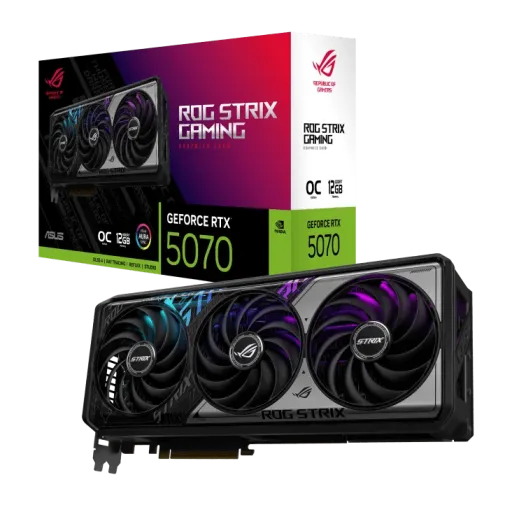
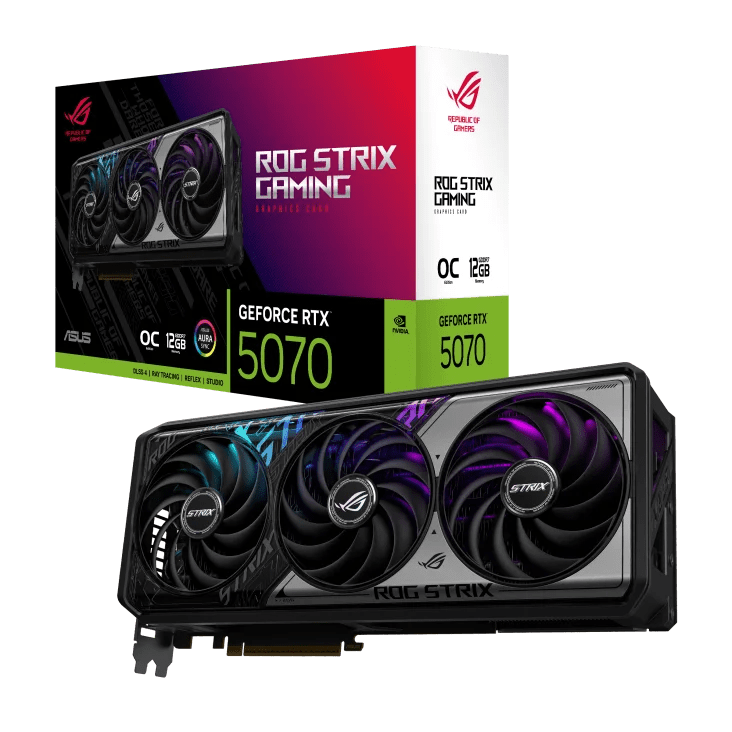
ASUS GeForce RTX 5070


You Might Also Like
This ASUS GeForce RTX 5070 is built to feel immediately current, kyun ke yeh NVIDIA Blackwell platform par based hai. This GPU class is positioned for high refresh 1440p gaming and confident creator work, rozana ke sessions mein bhi, without jumping into the heaviest flagship territory. This card carries 6144 CUDA cores, so modern engines get strong parallel throughput for high settings. This setup includes 12GB of GDDR7 VRAM, which keeps textures and assets stable when your game load gets heavy, bilkul stutter wali feel kam hoti hai. This memory design runs on a 192 bit interface, giving you a balanced bandwidth lane that suits 1440p ultra plus selective 4K tuning. This generation also supports PCI Express 5.0, so new builds stay clean and future facing for upgrades. This RTX 5070 tier is officially part of NVIDIA’s RTX 5070 family line, which helps you map it easily against monitor goals and workload needs. This overall package feels like a practical performance anchor, jab aap chahte ho ke PC har kaam smoothly kare, not just benchmarks
This generation is designed around AI assisted rendering, is liye high settings zyada playable lagte hain in real scenes. This RTX 5070 supports DLSS 4 features including Multi Frame Generation and Ray Reconstruction, which can lift smoothness when native rendering starts to strain. This matters most when you want sharp motion clarity, kyun ke fast camera pans aur quick flicks mein frame pacing bohat noticeable hoti hai. This architecture pairs fifth generation Tensor Cores with fourth generation RT Cores, so ray traced lighting and reflections can stay on without turning gameplay into a slideshow. This RTX 5070 family also includes NVIDIA Reflex 2 support, which is valuable for competitive titles where input feel matters, lag nahi chahiye hota. This GPU generation was introduced as part of NVIDIA’s RTX 50 series reveal at CES 2025, so the feature set aligns with the latest game engine direction. This is the kind of uplift that shows up in daily play, jab aap settings high rakhna chahte ho and still keep the experience responsive. This focus on neural rendering is also why the card can feel more “smooth” than older tiers at similar raw shader counts, bilkul practical difference hota hai
This RTX 5070 core count lands at 6144 CUDA cores, which gives a strong foundation for demanding raster workloads and modern effects. This spec balance is meant to hold steady at 1440p, rozana ke gaming sessions mein, so your GPU doesn’t feel “just enough” every time a new title drops. This NVIDIA reference class boosts up to around 2512 MHz, and ASUS listings also show boost clocks in that range depending on the model and OC profile. This means your “minimum FPS feel” can improve, kyun ke clocks sustain rehte hain when the scene complexity spikes. This card supports modern graphics APIs like DirectX 12 Ultimate, which matters for features like hardware ray tracing and newer rendering paths. This is also a practical fit for mixed use PCs, jahaan aap gaming ke saath Discord, browser tabs, aur screen capture bhi chala rahe hotay ho. This performance class is often recommended for 1080p through 4K depending on settings, which is exactly why it works well for users moving to high refresh without going extreme. This kind of balanced muscle is valuable when you want consistency, not just peak numbers
This RTX 5070 memory configuration is 12GB GDDR7, which helps keep large textures and geometry data comfortably buffered for 1440p play. This ASUS spec lists a 28 Gbps memory speed, so the card gets a meaningful bandwidth uplift that can reduce streaming hiccups, bilkul smoother feel aati hai when entering new areas. This design uses a 192 bit memory interface, which is a common sweet spot where efficiency and performance stay balanced. This effective bandwidth is commonly listed around 672 GB/s for RTX 5070 specs, which can help when you enable higher texture quality plus modern post processing. This kind of memory behavior matters in open world titles, kyun ke asset streaming aur shader compilation pressure zyada hota hai. This is also helpful in creator workflows, jahaan timeline scrubbing aur effects preview GPU memory ko constant pressure mein rakhtay hain. This VRAM size remains a practical middle ground, so you can run high settings sensibly without instantly hitting “out of memory” walls in typical 1440p use. This bandwidth forward setup is a real quality of life upgrade, jab aap chahte ho ke frame pacing clean rahe and visuals stay consistent
This graphics card connects through PCI Express 5.0, so new motherboard builds stay aligned with the latest platform bandwidth standards. This RTX 5070 family also lists PCI Express Gen 5 support at the NVIDIA level, which confirms the platform direction beyond a single board partner. This ASUS tech spec lists a max digital resolution of 7680 x 4320, so high resolution displays and premium capture setups remain supported. This output layout commonly includes 1x HDMI 2.1b and 3x DisplayPort 2.1b on ASUS RTX 5070 variants, which is great for multi monitor productivity, bilkul asaani se. This also matches major retailer listings for ASUS RTX 5070 cards with DP 2.1b and HDMI 2.1b, making it easier to plan cables and monitor upgrades. This platform supports up to four displays in typical configurations, which helps if your setup includes a gaming panel plus side screens for chat, editing, ya dashboards. This connectivity story matters because the GPU is not only about FPS, balkay about clean integration with your whole desk setup
This ASUS RTX 5070 board design typically uses a 16 pin power connector, so your PSU cabling plan should be modern and tidy from day one. This specific ASUS listing recommends a 750W PSU, which gives comfortable headroom for real world builds, especially jab CPU bhi strong ho. This NVIDIA reference guidance for RTX 5070 shows required system power around 650W, so ASUS recommending 750W can be understood as board partner safety margin for varied configurations. This physical footprint on ASUS Prime is listed as 304 x 126 x 50 mm, so case clearance and front radiator spacing stay easy to verify before you buy. This card class is shown as a 2.5 slot design on certain ASUS variants, which helps airflow planning, heat kam rakhna hota hai for long sessions. This kind of build practicality reduces upgrade friction, kyun ke aapko bar bar parts swap ya cable re route nahi karna parta. This is also why a good RTX 5070 setup feels “set and forget,” with daily stability that supports both gaming nights and workdays
This ASUS RTX 5070 lineup supports ASUS GPU Tweak III software, so you can manage profiles, fan behavior, and monitoring without complicated third party tools. This ASUS spec also points to GeForce Game Ready Driver and Studio Driver availability, which is important when you switch between gaming performance and stable creator workflows, bilkul practical need hoti hai. This NVIDIA RTX 5070 family page confirms both Game Ready Drivers and NVIDIA Studio Drivers as supported, giving you a clear path to tune for your usage style. This ecosystem also includes the NVIDIA App support for the platform, which helps keep updates and optimization organized. This matters because a GPU is not only silicon, balkay the day to day experience of updates, profiles, and stability. This kind of software layer reduces troubleshooting time, kyun ke common settings and driver options remain centralized. This is a strong quality of life advantage when you want smooth operation across games, editing tools, and live capture workflows. This overall tuning approach keeps the card feeling refined, even when your workload changes throughout the week
This RTX 5070 family lists 988 AI TOPS for the 5070 tier, which supports AI accelerated tasks that show up in modern creative apps, rozana ke kaam mein. This same AI performance figure is also echoed on ASUS RTX 5070 tech specs, helping you align expectations between NVIDIA reference and board partner listings. This platform positioning is directly tied to NVIDIA Studio for creator performance and stability, which matters for video editing, 3D rendering, and design pipelines. This generation also highlights NVIDIA Broadcast support and a ninth gen NVIDIA Encoder, so streaming and recording can stay efficient while gameplay remains responsive, lag nahi hota. This spec direction is reinforced by third party spec breakdowns listing newer video engines for RTX 5070, which is useful for creators who care about export speed and capture quality. This combination is ideal for hybrid users, jahaan aap gaming ke baad quick edit aur upload bhi karna chahte ho. This creator first angle makes the RTX 5070 feel more complete, because your GPU helps both play and output
This RTX 5070 generation improves memory speed to 28 Gbps, which is a real world advantage when compared to older cards using slower GDDR6X rates, bilkul bandwidth ka farq feel hota hai. This move to GDDR7 helps explain the bandwidth uplift that reviews and spec tables discuss, especially in modern titles that lean on heavier assets and effects. This card still uses 12GB VRAM, which is a practical amount for 1440p high settings but can become more limiting at 4K in some future heavy scenarios. This is why the best buyer fit is someone targeting high refresh 1440p first, phir 4K ko optimized settings ke saath explore karna. This purchase also makes sense for creators who want Studio stability and faster neural tools, because the platform explicitly positions RTX 50 series as a gamer and creator stack. This ASUS board planning remains straightforward with PCIe 5.0 support, modern outputs, and clear physical dimensions. This is the kind of upgrade that feels clean and modern, jab aap chahtay ho ke system next few years tak comfortable rahe, while staying grounded in practical specs
Here's how current offers compare across retailers.
Review current prices and specifications side by side.