






Price Breakdown & Availability
Here's how current offers compare across retailers.
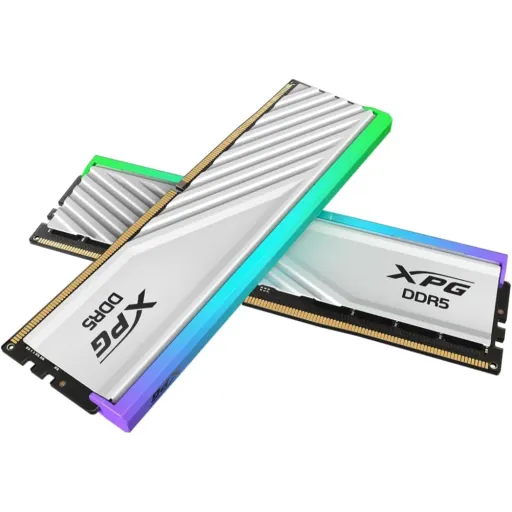
XPG Lancer Blade DDR5


You Might Also Like
Modern PC builds feel faster when memory stays consistent and clean. The XPG Lancer Blade DDR5 is designed for that smooth everyday flow, rozana browsing se le kar late night gaming tak, without turning your build into a bulky showpiece. The compact low profile heatsink is made to fit smaller cases and avoid interference with tower CPU coolers, so installation stays stress free in tight layouts. The desktop friendly form factor is listed as U DIMM, which keeps the upgrade path familiar for most mainstream platforms. The series is shown with tested speeds of 5600, 6000, and 6400 MT/s, letting you pick a practical sweet spot for your CPU and motherboard. Built in PMIC helps stabilize on module power, heat kam hoti hai under load, and that usually translates into steadier sessions. On die ECC is also highlighted for real time correction behavior, which supports reliability in the DDR5 era when densities and speeds climb. This is the kind of RAM choice that keeps performance feeling stable, bilkul drama ke baghair, while your build stays sleek
Smart component fit matters when airflow and clearance are tight. The Lancer Blade DDR5 is positioned around a low profile heatsink concept, jis se big air coolers ke saath clearance usually easy ho jati hai, and the build looks less crowded. The official dimensions are listed as 133.35 x 33.8 x 7.8mm, which helps explain why the module feels compact compared to taller heatspreaders. Pin and slot compatibility stays in the standard desktop lane, because DDR5 DIMMs in this family are shown as DIMM 288 pin in distributor specs. Platform safety is also improved by DDR5’s physical keying, so the notch alignment prevents mismatching with older generations, aapko galat fit ki tension nahi hoti. The color options shown for the Blade line include Black and White, which keeps the aesthetic flexible for minimalist or themed builds. Practical builders will appreciate that this approach focuses on fit and stability first, kyun ke real performance tabhi enjoy hoti hai when the system stays tidy. The result is a DDR5 upgrade that looks intentional and installs without clearance compromises
Reliable first boot is a big deal in DDR5 builds. The Lancer Blade DDR5 lists an SPD speed of 4800 MT/s, which typically serves as a safe baseline so the system posts cleanly before tuning. Rated performance is meant to be reached through profile based setup, and XPG notes that achieving officially advertised overclocking speeds requires enabling XMP or EXPO in BIOS with a compatible motherboard and CPU. Intel XMP is specifically framed as predefined, tested profiles that you can load in BIOS for DDR4/DDR5, jis se manual timing tuning ka headache kam ho jata hai, and the experience feels more plug and play. Intel also documents that XMP 3.0 is designed specifically for DDR5, which matters when you want modern profile behavior on current platforms. The Blade series lists tested speeds of 5600, 6000, and 6400 MT/s, so you can aim for the level that matches your stability goals and cooler setup. XPG also states support for AMD EXPO and Intel XMP 3.0, which keeps platform switching simpler if you build on both ecosystems. This tuning path keeps performance feeling fast, aur setup process asaani se complete hota hai
Stable RAM behavior is what makes a fast PC feel premium. XPG highlights on die error correcting code (ECC) as a real time correction feature that improves stability and reliability during operation. Kingston explains on die ECC as a DDR5 feature intended to correct bit errors within the DRAM chip itself, which helps mitigate reliability risks as densities increase, yeh choti choti errors ko handle karta hai inside the silicon. Practical users feel this benefit in the moments that matter, like long gaming marathons, heavy Chrome tabs, and background apps running together, jahan random hiccups annoying lagtay hain. Kingston also clarifies a key boundary: on die ECC is not the same as full end to end ECC that corrects errors outside the chip or on the bus, so expectations stay realistic for consumer desktops. The Blade approach pairs that DDR5 era correction layer with a low profile, airflow friendly physical design, which helps keep the module in a calm thermal zone. When stability stays predictable, performance bohat stable feel hoti hai, and your system behaves like it was tuned on purpose. This is the kind of hidden quality that doesn’t shout in RGB, but it shows up in fewer crashes and fewer reboots
Power delivery quality influences both stability and thermals. XPG states the Lancer Blade DDR5 includes a built in Power Management IC (PMIC) to enhance power supply stability, and it also notes lower operating voltage behavior as a reason DDR5 can be more power efficient than DDR4. Kingston describes DDR5 PMICs as on board power management that improves distribution and reduces noise compared with previous generations, jis se signal integrity ka benefit bhi milta hai, especially at higher speeds. The Blade specification shows test operating voltage listed across 1.1 1.4V, which supports both conservative daily profiles and performance focused tuning. The default SPD operating voltage is shown as 1.1V, which aligns with the idea of efficient baseline operation for everyday loads. Intel and industry discussions around DDR5 overclocking also highlight that DDR5 DIMMs use PMICs as part of modern tuning behavior, which is why profile based overclocking feels more structured now. For real users, the benefit is simple: power delivery controlled rehti hai, fans calmer behave karte hain, and your system feels less temperamental. This kind of efficiency supports long sessions without the “why did it stutter” worry
Thermal consistency keeps DDR5 performance feeling dependable. XPG emphasizes the compact low profile heatsink design for smaller cases and for avoiding interference with tower CPU coolers, jo builders ke liye direct relief hai when clearance is tight. The official operating temperature range is listed as 0°C to 85°C, which signals a design meant to handle real desktop conditions without being fragile. Physical size is also spelled out in the dimensions 133.35 x 33.8 x 7.8mm, making it easier to plan around big fans, shrouds, and radiator tubing. XPG further points to high quality ICs and PCBs for reliable overclocking behavior, which matters when you want performance without random instability. In daily use, that translates into smoother long gaming sessions, heat kam build hota hai, and fewer moments where performance dips because the system feels stressed. Balanced cooling also keeps your overall case airflow plan simpler, because tall RAM isn’t blocking your CPU cooler path. This is the practical upgrade style that fits both minimalist and performance builds
Every workload benefits when RAM capacity matches reality. XPG lists single module capacities in the Blade lineup as 8GB, 16GB, 24GB, and 32GB, so you can choose a stick size that fits your upgrade plan. Gaming focused builds often feel best with enough headroom for background apps, aur jab Discord, browser tabs, aur launchers saath run karte hain, the system stays responsive. Content creation and productivity also get smoother when memory pressure is lower, because switching between apps feels instant and timeline scrubbing stays less jittery. DDR5 architecture upgrades can help efficiency too, because DDR5 splits the module into two independent 32 bit subchannels to improve access efficiency, jo real world multitasking mein helpful ho sakta hai. The Blade series tested speed options of 5600/6000/6400 MT/s let you pair capacity with speed, so you don’t have to sacrifice one just to chase the other. The low profile physical approach helps keep upgrade paths open, because adding more modules later is simpler when clearance remains clean. This is a practical way to build a machine that feels fast today and stays comfortable as your usage grows
Platform flexibility matters when upgrades happen over time. XPG explicitly lists support for AMD EXPO and Intel XMP 3.0 on the Lancer Blade DDR5, which keeps tuning straightforward across the two biggest desktop ecosystems. AMD describes EXPO as an easy path to DDR5 memory overclocking for Ryzen processors on socket AM5, and the goal is user friendly performance via validated profiles, bilkul one setting wali simplicity. Intel explains XMP as a way to load predefined profiles to overclock compatible DDR4/DDR5 memory through BIOS, which reduces trial and error and makes the experience more consistent. XPG also notes that reaching officially advertised overclocking speeds requires enabling XMP or EXPO in BIOS and using a compatible motherboard and CPU, so expectations stay clear before you buy. This combination helps builders avoid constant re tuning, kyun ke profiles save time and keep settings predictable. The outcome is smoother gaming, faster loads, and fewer stability surprises, especially when you want performance without deep manual tweaking. This is a clean fit for gamers and creators who want reliable DDR5 behavior on both Intel and AMD builds
Long term value comes from choices that stay compatible. The Lancer Blade DDR5 is listed as a DDR5 U DIMM with a compact footprint, which supports mainstream desktop builds without adding bulky height. The low profile heatsink positioning is meant to reduce interference with tower CPU coolers, so future cooler upgrades feel less risky, aur build planning asaani se ho jati hai. The lineup’s tested speeds (5600/6000/6400 MT/s) and capacity options (8GB through 32GB per module) provide a flexible ladder for incremental upgrades instead of forcing an all at once rebuild. Reliability features like built in PMIC and on die ECC are called out as stability focused design choices, which is exactly what you want when the PC needs to just work every day. Warranty coverage is shown as a limited lifetime warranty, adding reassurance for a component that stays in your system for years. When the goal is a refined DDR5 experience, yeh RAM choice performance ko stable rakhti hai and keeps your build looking clean
Here's how current offers compare across retailers.