






Price Breakdown & Availability
Here's how current offers compare across retailers.
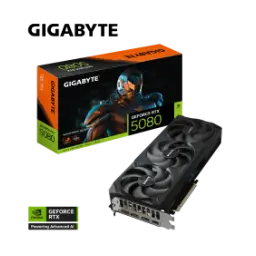
Gigabyte GeForce RTX 5080 Windforce OC SFF

You Might Also Like
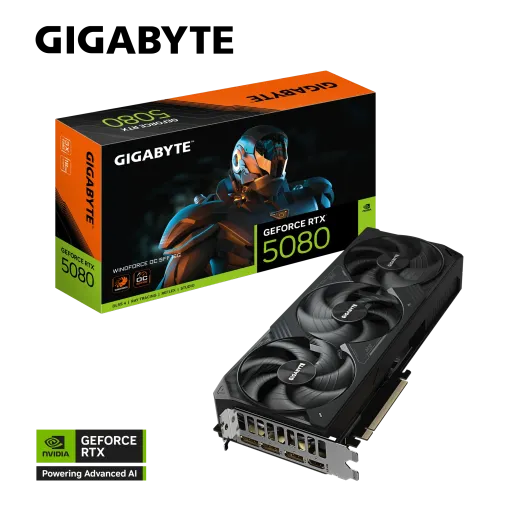
Meet the Gigabyte GeForce RTX 5080 WINDFORCE OC SFF, a compact focused edition that keeps flagship intent while staying build friendly for tighter layouts. This Windforce OC SFF 16G variant runs on the GeForce RTX 5080 platform, choti case planning ke saath, so you don’t feel forced into a huge chassis. Gigabyte integrates 16GB GDDR7 on a 256 bit interface, which means modern textures and heavy assets keep breathing room at higher resolutions. A factory tuned core clock reaches 2670 MHz, asaani se extra headroom mil jata hai, and the uplift is already baked in for everyday play. Dual BIOS gives a clear choice between Performance and Silent, so you can match acoustics to your routine without constant tweaking. The reinforced structure and included VGA holder help control GPU sag, build ke waqt tension kam hoti hai, and the whole setup feels more secure long term. NVIDIA also frames the RTX 5080 as an SFF ready enthusiast class design, which supports the idea that small builds can still target serious performance. When you want a compact gaming and creator core, yeh edition size aur stability dono ko practical banata hai without turning the build into a compromise
Modern monitors deserve modern ports, and this card delivers 3x DisplayPort 2.1b plus 1x HDMI 2.1b for clean, direct hookups. That output layout supports up to four displays, workspace aur gaming dono mein, so a dual monitor plus side panels setup stays simple. NVIDIA notes DisplayPort 2.1b with UHBR20 can reach very high refresh at 4K or push 8K when DSC is used, which helps motion clarity feel crisp during fast camera pans. HDMI 2.1b with DSC also enables high refresh 4K and advanced 8K pathways, living room setup mein bhi, so you can drive a big screen TV without weird compatibility gymnastics. HDCP 2.3 support keeps protected playback straightforward, jab streaming apps open hon, and multi display content stays consistent on supported hardware. Gigabyte lists a maximum digital resolution of 7680 x 4320, which aligns well with an 8K capable output mindset for creators and premium display owners. When a compact SFF case is the goal, fewer adapters means wiring asaani se route hoti hai and airflow is easier to protect
The GeForce RTX 5080 is built with NVIDIA Blackwell, giving you the latest platform aimed at both gamers and creators in one cohesive stack. Gigabyte explicitly positions this model as powered by Blackwell and DLSS 4, matlab aapko AI assisted performance path official support ke saath milta hai, not as a “maybe later” add on. NVIDIA describes DLSS 4 as a suite that uses AI to boost FPS and improve image quality, and it highlights Multi Frame Generation as a key new step for RTX 50 Series cards. Fifth‑Gen Tensor Cores are presented as the AI engine behind FP4 and DLSS 4 capability, so heavy scenes can feel smoother without needing to drop your entire visual preset. Fourth‑Gen Ray Tracing Cores are part of the Blackwell package, roshni aur reflections ka look zyada natural ho jata hai, while keeping performance behavior more predictable. The WINDFORCE OC SFF identity matters here because it pairs AI forward features with a compact board, so you can aim for high detail gameplay without moving to an oversized build. When your priority is stable frame delivery, yeh combination “new architecture + modern upscaling” ko daily gaming mein practical bana deta hai
The memory configuration is the quiet hero here, because 16GB VRAM helps modern games and creator assets stay comfortable at higher resolutions. Gigabyte specifies GDDR7 on a 256 bit memory bus, which keeps data moving efficiently, rozana ke gameplay mein stutter risk kam hota hai, especially when textures and RT settings rise together. The listed memory clock is 30 Gbps, giving the card a modern throughput profile that supports fast asset streaming and heavier scene complexity. TechPowerUp also records the same 16GB GDDR7 and 256 bit setup for this specific WINDFORCE OC SFF model, which helps confirm the core memory identity across databases. TechPowerUp lists effective 30 Gbps memory and calculates 960 GB/s bandwidth, jo high resolution textures aur big open world loads ko zyada relaxed feel de sakta hai, especially when you multitask with background apps. NVIDIA’s own RTX 5080 spec summary also calls out 16 GB GDDR7 with a 256‑bit interface width, keeping the platform message consistent for buyers planning long cycles. If your workflow includes gaming plus creation, yeh memory combo “smooth now, usable later” wali feel ko support karta hai without turning into a spec dump
Small form factor planning gets real when dimensions are clear, and Gigabyte lists this card at L=304 mm, W=126 mm, H=50 mm for straightforward fit checks. That footprint targets the SFF ready intent, choti case mein clearance ka masla pehle din se solve hota hai, especially around front radiators or tight cable bends. B&H describes the card as a 2.5‑slot design, which is a practical reminder that thickness still matters when you’re pairing it with capture cards or limited motherboard spacing. The included VGA holder adds support in compact builds, sag tension kam hoti hai, and your GPU sits more confidently when the system moves for cleaning or upgrades. Gigabyte also mentions a reinforced structure, which is useful for longevity because SFF cases often force tighter angles and more frequent handling. NVIDIA’s RTX 5080 page calls out SFF ready positioning at the platform level, so your SFF goal has support from the reference design mindset too. When a build must look clean and breathe well, yeh sizing clarity aapko guesswork se bachati hai and keeps the upgrade path calmer
Cooling quality decides whether performance feels steady, and Gigabyte equips this edition with the WINDFORCE cooling system for sustained sessions. The WINDFORCE feature list highlights a Hawk fan design, jis se airflow focused feel hota hai, so the card can stay composed during long gaming nights. Gigabyte also calls out server grade thermal conductive gel, which points to a reliability first approach where contact quality stays consistent over time. Dual BIOS adds another practical layer because you can pick Performance for max cooling or Silent for quieter daily use, rozana ke routine ke hisaab se. The card’s 2670 MHz core clock target is easier to appreciate when temps stay under control, because stable thermals help clocks feel less spiky during mixed workloads. NVIDIA lists a maximum GPU temperature spec for the RTX 5080 reference at 88°C, and good partner cooling helps you stay comfortably within intended operating behavior. When you want heat kam and noise under control, yeh cooling strategy makes “compact” feel mature instead of risky
The interface side is straightforward, because Gigabyte specifies PCI‑E 5.0 for the card bus on this WINDFORCE OC SFF model. That PCIe 5.0 x16 platform link is also recorded by TechPowerUp, isliye upgrade planning mein confusion kam hoti hai, especially for newer motherboards and future rebuilds. Power delivery uses a single 16‑pin connector, which keeps cabling cleaner in tight cases and reduces the “octopus” look behind the side panel. Gigabyte lists an included 12V‑2x6 to 3x PCIe 8‑pin adapter in the box, asaani se compatibility mil jati hai, so you can run it even if your PSU is not natively PCIe Gen 5 cabled. NVIDIA recommends an 850W system power level for RTX 5080 reference configurations, which helps set expectations for stable builds under gaming and creator loads. NVIDIA also notes PCIe CEM 5.1 compliance considerations for power, so pairing a modern PSU can reduce connector stress and keep the build dependable. When you plan power properly, yeh GPU “install and enjoy” wali feel deta hai and avoids surprises later
Creator workflows benefit from consistent compute resources, and NVIDIA lists 10,752 CUDA cores for the RTX 5080 platform to support demanding apps alongside gaming. TechPowerUp also identifies 10,752 cores for this exact Gigabyte WINDFORCE OC SFF variant, jis se platform clarity better hoti hai, so you know what level you are buying into. NVIDIA positions GeForce RTX 5080 with NVIDIA Studio support, which matters when you want smoother creative project turnaround without moving to workstation only hardware. The 16GB GDDR7 memory pool helps when timelines grow and assets pile up, editing ke doran “reload, reload” wali frustration kam hoti hai, and the experience stays more fluid. Multi display capability up to four screens supports real workflows, ek screen preview ke liye aur ek editing panels ke liye, while keeping output flexibility intact. NVIDIA’s DP 2.1b and HDMI 2.1b guidance includes high refresh 4K and advanced 8K display paths with DSC, which is ideal for creators who want sharp UI scaling and fast motion review. When your day includes gaming plus output, yeh GPU “work mode” aur “play mode” ko naturally switch karne deta hai without feeling like two separate systems
This RTX 5080 Windforce OC SFF edition fits best when you want high tier performance in a space aware build, especially if your case choice is non negotiable. The 16GB GDDR7 setup is a strong match for modern high resolution gaming and heavy creative assets, rozana ke use mein stability feel hoti hai, because you’re less likely to hit memory pressure at 4K focused settings. The port selection supports a premium desk today, and it stays future friendly for DP 2.1b and HDMI 2.1b display upgrades without adapters. Dual BIOS is valuable for real life because it lets you prioritize silence during work hours, phir raat ko Performance mode for longer sessions, and the switch is built in rather than improvised. NVIDIA’s own RTX 5080 messaging emphasizes Blackwell and DLSS 4 as the game changer layer, which suits buyers who prefer AI assisted scaling instead of constantly lowering settings. If you are comparing tiers by VRAM needs, TechRadar’s 2025 guidance highlights 16GB as a practical target for 4K gaming, which aligns neatly with this card’s memory class. When you want a compact upgrade that still feels modern, yeh Windforce OC SFF pick “ports, memory, cooling, and AI features” ko balanced rakhta hai in a single, clean build
Here's how current offers compare across retailers.
Review current prices and specifications side by side.
Gigabyte
Gigabyte GeForce RTX 5060From Rs. 124,990
Local price
Lowest current price22 offers
Updated 21 hours ago
Gigabyte
Gigabyte GeForce RTX 5070 TiFrom Rs. 340,000
Local price
10 offers
Updated 21 hours ago