



Price Breakdown & Availability
Here's how current offers compare across retailers.
You Might Also Like
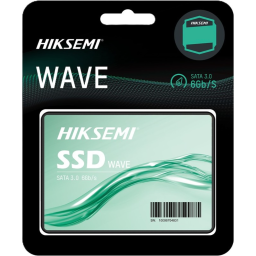
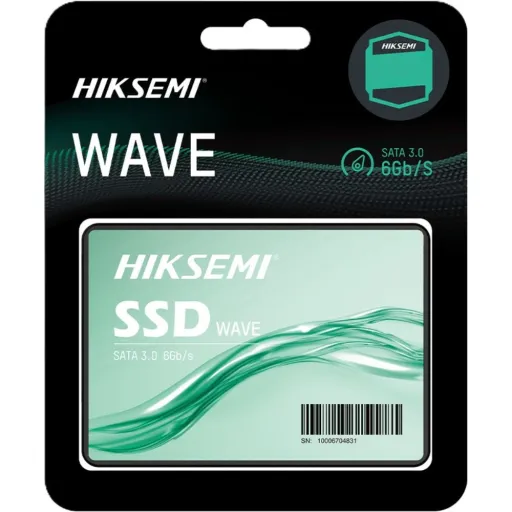
Designed for everyday upgrades and smoother PC responsiveness, the Hiksemi WAVE(S) 2.5in SATA SSD 512GB targets that slow, “waiting” feeling that builds up over time, rozana ke kaam mein. Built around a 2.5 inch SSD format with a SATA interface, it fits familiar upgrade paths for desktops and many laptops, asaani se replace ho jata hai. Moving from a hard drive to flash based storage usually changes the whole vibe of a system, because SSDs have no moving parts and deliver faster access with lower latency. Keystrokes and clicks start feeling more direct, lag nahi hota in the small moments, and everyday apps stop behaving like they need extra time to “warm up.” The 512GB capacity hits a practical balance for most users, letting the OS, core apps, and a real library of files live together without constant cleanup. Built with 3D NAND flash, the drive is positioned for modern consumer storage density and a more refined efficiency profile compared to older planar designs. For a PC that needs reliable daily pace, yeh upgrade workflow ko smooth banata hai while keeping installation and compatibility straightforward
Built for broad compatibility across older and newer machines, the WAVE(S) uses the SATA interface family that remains common in desktops, laptops, and upgrade friendly bays, bilkul easy match. The SATA 6Gb/s class is widely referenced for third generation SATA speed, and it is also designed to be backward compatible with slower SATA generations, so older boards can still run it. With a classic 2.5 inch drive size for internal mounting, it aligns with the long running storage footprint many cases and laptop caddies already support, without any special brackets in most setups. The 2.5 inch slim form factor is commonly associated with 69.85 x 100 x 7 mm dimensions, which keeps fitment predictable in typical 7mm bays, haath se fit check simple rehta hai. Many product listings for this series also describe the physical size around 10 x 6.9 x 0.7 cm, which maps to that familiar 2.5 inch footprint for straightforward installation. Cable routing stays simple with standard SATA data and power leads, wiring ka jhanjhat kam hota hai, and the upgrade feels like a clean swap rather than a platform change. This is the kind of SSD choice that keeps upgrades practical, especially when the goal is speed and stability without changing the motherboard
Built on 3D NAND flash storage medium, the Hiksemi WAVE(S) focuses on the mainstream SSD approach of stacking memory cells vertically for better density, performance potential, and efficiency. The 3D NAND concept is broadly defined as vertically stacked layers of cells, which helps drive higher capacity in compact footprints, aur is se upgrades zyada practical ho jati hain. Even large capacities can remain feasible in standard 2.5 inch SSDs, and industry discussions around 3D NAND highlight how stacking supports pushing capacity within conventional form factors. For everyday computing, this matters because a stable flash platform helps keep performance consistent under routine installs, updates, and file saves, rozana ke workload mein. The end result is a storage feel that stays responsive for OS tasks, app launches, and regular file handling, while keeping power usage in a more controlled range than mechanical drives. Hiksemi explicitly lists 3D NAND as the storage medium for the WAVE(S) series, which anchors the drive in a modern SSD baseline rather than older flash approaches. When the goal is a dependable daily SSD, yeh technology choice “invisible” benefits deti hai that show up as smoother routines instead of flashy marketing
Built for the SATA performance ceiling, the WAVE(S) series lists max sequential read in the 460 510 MB/s range and max sequential write in the 360 460 MB/s range, capacity dependent. Some regional listings for the 512GB variant cite sequential read up to 530 MB/s and sequential write up to 400 MB/s, which can help set expectations for real world benchmark ranges, results thore different ho sakte hain. The SATA interface itself has a well known throughput limit around 600 MB/s for SATA III class links, so strong SATA SSDs tend to cluster near that ceiling rather than leap beyond it. In daily usage, these numbers translate into quicker boot sequences, faster app loads, and smoother updates, bilkul khas taur par older HDD systems par. Random access and lower latency are where SSDs usually feel the most transformative, because the system stops waiting on spinning media and starts responding instantly to small reads, lag ka masla kam hota hai. Hiksemi also publishes 4K random IOPS ranges for the WAVE(S) line, which signals that the series is positioned for responsive everyday interaction, not just big file copies. When a PC needs faster “feel” rather than just a spec sheet, yeh SATA SSD wali smoothness consistently daily workflow ko uplift karti hai
Built around a roomy 512GB capacity for daily flexibility, this variant gives enough space for Windows, productivity apps, and a comfortable project folder structure, storage anxiety kam hoti hai. A practical half terabyte drive makes it easier to install essential tools and still keep free space for updates and caches, which helps the system stay smooth under routine use. The WAVE(S) series itself is published across a wide capacity span from 120GB up to 4096GB, which positions 512GB as a mainstream sweet spot in that lineup. For gamers and creators who juggle multiple installs, 512GB can hold a core game rotation or a working media library without constant uninstall cycles, rozana ka jhanjhat kam hota hai. The 2.5 inch form factor also keeps it easy to add into a desktop as a primary drive or a secondary library drive, depending on how the system is already set up. If the goal is a single drive upgrade that feels modern, this capacity tier avoids the “too small” trap while staying manageable for backups and migration, planning asaan rehti hai. When storage feels organized, kaam ka flow better hota hai, and the PC stays responsive because the drive is not constantly operating at near full capacity
Built to stay efficient during routine workloads, the WAVE(S) series lists max power consumption in a 1.3W to 3.7W range depending on capacity and activity. Lower power use often means less heat output, so the system can stay calmer in day to day tasks, heat kam rehti hai, and fan noise tends to be less irritating. The SSD design has no moving mechanical parts, which typically improves durability against bumps and also removes the constant vibration and spinning noise you get with hard drives. In laptops, this efficiency angle can matter even more, because storage power draw stacks with display and CPU usage, battery backup thori better feel ho sakti hai in light tasks. Hiksemi positions the WAVE(S) around stable data transmission and everyday reliability, which pairs well with an efficiency first approach for long sessions. When the system stays cooler, sustained responsiveness is easier to maintain, aur performance bohat stable lagti hai during updates, downloads, and multitasking. For office work, study setups, and home PCs, yeh quiet efficiency overall experience ko refined banati hai without needing any tuning
Built with reliability metrics published for the series, Hiksemi lists an MTBF of 1,500,000 hours for the WAVE(S) line, which is a common way vendors communicate expected reliability targets. The WAVE(S) series also includes a TBW range from 40TB up to 1920TB depending on the specific capacity, giving a broad endurance context for the lineup, use case pe depend karta hai. The operating temperature range is listed as 0°C to 70°C, which helps for typical PC environments where airflow and ambient heat can vary, ghar ya office dono mein. The drive weight is listed at up to 34.4 g, which reflects the lightweight nature of SSD builds compared to many HDDs, handling asaan hoti hai. Hiksemi also markets the series with anti shock and anti fall positioning, and that aligns with the general SSD advantage of having no moving parts that can be mechanically misaligned by a bump. The warranty for the series is listed as 3 years, adding a straightforward support expectation for everyday buyers. When a system holds important files, yeh reliability framing peace of mind build karti hai while keeping the focus on smooth daily performance
Built for simple migration from older storage, a 2.5 inch SATA SSD upgrade usually pairs well with drive cloning or a clean OS install, dono options practical hain. After installation, enabling TRIM support is a smart long term habit, because TRIM helps SSDs maintain performance and can reduce unnecessary write amplification over time, performance drop ka chance kam hota hai. Good SSD hygiene also means avoiding traditional defragmentation routines, since SSD behavior and wear patterns differ from HDDs and modern systems handle SSD optimization differently. Keeping some free space on the drive helps background management stay comfortable, so writes remain responsive, rozana ke installs aur updates mein. The SATA 6Gb/s ecosystem is designed for broad interoperability, so the same drive can often move between PCs if needed, making it a flexible upgrade asset. Hiksemi’s WAVE(S) positioning around stable transmission fits well with these best practices, because a clean software setup lets the hardware show its strengths. When setup stays tidy, system ka overall feel fast rehta hai, and the SSD delivers its best behavior without constant troubleshooting
Built for buyers who want predictable upgrades, the Hiksemi WAVE(S) 512GB makes sense for desktops and laptops that still rely on SATA bays and need a meaningful responsiveness boost, bilkul without platform changes. A SATA SSD is often the most noticeable upgrade for older systems, because SSDs reduce latency and improve the overall speed feel compared to mechanical drives in everyday tasks. The 512GB capacity tier supports real daily usage patterns, letting the system keep apps and working files together without constant moving and deleting, storage kafi lagti hai. Published sequential performance for the WAVE(S) line sits in typical high SATA ranges, which matches what most users should expect from a well tuned SATA 6Gb/s SSD. The 2.5 inch form factor keeps compatibility broad, and the lightweight, no moving parts SSD design supports quieter operation and better shock tolerance than HDDs. If the target is smooth Windows use, fast app launches, and reliable storage behavior, yeh drive practical category mein strong pick banti hai, while staying grounded in standard SATA hardware. The result is a cleaner, faster daily experience that feels modern even on a familiar machine
Here's how current offers compare across retailers.
Review current prices and specifications side by side.