







Price Breakdown & Availability
Here's how current offers compare across retailers.
You Might Also Like
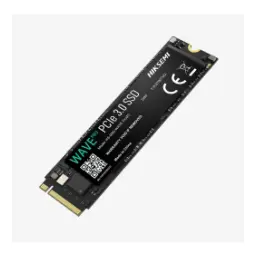
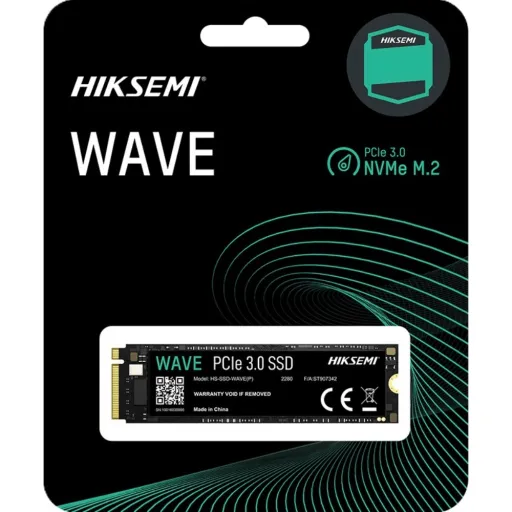
Built for daily PCs and practical upgrades, the Hiksemi WAVE(P) targets faster boot, quicker app launches, and smoother file handling, rozana ke kaam mein bilkul noticeable. Designed around PCIe 3.0 NVMe technology, it brings modern storage response without the cable clutter of older drives, aur setup bhi zyada messy nahi hota. Rated for read speeds up to 2500MB/s, the drive is built to reduce waiting in real workflows like copying folders, installing games, and loading projects. Keystrokes and clicks feel more immediate when storage stops being the bottleneck, so multitasking ka flow smooth rehta hai. The WAVE(P) uses 3D NAND as its storage medium, which supports compact capacity scaling and consistent everyday behavior in typical consumer use. Offered in common capacities from 128GB up to 1024GB, it fits both starter builds and mainstream upgrades without forcing a complicated compatibility hunt. Marketed for office and gaming performance needs, it aims at the kind of speed that shows up in load times and responsiveness rather than only synthetic charts, kaam bhi aur fun bhi. The overall idea stays simple: move the system to NVMe, and the whole machine feels less delayed under everyday pressure
Engineered for parallel I/O behavior, NVMe relies on a high performance queuing mechanism that supports 65,535 I/O queues with 65,535 commands each, jo heavy multitasking mein bottleneck ko todta hai. Built on the PCI Express bus, this architecture is designed to reduce overhead and keep commands flowing efficiently, which can translate into faster system responsiveness under mixed workloads. Paired with PCIe 3.0 bandwidth, an x4 link can deliver an effective one direction data rate around 3,938 MB/s, so the interface itself has enough headroom for fast consumer NVMe behavior. Chasing smooth performance is not only about big file copies, kyun ke random reads and small requests also benefit when queues stay efficient. Specified as a PCIe 3.0 NVMe SSD, Hiksemi WAVE(P) sits in the widely compatible Gen3 lane where many desktops and laptops can still unlock a clear upgrade from SATA era storage. Everyday actions like opening multiple apps, switching projects, or launching a game library can feel less interrupted when storage command handling is built for parallelism, lag nahi hota. While peak numbers vary by system and capacity, the interface foundation is the key reason the upgrade feels immediate in normal use
Built on modern flash stacking, 3D NAND increases capacity by stacking memory cells, which is one reason it became the preferred direction for most SSD designs. Designed with more available cells than older 2D approaches, 3D NAND can also provide more total write cycles in practice because there are more cells to distribute wear across, rozana ke writes mein tension kam hoti hai. Used as the storage medium inside Hiksemi WAVE(P), the product is explicitly listed as 3D NAND, aligning it with today’s mainstream SSD construction rather than legacy flash layouts. Kept in a compact M.2 module, this approach supports slim builds and cable free layouts where airflow and space matter, especially small cases ya laptop upgrades. Balanced performance is often the real win of modern NAND designs, because the drive is not just chasing a bursty benchmark but aiming for consistent day to day file operations. When paired with NVMe’s parallel queue model, 3D NAND based SSDs are positioned to keep interaction snappy even when multiple background tasks are reading and writing simultaneously
Rated at 1,500,000 hours MTBF, Hiksemi WAVE(P) is positioned with a reliability metric that signals long run design intent for consumer workloads. Defined as Mean Time Between Failures, MTBF is a statistical measure expressed in hours that reflects expected operation between failures across a large population, yeh single drive ki guaranteed life nahi hoti. Understood the right way, this number is best used as a comparative reliability indicator when choosing between similar class drives for daily systems and office rigs. Mentioned alongside modern NVMe architecture, the reliability target matters because a faster drive only helps if it stays stable under routine loads, bilkul stable performance chahiye hoti hai. Listed on the product spec sheet area, this MTBF figure complements other practical signals like operating temperature limits and warranty period, helping buyers judge overall fit. For everyday users, the takeaway is simple: MTBF is about reliability expectations at scale, and the WAVE(P) is specced with a high MTBF value for its consumer tier
Designed in the common M.2 2280 size, Hiksemi WAVE(P) fits the mainstream motherboard slot format used across modern desktops and many laptops. Explained in plain sizing terms, M.2 2280 means the module is 22mm wide and 80mm long, so you can match the standoff position easily, asaani se. Built for internal expansion, the M.2 connector ecosystem can carry PCI Express or SATA depending on the slot and drive, so checking that your slot supports NVMe over PCIe is the smart compatibility step. Kept cable free on the board, an M.2 NVMe setup reduces clutter and can improve build cleanliness, which helps airflow and makes maintenance less annoying. Matched with a PCIe interface in the WAVE(P) spec, the physical format and the protocol combine into a neat, modern storage lane for OS and apps. If your device has more than one M.2 slot, the best slot choice can depend on lane sharing and platform rules, so the motherboard manual still matters for maximum speeds and fewer surprises
Tuned for efficiency across capacities, Hiksemi WAVE(P) lists max power consumption from 1.3W up to 3.1W depending on the model, which supports cooler day to day operation. Kept under control in many builds, lower power draw can mean heat kam, less fan ramping, and fewer thermal spikes around the M.2 area during long installs or game downloads. Rated for an operating temperature of 0 to 70C, the drive is specced for typical PC environments where airflow varies between small cases and roomy towers. Designed at a lightweight profile, the module weight is listed as
Offered in 128GB, 256GB, 512GB, and 1024GB capacities, Hiksemi WAVE(P) lets you choose based on how much you install and how long you plan to keep the system. Anchored by endurance ratings, the TBW values range from 80TB to 240TB across the lineup, which helps you match the drive to write heavy tasks like frequent installs or content exports. Defined as Terabytes Written, TBW indicates how much total data you can write to an SSD over its lifetime endurance rating, yeh simple durability signal hota hai. Balanced for normal users, a higher capacity SSD often ends up feeling more comfortable because apps, updates, and caches have room to breathe, storage kafi lagti hai. Chosen with intent, 512GB can suit OS plus core apps and a few games, while 1TB gives a calmer experience for large libraries and creative scratch space. Kept within the official spec envelope, the endurance and capacity pairing is what makes the upgrade feel durable rather than only fast for the first month
Built to accelerate common PC moments, Hiksemi WAVE(P) lists sequential read figures up to 2450MB/s on the 1024GB model, while the headline read claim reaches up to 2500MB/s depending on configuration. Tuned for write behavior too, the 1024GB model is listed up to 2450MB/s sequential write, so large copies and installs can finish sooner when the source is fast enough. Driven by random access performance, the spec shows up to 460K 4K random read IOPS on the 512GB configuration, which helps small file loading and app start patterns feel more instant, lag nahi hota. Kept practical for mixed tasks, 4K random write IOPS are listed up to 335K on the 512GB model, supporting smoother background updates and cache writes in daily use. Explained by NVMe’s design, the queue based model is built for parallel command handling, which helps the drive feel responsive even when several apps hit storage at once. When paired with an OS on the SSD, the real benefit is less waiting between actions, so your system feels more direct without needing a new CPU
Planned like a clean upgrade, installing an M.2 NVMe SSD typically involves locating the M.2 slot, inserting the drive at about a 30 degree angle, and securing it with the small screw or latch. Kept safe from small mistakes, the standoff position should match the module length, and 2280 specifically refers to the 80mm length that many boards support, asaani se verify ho jata hai. Confirmed on the product spec, Hiksemi WAVE(P) is an M.2 2280 drive, so you can align the mounting point correctly and avoid forcing anything. Checked before purchase, your slot should support PCIe/NVMe rather than only SATA M.2, because the M.2 connector can carry multiple protocols depending on the device and platform. Finished with a migration plan, you can install the drive as secondary storage first and clone later if you want to switch the boot drive without reinstalling everything, bilkul tension free approach. Chosen with the right capacity and endurance, the WAVE(P) becomes the kind of upgrade that keeps your system feeling quick long after the first boot, while staying grounded in its PCIe 3.0 NVMe and 3D NAND design
Here's how current offers compare across retailers.