
Price Breakdown & Availability
Here's how current offers compare across retailers.
You Might Also Like
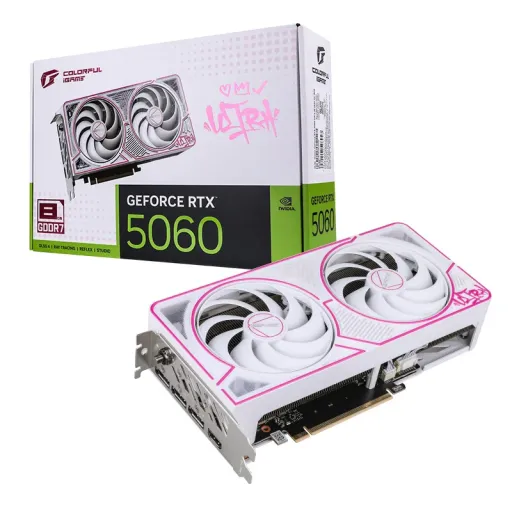
This iGame Ultra W Duo OC edition blends performance with personality, rozana gaming se le kar light creation tak, while keeping the build aesthetic cohesive. The white and pink color scheme looks striking through a glass side panel and helps a themed setup feel intentional. The hip hop style hollowed backboard is designed to let airflow pass through, heat kam rehta hai, so long sessions feel less stressful. The Duo cooler approach stays compact and focuses on practical compatibility for smaller cases. The listed dual slot design and ~231mm length make installation easier, asaani se, especially when clearance is tight. The large horizontal RGB lighting and "iGame ULTRA" pattern add visible character without turning the card into a bulky showpiece. The one key overclock concept keeps tweaking simple, thori si extra kick mil jati hai, while still feeling approachable for first time builders. The Ultra W DUO series positioning is also framed for SFF and HTPC style builds, so you can prioritize neat layout over oversized coolers
This RTX 5060 iGame variant is built around NVIDIA’s Blackwell generation, which targets AI driven graphics and more advanced ray tracing capabilities. The Blackwell based GeForce RTX 50 Series is described with fifth generation Tensor Cores and fourth generation RT Cores, so games and creator tools can lean harder into AI features, bilkul modern workflow jaisa. The DLSS 4 feature set is positioned as a major multiplier, especially when supported titles can use Multi Frame Generation for higher frame rates. The transformer based DLSS models are presented as improving stability and detail, which helps motion look cleaner when you pan fast, smooth scrolling aur camera turns mein. The RTX 50 Series messaging also emphasizes neural shaders and AI enhanced graphics, turning "features" into a more consistent day to day experience. The practical benefit is less time fighting settings, kyun ke AI uplift options zyada mature feel hotay hain, and more time playing or creating. The Ultra W Duo OC styling then wraps that platform in a card that looks like a deliberate upgrade, not just another black slab
An 8GB GDDR7 frame buffer gives the card modern memory behavior with higher effective speeds than older mainstream generations. The listed 128 bit bus and 28 Gbps effective memory rate translate into 448 GB/s bandwidth, which helps textures and assets move with less friction, gameplay feel zyada stable. The GDDR7 shift is also broadly discussed as a generation wide step for RTX 50 series cards, aimed at boosting bandwidth without always widening the bus. The Micron GDDR7 overview highlights up to 60% higher bandwidth than GDDR6 and over 50% better efficiency, so memory throughput can rise without the same power penalty, battery jaisa nahi but heat pressure kam hota hai. The real world win is fewer "micro stalls" during heavy scenes, asaani se, because the GPU spends less time waiting on data. The 8GB capacity is best treated as a focused, competitive tier choice, where smart settings plus DLSS can keep experience smooth in demanding titles. The overall memory package is designed to feel quick and current, while staying inside a compact, dual fan board class
This GPU configuration is listed with 3840 CUDA cores, giving it a strong baseline for modern raster workloads in its class. The core layout is paired with Blackwell generation RT and Tensor blocks in the same database listing, so ray tracing and AI features stay integrated, sirf marketing nahi. The listed clocks show a base of 2280 MHz with an OC boost around 2580 MHz, which can make the system feel snappier in bursty moments. The 32MB L2 cache noted for this GPU helps reduce trips out to VRAM in some patterns, which can tighten frametimes, performance bohat stable feel hoti hai. The practical advantage is smoother multitasking on the desktop, where overlays, voice chat, and a browser can stay open without the system feeling fragile. The Blackwell positioning also centers on AI enhanced graphics and DLSS 4, so you can trade raw load for smarter rendering when a game gets heavy. The end result is a card that feels responsive in daily use, rozana ke kaam mein, not just in benchmark charts
This Ultra W DUO design focuses on airflow efficiency and visual identity at the same time. The official highlights call out an "Ultra Cooling System" with ring shaped fans, so sustained sessions stay more comfortable, heat kam aur noise discipline rehta hai. The series description also mentions a hollowed back panel concept to let hot air pass through, which is a practical touch for tighter cases, asaani se airflow better ho jata hai. The board listing pegs the card at a 145W TDP, which is a range where cooling quality directly affects how "steady" the boost feels. The dual slot format keeps the cooler practical for mainstream builds, while still leaving room for cable routing and clean airflow paths. The dual fan positioning is also described as a compact form factor with two 90mm fans in the series announcement, which fits the idea of "small build, big vibe" for SFF users. The real payoff is fewer temperature spikes during long matches, bilkul, so performance stays predictable and comfortable
This card includes a modern port layout aimed at high refresh setups. The listed outputs show three DisplayPort 2.1b ports plus one HDMI 2.1b, so multi monitor desks and a TV hookup both remain simple. The DisplayPort versus HDMI discussion often favors DisplayPort for PC gaming flexibility, and DisplayPort 2.1 is highlighted for higher bandwidth potential, which helps future proof nicer panels, aankhon ko crisp motion milta hai. The HDMI 2.1b port remains practical for living room displays, while DisplayPort ports stay ideal for desk monitors with VRR and high refresh habits. The point is not just "more ports," balkay easier upgrades, because you can keep existing cables while still gaining next gen signaling options. The result is a cleaner setup for creators and gamers who run a main display plus a second productivity screen, multitasking asaan ho jati hai
This RTX 5060 board is positioned as a gamer creator crossover tool. The GPU database notes a 9th gen NVENC and 6th gen NVDEC media block, which supports smoother capture, streaming, and playback workflows without hammering the CPU, editing bhi smooth feel hoti hai. The GeForce RTX 50 Series messaging also emphasizes NVIDIA Studio for creators, so the ecosystem is designed around real apps, not only games. The practical benefit is a cleaner workflow when you record gameplay, export clips, or run a stream overlay while playing, koi extra tension nahi. The 8GB GDDR7 configuration can still do serious work when you keep assets organized and use hardware acceleration where it matters. The Blackwell foundation is also framed around AI driven rendering and neural features, which can matter for creative pipelines that lean into AI tools, asaani se. The end result is a card that supports content output with less friction, while keeping the system visually distinctive
This board keeps upgrades straightforward for mainstream PCs. The specs list a PCIe 5.0 x8 interface, which is aligned with the RTX 50 generation platform direction while still being easy to drop into modern motherboards. The power connector is shown as a single 8 pin, so compatibility stays friendly with existing PSUs, asaani se swap ho jata hai. The card dimensions are listed around 231mm length in a dual slot profile, which reduces case compatibility guesswork in mid towers and many compact builds. The Ultra W DUO series positioning also highlights compact dual fan intent for small form factor and HTPC builders, so it’s not designed to feel oversized in tighter layouts, bilkul practical. The one key overclock feature keeps experimentation easy, so you can test a bit more boost without complex software tuning. The overall build experience feels cleaner when the card fits quickly and cables remain manageable, build karte waqt frustration kam hoti hai
This Colorful RTX 5060 iGame variant makes the most sense for focused, high value builds. The Blackwell to GDDR7 transition is discussed as a meaningful generational shift in memory and platform behavior, which helps this tier feel modern even without oversized specs, overall experience refined rehta hai. The specific configuration here is listed as 8GB GDDR7 on a 128 bit bus with 448 GB/s bandwidth, which suits competitive and everyday play when settings are chosen smartly. The honest trade off is VRAM capacity, and hands on coverage has noted that 8GB can become a limiting factor in the most demanding scenarios, especially when ultra ray tracing presets pile on memory pressure, so planning matters. The good news is DLSS 4 and Blackwell AI rendering are positioned to help smooth performance scaling, meaning you can keep visuals strong without brute forcing everything, asaani se balance ban jata hai. The aesthetic and cooling identity is also a real differentiator, with Colorful highlighting ring shaped fans, RGB lighting, and the Ultra W design language. The extended warranty note adds extra peace of mind if registration is completed, which matters when a GPU is meant to stay in a build for years. The best fit is a buyer who wants Blackwell features, modern outputs, and a stylish compact card, rozana reliable feel ke sath, while staying realistic about 8GB memory planning
Here's how current offers compare across retailers.