
Price Breakdown & Availability
Here's how current offers compare across retailers.
You Might Also Like
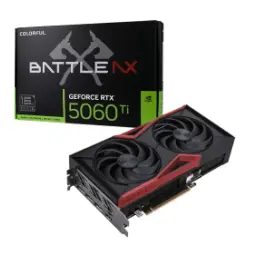
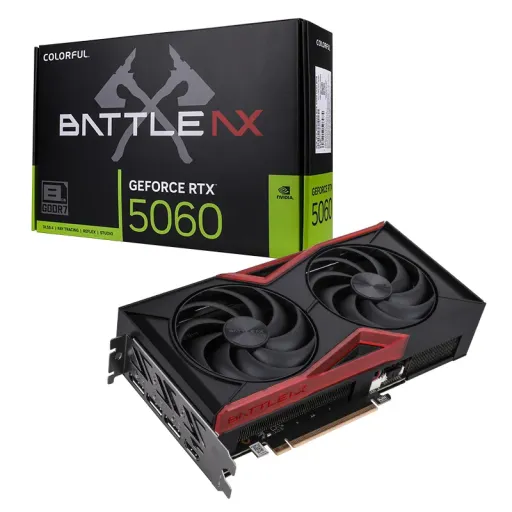
The Colorful GeForce RTX 5060 Battle AX DUO targets builders who want a strong looking GPU that still stays practical for everyday play. The red and black contrast styling adds a sharp, aggressive vibe, lekin overall look clean rehta hai for most gaming setups. The metallic hollowed backboard is not just decoration; yeh card ko sturdier feel deta hai and helps the build look more “finished” inside a glass case. The side RGB lighting gives you that subtle highlight without needing extra LED strips, aur aap apni build theme ko asaani se match kar sakte ho. The Axe Cooling System with ring shaped fans is designed for sustained sessions, taake heat jaldi se nikal jaye and boosts zyada stable rahen. The DUO concept fits a sweet spot for most mid tower builds, kyun ke dual fan airflow usually balances cooling and noise without making the card oversized. Aapko yeh overall package “battle ready” feel deta hai, lekin daily use mein bhi refined lagta hai
The NVIDIA Blackwell based GeForce RTX 50 platform focuses on pushing more performance through AI assisted rendering, so your games feel smoother at higher settings. DLSS 4 introduces Multi Frame Generation and expands transformer based improvements for stability, which helps motion look cleaner during fast camera pans. The RTX 5060 class is positioned as an accessible entry into this feature stack, aur yeh aapko modern ray tracing + AI scaling ka combo day to day gaming mein de deta hai. The key win is how DLSS workflows reduce the need to drop resolution aggressively, matlab 1080p ya 1440p pe visuals sharp reh sakte hain while frame delivery stays consistent. Blackwell’s generational jump also refreshes the RT and Tensor blocks, so lighting and AI upscaling work feels less like an “extra mode” and more like a normal setting you can keep enabled. Tom’s Hardware notes the broader Blackwell move to GDDR7 across the RTX 50 lineup, which supports the idea of higher bandwidth at similar bus widths for smoother data feeding in modern engines. In simple terms, yeh GPU un logon ke liye hai jo “settings up” rakhna chahte hain while keeping input feel controlled and the experience stable
The RTX 5060 configuration brings 3,840 CUDA cores, which is enough parallel compute to keep modern engines responsive without forcing you into ultra high power draw territory. TechPowerUp’s board database lists 3,840 cores for Colorful’s RTX 5060 DUO designs, along with the GB206 GPU foundation, so you’re getting a real Blackwell generation silicon base. The same reference shows 30 SMs, 30 RT cores, and 120 Tensor cores, jo ray tracing aur AI features ko practical banate hain in supported games and apps. For esports style titles, this kind of core count usually translates into steady frame pacing, taake micro stutter kam ho and aim tracking smooth feel kare. For story games, the benefit is “headroom,” meaning you can hold higher textures, better shadows, and cleaner anti aliasing while staying in a comfortable FPS zone. The Verge also highlights that the standard RTX 5060 uses 3,840 CUDA cores, so this is the intended baseline for the lineup rather than an oddball cut down part. In real build planning terms, yeh card un logon ko suit karta hai jo high refresh 1080p chahte hain and a controlled, predictable performance profile at 1440p
The memory setup matters because modern games stream assets constantly, and a faster pipe reduces the “loading in” feel during chaotic scenes. This Battle AX DUO class is specified with 8GB of GDDR7 on a 128 bit bus, and listings for the matching NB DUO 8GB V show 448GB/s bandwidth as the practical result. The same spec source notes a 28Gbps memory clock, jo GDDR7 ke fast signaling ka benefit hai and supports higher throughput even without a wide bus. JEDEC’s GDDR7 standard (JESD239) is built around PAM3 signaling and is positioned to deliver significantly higher bandwidth and better efficiency compared to older GDDR generations, which is exactly why RTX 50 series boards moved to it. Tom’s Hardware also discusses that many Blackwell RTX 50 GPUs run GDDR7 at around 28 Gbps, reinforcing that this speed tier is a normal target for the generation. The practical takeaway is simple: aapko smoother texture delivery milti hai, and the card feels less “choked” when scenes get dense, while many everyday titles still run comfortably within an 8GB memory pool
The RTX 5060 tier is designed for gamers who care about consistent frame delivery more than chasing extreme power numbers. The Verge describes RTX 5060 as the entry model in the RTX 50 series and calls out its GDDR7 memory, DLSS 4 support, and updated ray tracing/tensor hardware, which is the exact feature mix that makes modern settings easier to live with. When ray tracing is enabled selectively, the AI upscaling pipeline helps preserve playable FPS, aur aap apni settings ko “balanced” rakh kar bhi premium lighting ka taste le sakte ho. NVIDIA’s own Blackwell announcement frames DLSS 4 as a major performance multiplier through Multi Frame Generation, which is useful when you want to push resolution or heavier effects. For high refresh monitors, the smoother the frametime curve, the more the game feels locked in, matlab fast flicks aur quick peeks pe control better lagta hai. Tom’s Hardware also highlights that Blackwell’s broader shift to GDDR7 increases bandwidth over similar bus widths, which supports stability when games are streaming textures and geometry continuously. Overall, yeh card aapko “choose your style” flexibility deta hai: competitive titles mein high FPS priority, aur cinematic games mein extra effects without turning the experience into a stutter fest
Cooling quality matters because sustained gaming is where many GPUs show their true character. Colorful highlights the Axe Cooling System with ring shaped fans on the Battle AX DUO, which is aimed at keeping airflow focused across the heatsink for better long session stability. The metallic hollowed backboard adds structure and supports the card’s premium look, aur practical taur par airflow ko obstruct nahi karta like fully sealed plates sometimes do. Distributor listings for the NB DUO 8GB V mention Auto Stop Technology, which typically means fans can idle down at light desktop loads for quieter daily use. The same spec sheet frames this as a standard fan cooled design with a compact dual fan footprint, so case airflow planning stays simple. In everyday language, heat kam rehti hai to clocks zyada der stable rehte hain, and your gameplay feels predictable instead of “fast for five minutes, then slow.” The RGB side lighting also stays tasteful for most setups, giving you a visual cue that the GPU is the centerpiece without screaming for attention
A future facing GPU should connect cleanly to modern displays. The Colorful RTX 5060 NB DUO 8GB V spec listing shows 3× DisplayPort 2.1b plus 1× HDMI 2.1b, which keeps multi monitor setups straightforward for gaming and productivity. TechPowerUp also lists this RTX 5060 DUO board class with HDMI 2.1b and DisplayPort 2.1b outputs, reinforcing that you’re buying into a modern I/O generation. Power wiring stays simple because the card uses a single 8 pin connector on the same spec sheet, so you avoid adapter clutter, bilkul clean build ho jati hai in most mid range PSUs. The board level data also points to a 145W TDP, which is the kind of envelope that usually keeps thermals manageable without needing oversized cases. TechPowerUp’s database notes PCIe 5.0 x8 for this RTX 5060 DUO design family, which aligns with the generation’s move to modern platform support. The practical benefit is low drama installation: aap plug in karo, cables route karo, and your upgrade looks tidy while staying ready for newer monitors
A modern GPU should do more than just game. The Colorful RTX 5060 NB DUO 8GB V listings call out NVIDIA feature support like DLSS 4, Reflex, and Studio, which matters when you want low latency feel plus stable creative app behavior. NVIDIA’s Blackwell announcement emphasizes DLSS 4 and Reflex working together to boost performance while maintaining responsiveness, which is especially useful for competitive games and live streaming overlays. TechPowerUp’s GB206 notes also list updated generation blocks like newer RT and Tensor cores and a modern NVENC/NVDEC stack, which supports smoother capture, playback, and hardware accelerated workflows. When you edit clips or scrub timelines, extra bandwidth and efficient encoding reduce waiting time, aur aap ka workflow “ruk ruk” kar nahi chalta. For streamers, stable thermals and predictable clocks are the real quality of life feature, because dropped frames feel worse than slightly lower peak FPS. The best part is how these benefits show up quietly: aapko fewer hiccups, smoother previews, and cleaner frame pacing milti hai without turning your PC into a loud heater
Choosing the right GPU is easier with clear expectations. The RTX 5060 spec baseline includes 3,840 CUDA cores and 8GB VRAM, and coverage around the launch notes that NVIDIA positioned 8GB as a cost/performance balance for this tier, so it’s important to plan settings wisely in heavier new titles. The Colorful board listing shows 8GB GDDR7 with a 128 bit bus and 448GB/s bandwidth, which is strong throughput for the class, especially when paired with DLSS 4 and sensible texture choices. The same spec sheet recommends a 550W PSU, so builders can keep power planning comfortable, aur upgrade ke baad random shutdown ka risk low rehta hai. JEDEC’s GDDR7 standard exists to push higher bandwidth and better efficiency than prior generations, which supports why this card feels “new gen” even with a 128 bit interface. This Battle AX DUO edition makes the most sense for high refresh 1080p, smooth 1440p with balanced settings, and hybrid creator gamer use, jahan stability aur efficiency bohat matter karti hai. The final win is confidence in daily behavior: aapko modern ports, modern memory, and modern AI features milte hain in a build friendly dual fan design
Here's how current offers compare across retailers.