Price Breakdown & Availability
Here's how current offers compare across retailers.
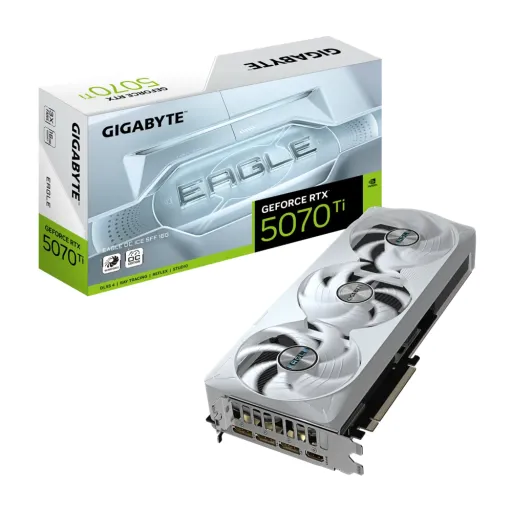
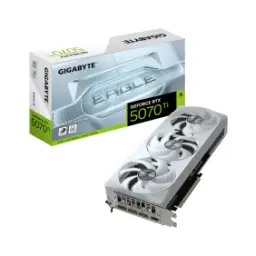
Gigabyte GeForce RTX 5070 Ti EAGLE OC ICE SFF
You Might Also Like
Meet the Gigabyte GeForce RTX 5070 Ti EAGLE OC ICE SFF, a graphics card that targets high end gaming and creator workloads while staying SFF minded for modern builds. This edition pairs the RTX 5070 Ti GPU with 16GB GDDR7 on a 256 bit interface, so large textures and heavy scenes feel zyada relaxed in real use. The OC tuning pushes a 2542 MHz core clock versus a 2452 MHz reference figure, which helps bursty gameplay feel crisp, bilkul snappy. The underlying feature stack is positioned around NVIDIA Blackwell and DLSS 4, giving you a forward looking platform for newer engines and AI enhanced rendering. The 8960 CUDA core configuration keeps raster performance strong, and it also supports smoother creative acceleration when timelines, layers, aur effects stack ho jate hain. The PCI E 5.0 interface is ready for current platforms, so bandwidth bottlenecks are less of a worry in a clean, balanced build. The ICE styling leans into a lighter, premium aesthetic that suits white or contrast builds, aur overall look classy lagta hai. The goal here is simple: keep performance flagship tier, while physical footprint and usability stay practical for everyday ownership
Small form factor builders often need strict measurements, and this card lands at L=304 W=126 H=50 mm for predictable planning. The NVIDIA SFF Ready guideline calls out limits like 304 mm max length and 50 mm max depth, so case compatibility checks become straightforward, asaani se. The Gigabyte product positioning explicitly labels the model as NVIDIA SFF ready, which reduces the guesswork that usually happens with tight clearances. The included versatile VGA holder supports the card in real builds, especially when you want less sag and a more stable long term fit. The reinforced structure callout is meant to keep the shroud and PCB feeling solid, haath se install karte waqt confidence rehta hai. The 16 pin connector choice also influences layout, because cable bend room matters more in compact enclosures where every millimeter counts. The end result is a GPU that feels purpose built for SFF rather than simply “short enough,” and that difference shows up during building and maintenance
Display connectivity stays future facing with three DisplayPort 2.1b ports and one HDMI 2.1b, so you can wire up high refresh panels and TVs without adapters. The digital maximum resolution is listed at 7680 x 4320, which keeps the door open for 8K workflows and ultra high res capture, zarurat par. Multi view support for up to four displays helps productivity and streaming layouts, jahan chat, game, aur tools ek saath chalne chahiye. The port selection also aligns with the broader RTX 5070 Ti board design shown in databases, reinforcing that you are getting the expected modern I/O mix. The practical benefit is simpler: one PC can run a fast main monitor plus side panels, and switching contexts stays smooth with less cable drama, bilkul. The graphics API support includes DirectX 12 and OpenGL 4.6, which helps compatibility across current game engines and many creative apps used daily. The overall experience feels ready for today’s mixed setups, whether that means competitive play, editing, or a clean multi monitor workstation
Core performance starts with 8960 CUDA cores and an OC core clock rated at 2542 MHz, giving you strong baseline throughput before any software uplift kicks in. The same OC uplift is reflected in third party spec databases, which helps validate that the EAGLE OC ICE SFF tuning is a real step up from reference behavior. The Blackwell positioning on the product page emphasizes DLSS 4 support, which matters because many modern titles rely on AI rendering to keep visuals high while FPS stays stable, lag nahi. NVIDIA describes DLSS Multi Frame Generation as generating up to three additional frames per traditionally rendered frame, which can lift perceived smoothness heavily in supported games. NVIDIA also frames DLSS 4 as capable of up to 8X performance increases versus brute force rendering in certain scenarios, so it is best treated as a situational turbo rather than a guaranteed number. Responsiveness stays in focus with Reflex 2 and Frame Warp, and NVIDIA states Reflex 2 can reduce PC latency by up to 75% in supported implementations. The real win is balance: you can chase high frames, keep motion clarity, and still feel controllable input, especially jab competitive titles mein flicks aur tracking matter karte hain
Memory is where this card feels “comfortable” long term, because 16GB of GDDR7 gives room for higher resolution textures, heavier mods, and larger creative caches. The 256 bit bus and 28 Gbps memory speed are explicitly listed by Gigabyte, which supports the idea of consistent bandwidth for 1440p and 4K class usage. TechPowerUp reports the 28 Gbps effective speed translating to 896.0 GB/s of memory bandwidth, which is the kind of throughput that helps avoid sudden dips when assets stream in, bilkul. The practical effect is fewer “VRAM spikes” turning into stutter, especially when you keep textures high and let the GPU breathe instead of constantly trimming settings. The 16GB capacity also helps creators who keep multiple apps open, where timelines, previews, aur browser tabs sab ek saath chal rahe hotay hain. The point is not just bigger numbers; the point is predictability, because stable memory behavior makes the whole PC feel more responsive in day to day use
Thermals define sustained performance, and Gigabyte pairs this card with the WINDFORCE cooling system built around Hawk fans and a tuned airflow path. Gigabyte states the Hawk fan blade design can deliver up to a 53.6% increase in air pressure and a 12.5% increase in air volume, which targets better cooling without turning noise into a constant issue. Alternate spinning is used to reduce turbulence between adjacent fans, so airflow stays more focused, aur heat kam feel hoti hai under load. Gigabyte also calls out server grade thermal conductive gel as part of the design, alongside composite copper heat pipes and a large copper plate for heat transfer. Dual BIOS support (Performance or Silent) gives you an easy choice between maximizing clocks or keeping acoustics calmer, without constant manual tuning. RGB lighting is included for controlled personalization, lekin focus abhi bhi cooling aur stability par rehta hai. The overall benefit is simple: when temperatures are controlled, boost behavior stays steadier and long sessions feel less “throttly” in real gameplay
Power planning stays straightforward with a single 16 pin connector and a 750W recommended PSU rating from Gigabyte. The included adapter is listed as a 12V 2x6 to 2x PCIe 8 pin option, which helps older PSUs integrate while you keep the build neat, asaani se. The PCI E 5.0 card bus keeps platform compatibility aligned with current motherboards, so you get a modern backbone for upgrades over time. The SFF focused dimensions also matter for cable routing, because tight cases need clean bends and clear airflow, warna heat aur clutter dono barh jate hain. The card’s published 304 x 126 x 50 mm size helps you choose cases and PSU cables with fewer surprises, which is a big deal for SFF builders who hate rework. The outcome is a build that feels planned instead of “forced,” and that usually translates into better temps and less maintenance later
Creator workflows benefit when the GPU stack is complete, and Gigabyte highlights NVIDIA Studio tools plus NVIDIA Broadcast for AI assisted audio and video cleanup. The same page calls out a ninth gen NVIDIA Encoder, which matters for streamers who want cleaner output and faster exports, rozana ke content schedule mein. TechPowerUp also lists NVENC as 9th Gen on the RTX 5070 Ti family, supporting the idea that this tier is aimed at both gaming and production. The 16GB GDDR7 memory pool helps keep heavier project files responsive, so preview scrubbing and multitasking feel less cramped over time. DLSS 4’s transformer model improvements are positioned by NVIDIA as image quality upgrades for Super Resolution and Ray Reconstruction, which can be useful when you want better clarity while still keeping performance, bilkul balanced. The end goal is a GPU that supports both play and output, because modern users often game, edit, and stream from the same compact PC
Real world positioning becomes clearer through reviews, and The Verge benchmarked the RTX 5070 Ti as delivering performance close to an RTX 4080 class card in many scenarios. The same review noted roughly a 14% uplift over RTX 4070 Ti at 4K and around 22% at 1440p, which frames this tier as a meaningful jump for many upgraders. This particular Gigabyte EAGLE OC ICE SFF variant adds a rated 2542 MHz core clock, so it aims to squeeze extra headroom while staying inside an SFF ready size envelope. The modern I/O mix of DisplayPort 2.1b and HDMI 2.1b supports new monitors and TVs cleanly, jo future upgrades ko easy banata hai. DLSS 4 Multi Frame Generation can generate up to three additional frames per rendered frame in supported titles, which is especially valuable when you want higher smoothness without dropping visual settings hard. The closing takeaway is practical: you get 16GB GDDR7 headroom, SFF friendly dimensions, and a current gen AI rendering stack, all in a card that is built to live comfortably in compact cases
Here's how current offers compare across retailers.
Review current prices and specifications side by side.
Gigabyte
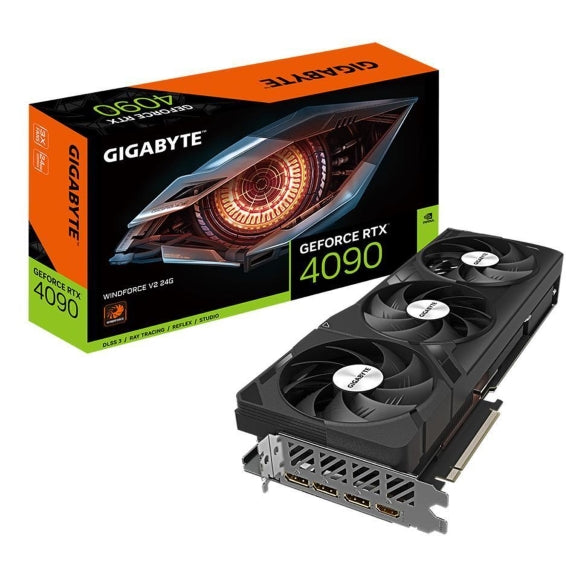
Gigabyte GeForce RTX 4090From Rs. 637,000
Local price
1 offer
Updated 23 hours ago
Gigabyte
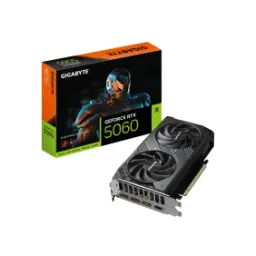
Gigabyte GeForce RTX 5060From Rs. 124,990
Local price
Lowest current price22 offers
Updated 23 hours ago