



Price Breakdown & Availability
Here's how current offers compare across retailers.
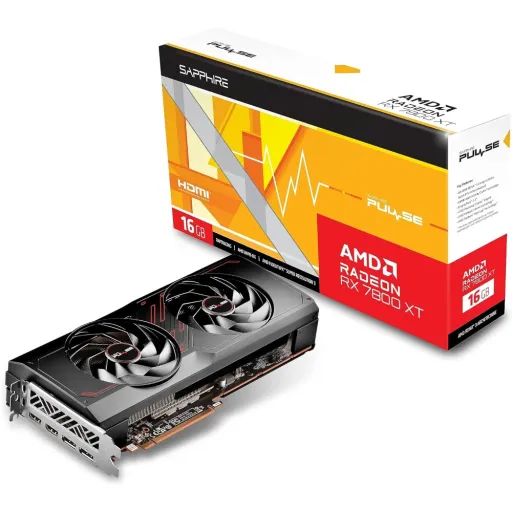
Sapphire Radeon RX 7800 XT Pulse

You Might Also Like
Sapphire’s Radeon RX 7800 XT PULSE is built for players who want a focused, no nonsense GPU that feels premium in daily use, bina extra drama ke. This card is based on AMD’s RDNA 3 architecture, so you get the modern feature set that today’s game engines actually lean on for smooth frames and better efficiency. The core configuration is strong for its tier, featuring 3840 stream processors and 60 compute units, which translates into stable throughput when scenes get busy and effects stack up. Sapphire pairs that GPU with 16GB of GDDR6 on a 256 bit memory bus, and that headroom matters when textures are heavy, mods get ambitious, ya phir you simply want fewer compromises at 1440p. The PULSE edition also keeps the build practical with a dual fan, 2.5 slot cooling design, which helps maintain consistent clocks without turning your case into a heater, heat kam rehta hai in long sessions. TechPowerUp’s database confirms the PULSE variant’s core spec profile around the RX 7800 XT baseline (3840 shaders, 16GB GDDR6, 256 bit), which is the foundation behind its “plays everything at 1440p” identity. If the goal is a balanced enthusiast class experience that stays composed across esports, AAA, and creator side workloads, this is the kind of card that fits, bilkul practical choice
Real world gaming feels better when performance is predictable, aur frame pacing stable ho, and the RX 7800 XT class is widely treated as a strong 1440p option. TechPowerUp’s review conclusion notes the RX 7800 XT is a great card for 1440p gaming and can “easily reach over 60 FPS” with maximized settings in all but the most demanding games, which is exactly the kind of consistency most buyers actually want. TechSpot’s testing also frames the 7800 XT as a capable 1440p performer, often landing near or above competing options in many rasterized workloads, jo rozana ke titles mein zyada matter karta hai. Competitive titles benefit from this “headroom feeling” because dips are less dramatic, so aim tracking and camera sweeps stay smooth, lag nahi hota when the action spikes. Ray tracing can still be heavier than comparable NVIDIA options in many games, so the smarter approach is treating RT as a tuning dial rather than an always on checkbox, especially when you want high refresh motion clarity. Upscaling support also changes the practical ceiling for 4K attempts, because it lets you trade a bit of render resolution for better FPS without making the image look soft, asaani se settings balance ho jati hain. If your monitor is 1440p high refresh, this GPU tier is built to feel “effortlessly responsive” more often than not, and that daily smoothness is where the PULSE personality shines
Modern game engines reward balanced compute and bandwidth, aur RDNA 3 is designed around that reality rather than only chasing peak numbers. The RX 7800 XT configuration delivers 60 compute units with 3840 stream processors, giving you the shader density needed for high settings at 1440p and solid scaling when you add heavier post processing. Sapphire lists up to 2430 MHz boost clock and up to 2124 MHz game clock for the PULSE, which helps keep average performance feeling consistent instead of spiky. TechPowerUp’s RX 7800 XT review highlights RDNA 3 architectural changes like dual issue rate compute units and AMD’s stated IPC uplift claims, which is part of why newer Radeon generations can feel more “efficient per frame” in a lot of mixed workloads, performance bohat stable hoti hai when tuned right. The same review also discusses ray accelerator improvements as a generational focus, but it’s still wise to think of ray tracing as situational, because raster performance is where this class consistently shines across the widest library. The practical takeaway is simple: high settings stay accessible, motion stays clean, and the GPU has the modern baseline support expected from a current gen enthusiast card, including DirectX 12 Ultimate capability as noted in the RX 7800 XT spec listings
VRAM capacity matters more as games evolve, kyun ke textures, shaders, and world detail are trending upward every year. Sapphire equips the PULSE RX 7800 XT with 16GB of GDDR6 on a 256 bit bus, which is a meaningful comfort zone for 1440p high textures and for creators juggling large assets. Sapphire also lists a 19.5 Gbps effective memory clock, giving the card strong throughput for feeding the GPU without constant “memory pressure” moments. TechPowerUp’s RX 7800 XT specification listing ties that 19.5 Gbps memory speed to roughly 624 GB/s of memory bandwidth, which helps explain why the card stays composed when scenes get busy and lots of data moves per frame, stutter ka chance kam hota hai. Infinity Cache also plays a role in keeping effective latency and bandwidth behavior competitive, and Sapphire lists 64MB Infinity Cache for the PULSE model. This combination is especially helpful in open world titles and modern shooters where high res texture packs can punish smaller VRAM pools, and it also supports smoother multitasking on a multi monitor setup where a game, browser, aur Discord saath chal rahe hon. The end result is not just higher averages, but a calmer experience when the game gets heavy, which is the upgrade most people feel within the first week
Sustained performance depends on cooling quality, aur PULSE cards are built around practical thermals instead of flashy extras. Sapphire lists Dual‑X Cooling Technology, optimized composite heatpipes, intelligent fan control, and a metal backplate on the RX 7800 XT PULSE, which collectively help the GPU hold boost behavior more consistently in longer sessions. Sapphire also emphasizes fuse protection on the PCIe power connector circuit, a small but meaningful reliability detail for daily use where power spikes can happen, peace of mind rehta hai. Sapphire notes the dual ball bearing fans have an approximately 85% longer lifespan than sleeve bearings in their tests, and the fan solution is described as up to 10% quieter than the previous generation, which directly targets the “PC should not scream” problem. Sapphire’s detailed PULSE cooling notes also describe the Angular Velocity Fan Blade design as delivering up to 44% more downward air pressure and up to 19% more airflow versus previous generations, improving cooling efficiency while keeping acoustics more controlled, fan noise kam hota hai. The same technical page references a high TG copper PCB and power design choices meant for stability under load, which is exactly what you want when gaming marathons stretch into hours
Driver features matter when they are easy to use, aur AMD leans into one click optimization for common gaming goals. AMD’s HYPR‑RX profiles are designed to let multiple features interoperate at the same time (including Radeon Super Resolution, FidelityFX Super Resolution, Radeon Anti‑Lag, and Radeon Boost where applicable), which helps you chase higher FPS and lower latency without juggling ten toggles. AMD Radeon Anti‑Lag is positioned as a latency reduction feature for DirectX 9/11/12 titles on supported hardware, and it is especially relevant when you want fast click to response behavior in esports, responsiveness bilkul tight feel hoti hai. AMD Radeon Boost is designed to dynamically adjust resolution behavior during fast motion to improve FPS with minimal perceived quality impact, which can be useful when fights get chaotic and you want the GPU to feel more immediate. AMD’s Adrenalin Edition application is built as the hub where these features, game stats, and driver updates are managed, so the tuning workflow stays straightforward even for first time Radeon owners, asaani se setup ho jata hai. These tools are not a replacement for good hardware, but paired with a strong 1440p class GPU they let you tailor the feel of motion, input, and clarity per game, without turning optimization into a part time job
Upscaling works best when it preserves detail, aur AMD’s FidelityFX approach gives a practical route to higher FPS in supported titles. GPUOpen describes FidelityFX Super Resolution 2 as an open source temporal upscaling solution that uses temporal algorithms to reconstruct fine detail and provide anti aliased output, which is exactly what you want when you drop render resolution but still want the image to look crisp. GPUOpen also explains FidelityFX Super Resolution 3 as extending FSR 2 by adding frame generation through new technologies like frame interpolation and optical flow enhancements, which can be a big deal in supported games when you are chasing smoother motion for high refresh displays, smooth scrolling jaisi feel gameplay mein aa jati hai. TechPowerUp’s RX 7800 XT conclusion notes that 4K with decent framerates becomes more feasible if you dial down details or use an upscaling technology, which is the realistic “quality versus speed” strategy many players use today. Sapphire’s own PULSE product page lists AMD FidelityFX Super Resolution among supported features for the platform, reinforcing that this GPU is meant to participate in the modern upscaling ecosystem rather than brute force everything at native resolution. The practical advantage is flexibility: you can keep textures high and motion clean, phir resolution strategy ko game by game adjust kar sakte hain without feeling stuck
System compatibility feels easy when dimensions are clear, aur the RX 7800 XT PULSE is built like a serious, modern card. Sapphire lists the PULSE form factor as a 2.5 slot ATX design with dimensions of 280(L) x 128.75(W) x 52.57(H) mm, so you can plan case clearance and front radiator spacing with less guesswork. Sapphire also specifies a PCI‑Express 4.0 x16 interface, which is the standard you expect for this performance class and keeps platform integration straightforward on modern boards. Power delivery is handled via two 8 pin connectors, and Sapphire lists 266W total board power plus a minimum 700W PSU recommendation, which is the practical checklist item that prevents random stability issues later, tension kam hoti hai build time par. Display connectivity is also modern, with Sapphire listing up to four displays and outputs of 2x HDMI plus 2x DisplayPort, making dual monitor productivity and high refresh gaming setups easy to wire. Sapphire further lists 8K class maximum resolution support for HDMI and DisplayPort 2.1, which is useful for future monitor upgrades and for creators who preview high res content
A smart GPU choice balances speed and stability, aur the PULSE edition’s identity is exactly that kind of everyday reliability. TechPowerUp’s testing summary positions the RX 7800 XT as a strong 1440p option that can beat or closely compete with alternatives in many rasterized scenarios, which aligns with the “high settings, low stress” goal for most gamers. TechSpot’s review data similarly shows the 7800 XT trading blows favorably in many 1440p results, reinforcing that this tier is built around real world playable performance rather than niche benchmarks, performance kaam ka hota hai. Ray tracing remains more demanding and can favor competing approaches, so the best experience usually comes from combining selective RT settings with upscaling when supported, which keeps visuals rich without sacrificing responsiveness. Sapphire’s PULSE design choices then handle the “long session” side of ownership, including fuse protection, Dual‑X cooling, and dual ball bearing fans aimed at durability and quieter operation, so the card stays calm under load, heat kam aur noise bhi controlled. Sapphire’s TriXX Boost also offers a practical FPS uplift approach by lowering render resolution and upscaling with Radeon Image Sharpening, which is useful when you want quick gains without deep per game tweaking. If you want a modern 16GB Radeon that feels “set up once, enjoy daily,” the Sapphire RX 7800 XT PULSE fits that role cleanly while keeping the feature path open for the software stack that AMD continues to push forward
Here's how current offers compare across retailers.
Review current prices and specifications side by side.
 Current
Sapphire
Sapphire Radeon RX 7800 XT PulseRs. 174,990
Local price
2 offers
Updated 8 hours ago
Sapphire
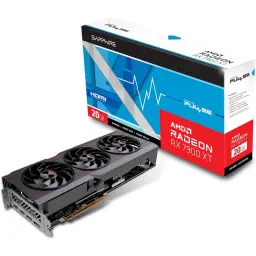
Sapphire Radeon RX 7900 XTFrom Rs. 254,790
Local price
4 offers
Updated 8 hours ago
Sapphire
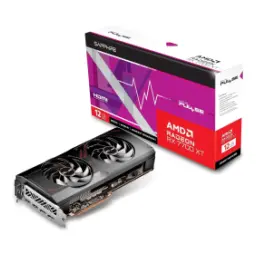
Sapphire Radeon RX 7700 XTFrom Rs. 139,000
Local price
Lowest current price11 offers
Updated 8 hours ago