Price Breakdown & Availability
Here's how current offers compare across retailers.
You Might Also Like
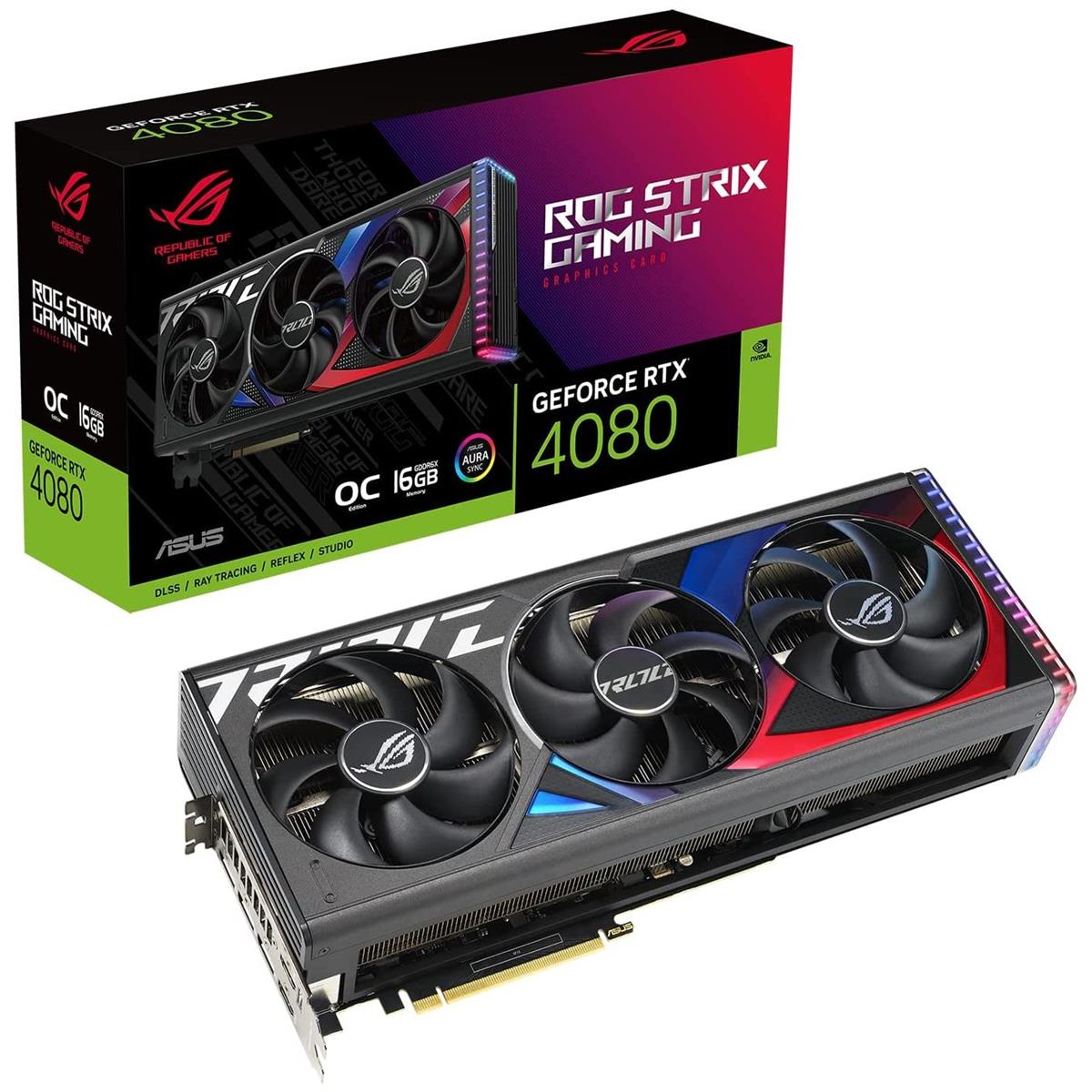
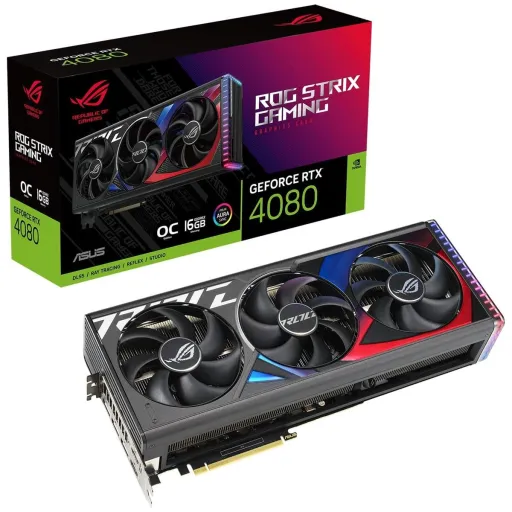
This ASUS ROG Strix OC Edition is built for enthusiasts who want flagship tier performance with the kind of cooling headroom that stays stable in real sessions, rozana ke long gaming marathons mein. The core platform is NVIDIA GeForce RTX 4080 with 9728 CUDA cores, so high refresh 1440p and serious 4K workloads feel practical instead of “settings roulette.” The card carries 16GB GDDR6X on a 256 bit interface, which helps keep texture heavy modern games smooth, aur 4K assets par frame pacing zyada consistent rehti hai. The factory OC profile reaches an advertised 2655 MHz in OC mode, meaning out of box boost behavior is tuned for buyers who prefer performance with minimal fiddling. The Ada Lovelace generation focus is efficiency per frame, so you can push visual quality without every upgrade turning into a power and heat headache, bilkul practical sense mein. The ROG Strix design language also adds Aura Sync ARGB support, so the card can visually match a coordinated build while staying functional first. This is the kind of GPU that fits buyers aiming for a premium “one strong upgrade” cycle rather than frequent incremental swaps, because the spec balance is already aligned to high end targets
This graphics card supports a digital max resolution of 7680 x 4320, so the output pipeline is ready for extreme resolution displays and high detail productivity, jab aapka workflow heavy ho. The I/O layout includes two native HDMI 2.1a ports and three native DisplayPort 1.4a ports, which makes multi monitor setups straightforward without adapters in most real desks. The maximum display support is listed as four monitors, so a dual workspace + gaming panel combination stays easy to manage, aur cable planning simple rehti hai. The HDCP support is specified as 2.3, which matters for protected playback workflows and modern streaming device compatibility in a clean living room PC. This output flexibility pairs well with high refresh monitors, because smoother frame delivery looks best when the signal path and display link are not the bottleneck. The practical benefit is daily comfort: fewer dongles, fewer odd handshakes, and less troubleshooting, asaani se setup complete ho jata hai. The result is a GPU that can anchor both a creator desk and an enthusiast gaming corner, without forcing you to choose one use case
This RTX 4080 class GPU is built on NVIDIA’s Ada Lovelace generation, which targets stronger performance and power efficiency so demanding scenes feel less punishing on thermals, heat kam rehti hai. The ROG Strix OC Edition lists 9728 CUDA cores, making it a serious compute base for modern game engines and GPU accelerated apps. The factory clock tuning is also clearly defined with a 2625 MHz boost in default mode and 2655 MHz in OC mode, which helps set expectations for stock performance behavior. The larger advantage is consistency: strong baseline throughput reduces the need to drop resolution or compromise on texture quality when a game gets busy. The Ada architecture’s Tensor Cores are positioned to accelerate AI driven features like DLSS 3, so performance gains can come with controlled image quality tradeoffs, bilkul smart tareeqay se. The real feel upgrade shows up in moment to moment input: quick camera pans, fast traversal, and heavier combat effects stay readable when the GPU has headroom. The ROG Strix line also emphasizes chart topping thermal performance as part of its identity, which matters because clocks only help when they can be sustained. This is a balanced “performance plus stability” profile, designed for people who want speed zabardast but also want the system to feel calm and predictable
This generation brings third generation RT Cores, so ray tracing workloads can be handled with better throughput and smarter handling of complex scene details, jab lighting heavy ho. The Ada Lovelace stack also highlights fourth generation Tensor Cores designed to accelerate DLSS 3, which is often the difference between “looks amazing” and “plays smooth” in modern AAA settings. The RTX 4080 family specifications place it inside a feature set that includes DLSS support and Ada architecture benefits, so the card is not only raw horsepower but also a toolbox for smarter rendering. The ROG Strix product messaging specifically calls out 4th Gen Tensor Cores and 3rd Gen RT Cores plus an “up to 4x” DLSS 3 claim versus brute force rendering, which sets the intention: higher perceived performance while keeping visuals premium, bilkul. The practical benefit is quality control: you can keep reflections and global lighting effects enabled in more titles, then lean on DLSS options when native becomes expensive. The RTX 4080 is listed with 9728 CUDA cores in NVIDIA’s own comparison table, anchoring that feature suite with the compute needed to keep ray tracing responsive. The end result feels less like compromise and more like tuning, because you can prioritize clarity, stability, and responsiveness together
This ROG Strix cooler design focuses on airflow and contact quality so clocks can stay high without sudden thermal dips, aur fan noise zyada spike nahi karta. The product page highlights Axial tech fans scaled up for 23% more airflow, which directly supports stable performance during long sessions. The same design notes a patented vapor chamber with a milled heatspreader for lower GPU temperatures, which matters because consistent temperatures usually mean more consistent frame pacing. The 3.5 slot form factor is part of that thermal intent, because larger fin area and airflow paths give the cooler more room to work without rushing. The official tech specs list a 3.5 slot card with dimensions of 357.6 x 149.3 x 70.1 mm, so case clearance planning should be taken seriously before buying. The chassis approach mentions a diecast shroud, frame, and backplate with venting for airflow and heat dissipation, which supports durability and helps avoid “sag anxiety,” haath mein bhi solid engineering feel hoti hai. This is the kind of cooling first build that fits people who want performance stable across hours, not just fast in a short benchmark burst
This GPU is specified with a 750W recommended PSU, which helps keep the whole system stable when both CPU and GPU boost together. The power connector is listed as one 16 pin, so cable routing and adapter placement should be planned carefully for a neat build, asaani se. The ROG Strix design also calls out digital power control with high current power stages and 15K capacitors to fuel maximum performance, which is meaningful for load stability under spikes. The practical takeaway is confidence: fewer random crashes under mixed workloads, aur long gaming + streaming sessions zyada reliable feel hotay hain. The software bundle mentions ASUS GPU Tweak III availability, so tuning fan curves or power behavior can be approached in a familiar interface instead of only third party tools. The card is also built with Auto Extreme precision automated manufacturing for higher reliability, which supports buyers who want a premium component that feels consistent over time. This is not only about raw wattage, because stable delivery and clean thermals combine to keep boosts predictable, performance bohat stable rehti hai
This card ships with 16GB of GDDR6X memory, which matters for high resolution texture packs and heavier ray traced assets where VRAM pressure can cause stutters, bilkul annoying lag. The memory interface width is 256 bit, giving the platform the bandwidth characteristics expected in an enthusiast tier where 4K detail needs room to breathe. The ROG Strix OC Edition also lists a 22.4 Gbps memory speed, helping textures, geometry, and modern effects move smoothly through the pipeline during fast scene changes. The TechPowerUp database entry reinforces the same core configuration for this specific ROG STRIX RTX4080 O16G GAMING model, which is useful when cross checking builds and compatibility lists. The real benefit for many buyers is multitasking comfort: streaming, recording, browser tabs, and a demanding game can coexist with fewer “memory squeeze” moments, rozana ke use mein. The Ada architecture also emphasizes advanced video acceleration and an optimized AV1 stack, which supports modern streaming and content workflows in a more efficient way. This is a memory setup that aims to stay relevant across multiple game cycles, because capacity and bandwidth together often age better than clocks alone
This GPU uses PCI Express 4.0 as its bus standard, which keeps it aligned with modern motherboards and avoids needless platform mismatches. The RTX 40 Series platform messaging also highlights Resizable BAR support as a PCI Express feature that can improve performance in many games, making it a sensible checkbox for new builds. The practical angle is simple: when the CPU can access the full GPU frame buffer, some titles gain smoother delivery without you having to change visual presets, asaani se. The ROG Strix OC Edition has a physically large cooler footprint, so PCIe slot spacing, front radiator placement, and cable clearance should be planned before purchase. The official dimensions are listed at 357.6 mm length, which can be the difference between a clean install and a stressful rebuild in tighter cases, bilkul. The output layout also supports up to four displays, which pairs well with a modern PCIe platform for both productivity and gaming desks. This is the kind of card that rewards thoughtful system planning, because once installed correctly it tends to feel “set and forget” stable
This RTX 4080 sits in a clear comparison stack where NVIDIA lists it at 9728 CUDA cores and 16GB GDDR6X, placing it firmly in the enthusiast tier for serious gaming and creation. The same table shows the RTX 4080 SUPER carries 10240 CUDA cores, which helps buyers understand the positioning without guessing, aur decision zyada clear ho jata hai. The ROG Strix OC Edition’s value add is not only the OC clock figure but also the thermal design choices like Axial tech fans and a vapor chamber, which support sustained performance in real rooms. The official OC mode boost clock is listed at 2655 MHz, giving an immediate uplift profile without needing manual tuning on day one. The recommended PSU is 750W and the power input is a single 16 pin, so the build expectation is “high end but manageable” rather than exotic. The Ada Lovelace feature stack also supports modern AI driven rendering like DLSS 3, so longevity is not only about brute force but also about feature relevance, future titles mein bhi kaam aata hai. This is a strong pick for buyers who want a premium cooler, premium PCB approach, and a defined OC profile in one cohesive package, without drifting into unpredictable “too hot to hold” behavior
Here's how current offers compare across retailers.
Review current prices and specifications side by side.