


Price Breakdown & Availability
Here's how current offers compare across retailers.
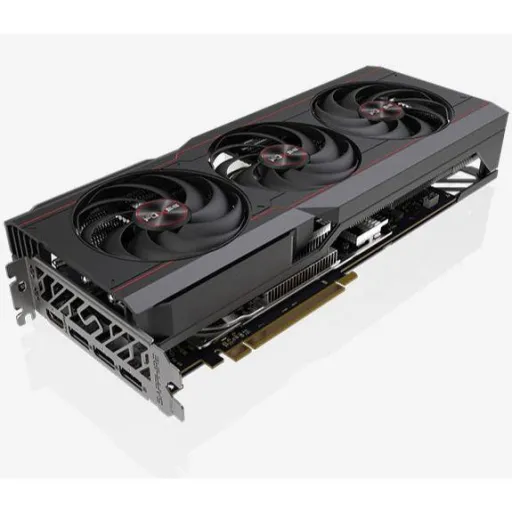
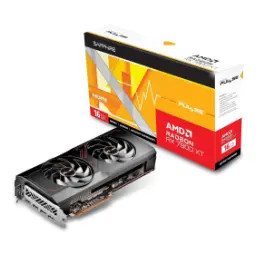
Sapphire AMD Radeon RX 6800 XT Pulse

Current Price
-
Lowest (30d)
-
Highest (30d)
-
30-Day Change
-
Showing daily prices
You Might Also Like
This Sapphire PULSE RX 6800 XT centers on balanced high end performance for demanding play and creation, without turning your build into a fragile showpiece. The GPU foundation is AMD Radeon RX 6800 XT on RDNA 2 architecture, jo modern engines ko efficiently handle karta hai, and it’s built for long sessions when consistency matters. The card runs on a PCI Express 4.0 x16 interface, so bandwidth bottlenecks usually stay out of the conversation in current desktop platforms. The onboard memory is 16GB GDDR6, which keeps high resolution textures comfortable, rozana ke AAA titles mein bhi, so you spend less time trimming settings. The PULSE tuning targets boost clocks up to 2310 MHz with a game clock up to 2065 MHz, meaning most real gameplay stays fast and responsive rather than peaking briefly. This generation’s headline includes 128MB of Infinity Cache, jo latency ko reduce karne mein help karta hai, and it supports the kind of high detail 4K/1440p workloads people actually run. The overall positioning stays “serious 4K capable” without being overly niche, so it fits gaming, streaming, and creative pipelines with the same confident core. AMD highlights RX 6000 series cards as designed to power demanding 4K workloads with 16GB GDDR6, is liye yeh card upscale goals ko realistic banata hai, while keeping the setup straightforward
This graphics card is built to push sharp pixels, especially when your monitor setup demands both clarity and stability. The PULSE output layout includes 1x HDMI and 3x DisplayPort, so multi monitor desk setups asaani se plan ho jati hain, and cable juggling stays minimal. The card supports up to four displays, which matters for creators who keep timelines, reference, and chat open together during long workflows. The listed maximum resolution reaches 7680×4320 over HDMI and DisplayPort 1.4, so high res panels and capture pipelines don’t immediately force compromises. The practical benefit is smoother day to day navigation, rozana browsing se le kar editing tak, because the GPU is not constantly struggling just to keep the desktop responsive. DirectX 12 Ultimate support is part of the RX 6800 XT platform, which keeps modern feature paths available when games lean into newer rendering techniques. The “visual feel” becomes about consistency rather than peak numbers, aur jab aap window switching ya overlays use karte ho, experience refined rehta hai. Strong output flexibility also makes upgrades easier, since you can move from 1440p high refresh to 4K without rethinking the entire GPU tier. The design goal stays simple: keep motion clean, keep edges crisp, and keep your display options open for whatever the next monitor upgrade looks like. SAPPHIRE positions this PULSE model with a 4K game index, jo is baat ko reinforce karta hai, while keeping the product focus grounded in real use
This RX 6800 XT configuration is about brute capability you can actually feel during play and heavy multitasking. The PULSE spec includes 4608 stream processors, which translates into strong shading throughput for modern lighting, particles, and high detail scenes. The underlying RX 6800 XT design enables 72 compute units, so parallel workloads scale well when games throw complex geometry and effects at the GPU. The same layout maps to 72 Ray Accelerators, jo hardware level ray workloads ko handle karte hain, so supported titles can add realism without instantly collapsing performance. The PULSE clocks are tuned with a game clock up to 2065 MHz and boost up to 2310 MHz, which helps frame pacing feel “settled” rather than jumpy. In practical sessions, that means fewer micro hitches, kaam ho ya game ho, because the card isn’t constantly bouncing between extremes. The RDNA 2 platform also pairs the compute side with a large last level cache, which is part of why 1440p and 4K workloads stay competitive for this generation. TechPowerUp’s breakdown describes RX 6800 XT as 72 of 80 CUs enabled on the Navi 21 silicon, so the tier sits close to the top of its architecture without needing “halo” pricing or niche cooling. The end result is a performance personality that stays smooth, heat kam rakhnay ke sath, and it supports long sessions where consistency matters more than a single benchmark spike
This kind of GPU performance works best when the whole PC is planned as a system, not just a single part purchase. The PULSE card uses PCI Express 4.0 x16, which keeps platform bandwidth strong and reduces “why is it stuttering” guesswork in modern boards. The RX 6800 XT reference design is rated around 300 W board power, so airflow and PSU headroom should be treated as essentials, bilkul optional nahi. TechPowerUp lists a suggested 700 W PSU class for RX 6800 XT, which helps prevent transient dips and stability headaches during heavy gaming loads. The reason planning matters is simple: when power delivery stays clean, clocks stay stable, and that stability feels like “lag nahi” during chaotic scenes. AMD describes Infinity Cache as designed to reduce latency and power consumption, so performance can scale without relying purely on raw memory bus width. That architectural approach pairs nicely with smart case airflow, because you’re not fighting unnecessary heat to get good frames. The practical win is quieter operation at similar output, rozana ke use mein, because fans do not need to sprint all the time to keep temperatures under control. When the build is balanced, the card becomes a dependable daily driver for 1440p high refresh or 4K detail focused sessions. The setup advice stays straightforward: match the tier with a quality PSU, give the case real airflow, and let the GPU do its job without system level bottlenecks
This generation adds more than raw FPS, because the visuals can shift from “gamey” to more cinematic when lighting behaves naturally. The PULSE RX 6800 XT includes 72 Ray Accelerators, which are designed to accelerate ray tracing workloads inside supported games and engines. TechPowerUp’s RX 6800 XT spec listing also notes 72 raytracing acceleration cores, so the hardware path is present rather than being a software only fallback. The benefit shows up in reflections, shadows, and global illumination moments, jahan depth aur realism zyada natural lagta hai, especially in darker scenes. DirectX 12 Ultimate support on RX 6800 XT helps keep modern rendering features available, so new titles can use advanced pipelines without leaving the card behind. When ray tracing is enabled, smart tuning becomes the winning strategy, kyun ke aap quality aur smoothness ka balance easily find kar sakte ho, and that balance feels better than chasing max settings blindly. AMD’s FSR 2.0 is described as temporal upscaling that boosts framerates in supported games while targeting image quality that can look similar or better than native, which is useful when you want higher FPS without dropping resolution. The end experience is controlled and flexible: keep ray effects where they matter most, use smart upscaling where it helps, and maintain a clean, responsive feel. This approach turns the card into a strong “quality first” GPU, jahan visuals zabardast bhi lagte hain aur gameplay playable bhi rehta hai, for long sessions
This PULSE edition focuses on longevity features that matter after the first week of ownership. The card includes Tri X Cooling Technology, so heat can be moved away efficiently during extended gaming, heat kam rehne se performance more stable stays. The cooler control stack includes Intelligent Fan Control and Precision Fan Control, which helps avoid annoying ramp up patterns while keeping temperatures in check. The physical build also includes a backplate, which supports the card structure and keeps the build feeling solid when installed in typical mid tower cases. The protection oriented features include Fuse Protection and Digital Power Design, jo power delivery ko disciplined rakhtay hain, and that matters when your GPU is under sustained load. The fans use Two Ball Bearing design, which is a practical durability choice for people who game daily and do not want early fan noise issues. The BIOS support is Dual UEFI, giving an extra layer of flexibility for stability focused users, jahan aap safer profile par bhi shift kar sakte ho, and it keeps troubleshooting less stressful. SAPPHIRE also highlights Dual BIOS as part of the PULSE feature set, which aligns with the idea of a card built for real world reliability. The overall feel is refined and dependable, kyun ke cooling aur protection dono mil kar long sessions ko comfortable banatay hain, without turning your PC into a noisy heater
This GPU tier makes the most sense when it keeps future facing settings comfortable, not when it barely survives today’s defaults. The PULSE model carries 16GB of GDDR6 memory, so high resolution texture packs and large open worlds feel less constrained during long sessions. SAPPHIRE also specifies the memory as 16GB on a 256 bit bus with 16 Gbps effective speed in its RX 6800 XT series details, which is a strong baseline for bandwidth and stability. TechPowerUp lists RX 6800 XT memory as 16GB GDDR6 on a 256 bit interface with 16 Gbps effective, so the platform level spec picture stays consistent across reputable databases. The 128MB Infinity Cache is a key part of why the card feels quick at 1440p and 4K, kyun ke frequently used data closer rehta hai, and that can help reduce stalls. TechPowerUp’s architecture discussion explains how RX 6800 XT pairs a 256 bit GDDR6 setup with Infinity Cache to blunt the gap that would normally require wider buses, so the design is intentionally efficiency aware. The user facing win is smoother texture streaming and fewer “pop in” distractions, rozana ke gameplay mein, because memory pressure stays lower. The other win is peace of mind for creators: larger projects and heavier timelines can keep assets accessible without constant cleanup. This is the kind of headroom that makes a GPU feel premium for years, not just impressive for a weekend
This card becomes more valuable when you take advantage of the surrounding ecosystem, not just the silicon. AMD describes Smart Access Memory as letting Ryzen processors access the full high speed GDDR6 graphics memory, and it notes up to a 13% performance increase on an RX 6800 XT in Forza Horizon 4 at 4K when combined with Rage Mode. The real benefit is smoother minimums and less input frustration, rozana ke competitive moments mein, because CPU to GPU data paths can become less restrictive. AMD’s enablement guidance lists requirements like a Radeon 6000 series GPU with certain Ryzen CPUs and 500 series motherboards plus updated BIOS/AGESA, so it is best treated as a platform feature rather than a one click miracle. On the SAPPHIRE side, the PULSE card is listed as TriXX supported and includes TriXX Boost, which gives an extra tuning and utility layer for users who want control without endless manual tweaking. SAPPHIRE’s own RX 6800 series notes also highlight TriXX and TriXX Boost as part of the PULSE feature set, reinforcing that software support is part of the product identity. The best approach is simple and repeatable: enable the platform features when your system qualifies, phir stability test karo, and keep the profile that delivers consistent frametimes. This keeps the experience refined, because you’re optimizing for real gameplay feel rather than chasing a fragile peak number. When hardware and software work together, the upgrade feels complete rather than incomplete
This GPU makes the most sense for players who want high detail 1440p and confident 4K settings without stepping into truly extreme flagship tiers. The PULSE positioning includes a 4K game index, which aligns with the real world goal of running modern titles with sharp visuals and stable performance. The hardware base brings 16GB GDDR6 memory and PCIe 4.0 x16 connectivity, so large assets and fast platform throughput stay supported for the long run. TechPowerUp lists recommended gaming resolutions including 2560x1440 and 3840x2160 for RX 6800 XT, which matches the idea that this card is comfortable above 1080p as a primary target. The ray tracing capability is present via 72 accelerators, so you can add realism where it matters, lekin settings smart rakhna best rehta hai, and the experience stays smooth. The cooling and protection features focus on daily reliability, kyun ke Dual BIOS, fan controls, and a backplate are meant to keep long sessions stable. The most practical buyer profile is someone upgrading from an older midrange or last gen high end card and wanting a clean jump in texture headroom, smoothness, and feature support. The final takeaway is straightforward: choose it when you value stable high detail gaming and durable design choices, rozana ke use mein, and you want a high end card that behaves like a dependable tool
Here's how current offers compare across retailers.
Review current prices and specifications side by side.
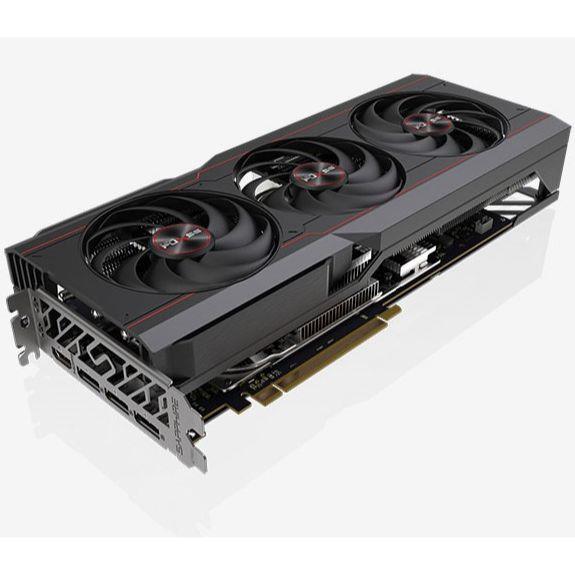 Current
Sapphire
Sapphire AMD Radeon RX 6800 XT PulseRs. 117,999
Local price
Lowest current price1 offer
Updated 7 hours ago
Sapphire
Sapphire Radeon RX 7900 XTFrom Rs. 254,790
Local price
4 offers
Updated 7 hours ago
Sapphire
Sapphire AMD Radeon RX 7600 XTFrom Rs. 124,990
Local price
1 offer
Updated 7 hours ago