
Price Breakdown & Availability
Here's how current offers compare across retailers.
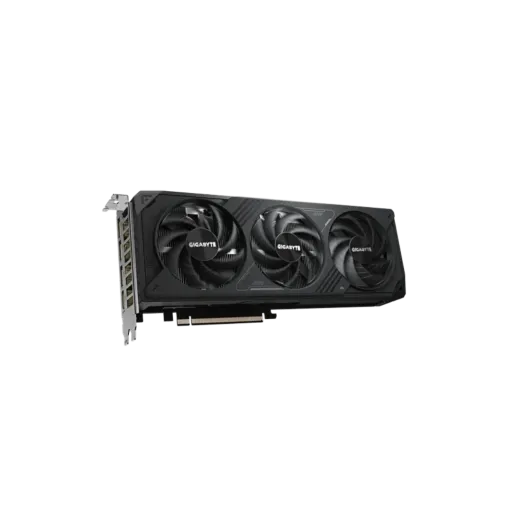
Gigabyte GeForce RTX 5070 Windforce SFF


You Might Also Like
Built for small rigs that still chase big frames, the Gigabyte GeForce RTX 5070 WINDFORCE SFF 12G keeps the idea simple: full RTX 5070 class capability, compact footprint, and practical thermals. Designed around NVIDIA Blackwell and modern DLSS features, yeh card gaming plus creator workflows ko ek hi clean package mein fit karta hai without turning your case into a hot box. Powered by 6144 CUDA cores, the GPU has enough parallel grunt for high FPS 1440p play, while keeping the overall stack balanced for an SFF focused build. Packed with 12GB GDDR7 on a 192 bit interface, textures and modern assets comfortably handle hotay hain, especially when you keep settings sensible and aim for smooth frame pacing. Sized at 282 x 110 x 50 mm, the card is clearly tuned for builders who want airflow and clearance without giving up real GPU tier performance. Equipped with three DisplayPort 2.1b and one HDMI 2.1b, multi monitor desks and high refresh setups become straightforward to wire up. Built in SFF ready labeling adds confidence for tighter cases, kyun ke dimensions and thickness already target that compact building mindset
Made for builders who hate clearance surprises, NVIDIA’s SFF Ready guideline sets simple limits on height, length, and thickness so parts match asaani se. Defined around 151 mm max height (including cable bend), 304 mm max length, and 50 mm (2.5 slot) max depth, the guideline gives you a quick reality check before you buy a case. Measured at 282 mm long and 50 mm thick, this WINDFORCE SFF edition sits inside the key length and depth targets, so most compact focused layouts are easier to plan. Listed at 110 mm for the card’s width/height dimension, the physical body stays well under the 151 mm envelope, although cable bend room still matters when you route the 16 pin lead, bilkul especially in short depth cases. Designed to be labeled as “NVIDIA SFF ready,” the model leans into compact builds without pretending every mini case is identical. Planned airflow stays cleaner when the GPU does not overhang front intakes, aur is size class mein aap aksar better fan placement and less turbulence enjoy karte ho. Kept within a predictable thickness, the 50 mm profile also helps avoid squeezing out adjacent PCIe slots, which is practical for ITX boards with tight layouts
Built on NVIDIA Blackwell with DLSS 4 support, the card targets a modern pipeline where AI features do more than just inflate a benchmark number. Designed around DLSS 4 Multi Frame Generation, NVIDIA describes generating up to three additional frames per traditionally rendered frame, jo real gameplay mein motion ko zyada fluid feel kara sakta hai. Tuned for today’s heavy ray traced scenes, the DLSS 4 stack is positioned as an up to 8X multiplier versus brute force rendering in supported scenarios, which matters when you want high settings but hate noisy fans. Featured on the product page with Reflex 2 and Frame Warp, the responsiveness angle is clearly part of the promise, taake competitive moments mein input feel tight rahe. Improved image stability is also a big story this generation, because NVIDIA highlights transformer based upgrades for Ray Reconstruction and Super Resolution to reduce ghosting and keep detail stable in motion. Balanced correctly, yeh approach aapko settings ko “medium” par lock karne ki majboori se nikalta hai while keeping the experience controlled. Focused on practical smoothness, the best use case is pairing high refresh 1440p with DLSS where it makes sense, rather than chasing native only purity in every title
Anchored by 6144 CUDA cores, the RTX 5070 tier is designed to deliver strong mainstream high performance without the massive size penalty of top end coolers. Set with a 2512 MHz core clock on this WINDFORCE SFF model, the card aims for stable day to day boost behavior, rozana ke sessions mein “random dip” wali tension kam hoti hai. Listed by NVIDIA at 2.33 GHz base and 2.51 GHz boost for RTX 5070, the reference targets align closely with Gigabyte’s approach here, so performance feels predictable rather than experimental. Built on Blackwell (listed as Blackwell 2.0 in common databases), the underlying platform is meant to pair raster strength with newer RT and Tensor generations for hybrid rendering workloads. Manufactured on a 5 nm process size listing (often shown as TSMC 4N in specs tables), efficiency per frame improves, which is exactly what SFF builders want when heat kam rakhna ho. Connected over PCIe 5.0, the card stays current for newer platforms and helps keep the whole system feeling “new gen” when you upgrade CPU and storage later. Balanced for gaming and creation, the platform messaging also highlights creator tooling and stability via drivers, jo content workflows ko smoother banata hai without extra tinkering
Built with 12GB of GDDR7 memory, the card gives you practical headroom for current game textures, creator caches, and heavier mod packs at 1440p. Wired through a 192 bit memory bus, the design focuses on balanced throughput instead of chasing extremes, jo is tier mein usually the sweet spot hota hai. Rated at 28 Gbps memory speed on Gigabyte’s spec sheet, the bandwidth story becomes more than marketing because it supports consistent frame delivery when scenes get busy. Calculated at 672.0 GB/s bandwidth in common spec databases, you get the kind of throughput that helps avoid “texture pop” vibes when you are streaming assets quickly. Tuned for real play, yeh memory configuration high settings ko enable karti hai while still letting you prioritize smooth minimum FPS instead of only peak numbers. Paired with DLSS where appropriate, the memory and bus width also help keep the image stable, because you are less likely to hit VRAM pressure that forces sudden quality drops. Built for longevity, this 12GB GDDR7 baseline is a sensible match for the RTX 5070 class rather than an awkward underfill that feels outdated quickly
Engineered around Gigabyte’s WINDFORCE cooling system, the design combines multiple airflow and contact strategies to keep temperatures controlled in compact cases. Built with Hawk fans and alternate spinning, airflow becomes more directed, aur turbulence kam hoti hai when fans sit close together. Claimed by Gigabyte to increase air pressure by up to 53.6% and air volume by 12.5% with the Hawk fan blade design, the goal is better heatsink penetration without turning acoustics into background noise. Designed with 3D Active Fan behavior, the fans can stay off under low load, which keeps desktop work, browsing, and light editing bilkul silent feel. Built with a large copper plate and composite copper heat pipes, contact and transfer are emphasized so boosts can hold longer during longer sessions. Applied with server grade thermal conductive gel for VRAM and MOSFET components, the card targets more consistent contact on uneven surfaces, jo long term use mein stability ko support kar sakta hai. Finished with screen cooling and a pass through style heatsink approach, hot air ko case ke andar trap hone se bachane ka intent clear nazar aata hai. Tuned for SFF reality, the best payoff is sustained performance that feels stable, not a quick burst that collapses after five minutes
Equipped with three DisplayPort 2.1b ports and one HDMI 2.1b, the card makes it easy to run high refresh monitors and modern TVs without adapter juggling. Rated for up to 7680x4320 digital max resolution, it supports serious pixel density when you want crisp UI and clean text, chahe work ho ya play. Designed to drive up to four displays, the setup works well for creators who keep a timeline, preview, and chat window open, aur multitasking ka workflow smooth rehta hai. Backed by common database listings that match the same output configuration, the port selection is not a “paper spec,” it is the actual practical I/O you plug in daily. Paired with an SFF friendly chassis, clean cable routing becomes easier because you can keep monitors on DisplayPort and reserve HDMI for a TV capture or couch play. Built for DirectX 12 and OpenGL 4.6 support, it keeps compatibility wide across modern games and creative tools, which helps avoid random app issues. Tuned for today’s displays, the combination encourages you to actually use your monitor’s refresh rate, kyun ke smoother motion is the whole point of the tier
Powered through a single 16 pin connector, the installation stays simple and avoids the clutter of multiple separate GPU power leads in tight SFF routing lanes. Bundled with a 12V 2x6 to 2x PCIe 8 pin adapter, compatibility improves for PSUs that do not have a native 16 pin cable, jo upgrade ko easier bana deta hai. Recommended by Gigabyte with a 750W PSU guideline, the vendor is clearly steering builders toward comfortable headroom for spikes, especially if your CPU is also power hungry. Listed with a 250 W TDP in common spec references, the power class is meaningful but not outrageous, which suits compact cases where heat dissipation space limited hoti hai. Reinforced with a structural backplate approach, the card focuses on rigidity and long term durability in normal horizontal mounts, so sag anxiety is reduced. Built with PCIe 5.0 interface support, the platform stays aligned with newer boards and helps keep your build feeling current over multiple upgrade cycles. Designed for daily stability, the overall “small card, serious cooler” direction keeps performance consistent without demanding constant fan curve tweaking, bilkul set and forget style
Designed for people who want high refresh gaming without oversized hardware, the RTX 5070 class brings 6144 CUDA cores and a 12GB GDDR7 baseline that fits modern game demands. Sized at 282 x 110 x 50 mm, this WINDFORCE SFF variant targets compact cases while still offering full feature ports and real cooling hardware, jo small builds ko compromise build nahi banata. Aligned with NVIDIA’s SFF Ready guideline concept, the 50 mm thickness and under 304 mm length keep fitment more predictable when you are choosing cases and planning airflow. Built to leverage DLSS 4 Multi Frame Generation and related model upgrades, the platform can trade AI assistance for smoother motion when native rendering gets too heavy, without forcing you to sacrifice clarity. Positioned with Gigabyte’s WINDFORCE cooling features like semi passive fan behavior, the card supports quieter everyday computing, rozana ke use mein heat kam aur noise kam feel hoti hai. Equipped with DisplayPort 2.1b and HDMI 2.1b outputs, it is ready for modern monitors and TVs, so your setup can scale without port limitations. Chosen for the right buyer, this card suits compact 1440p focused gaming, streaming, and creative workloads where efficiency and size matter as much as raw speed
Here's how current offers compare across retailers.