





Price Breakdown & Availability
Here's how current offers compare across retailers.
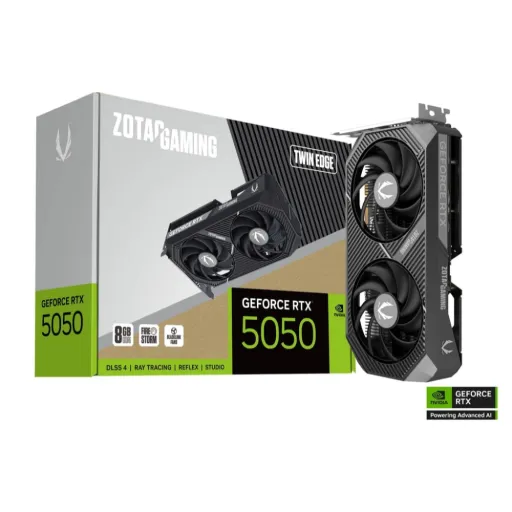
As of , there are 9 offers from 9 stores in Pakistan, priced Rs. 101,999 to Rs. 129,999.


Zotac Gaming GeForce RTX 5050 Twin Edge 8GB Graphics Card, GDDR6 128-Bit Memory, 2572 MHz Engine Clock, 20 Gbps Memory Clock, 2560 CUDA Cores, PCI Express 5.0 x8
Seller: JunaidTech
Updated
Zotac Gaming GeForce RTX 5050 Twin Edge 8GB Graphics Card, GDDR6 128-Bit Memory, 2572 MHz Engine Clock, 20 Gbps Memory Clock, 2560 CUDA Cores, PCI Express 5.0 x8
Seller: JunaidTech
Updated
Rs. 114,999

ZOTAC Gaming GeForce RTX 5050 Twin Edge Graphics Card, 8GB GDDR6, 128-Bit, PCI Express 5.0 x8, ZT-B50500E-10M
Seller: Consumer Express Laptops
Updated
ZOTAC Gaming GeForce RTX 5050 Twin Edge Graphics Card, 8GB GDDR6, 128-Bit, PCI Express 5.0 x8, ZT-B50500E-10M
Seller: Consumer Express Laptops
Updated
Rs. 124,999
ZOTAC GAMING GeForce RTX 5050 Twin Edge


Loading price history…
You Might Also Like
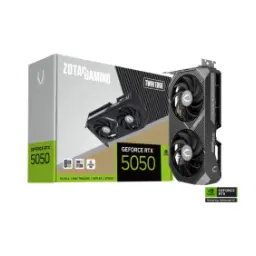
This ZOTAC GAMING GeForce RTX 5050 Twin Edge targets practical performance in a compact footprint, so choti cases mein bhi clean fit milta hai without turning your build into a cable mess. The dual slot design keeps installation straightforward for most mainstream towers and SFF friendly layouts, aur aapko extra brackets ya weird clearance juggling ki zarurat kam hoti hai. The card is listed as SFF Ready and built around a compact dual fan form factor, which matters when airflow pathways are tight and heat needs a quick exit. The Twin Edge dimensions are roughly 220.5mm in length, so you can plan front radiator clearance and drive cage spacing with more confidence, bilkul especially in smaller cases where a few millimeters decide everything. The RTX 5050 Twin Edge model is also documented as a dual slot card around 221mm long in third party databases, which helps you cross check fitment before ordering. This overall positioning makes sense for gamers who want modern RTX features but still prefer a balanced, easy to integrate GPU, rozana ke use mein hassle kam and upgrades feel smoother. The end result is a card that focuses on real world compatibility first, while still keeping enough headroom for current engines and competitive play
This Twin Edge edition supports a modern monitor setup out of the box, so your desk can scale from one screen to a full multi display workspace asaani se. The output layout is listed as three DisplayPort 2.1b ports with UHBR20 plus one HDMI 2.1b port, which gives you flexibility for high refresh gaming panels and living room TVs. The DisplayPort side is specified with UHBR20 and even notes support claims like up to 4K 480Hz or 8K 165Hz with DSC, so future monitor upgrades feel less restricted by the GPU I/O. The HDMI port is specified with support notes for 4K 120Hz HDR and 8K 60Hz HDR plus VRR under the HDMI 2.1b specification, which helps when you want couch gaming or a clean single cable TV setup. The quad display capability is also called out, so productivity workflows like Discord on one screen and game guides on another stay comfortable, rozana ke routine mein. This display pipeline matters because smooth refresh is not only about FPS, balkay motion clarity bhi improve hoti hai when your GPU can feed the panel properly. The practical benefit is simpler cabling choices and fewer “wrong port” compromises when you expand your setup
This RTX 5050 Twin Edge is built on NVIDIA's Blackwell generation, which means the platform is designed around modern AI assisted rendering rather than only raw raster power. Third party specs list the ZOTAC Twin Edge on Blackwell 2.0 with the GB207 GPU, so the core identity aligns with the RTX 50 Series feature direction. The boost clock is listed at 2572 MHz for this Twin Edge model, which helps keep moment to moment frame delivery responsive in real gameplay. NVIDIA describes DLSS 4 as introducing Multi Frame Generation for GeForce RTX 50 Series, generating up to three frames per traditionally rendered frame, so demanding scenes can feel smoother without pushing thermals too hard. The same DLSS 4 announcement also highlights upgraded AI models and improved image quality behaviors like reduced ghosting and better stability in motion, jo fast camera pans mein noticeable hota hai. This approach is especially useful when you want higher refresh gameplay on a midrange power budget, kyun ke aap brute force ke bajaye smart scaling use karte ho. The practical takeaway is that you can tune settings for clarity and latency while still chasing a smooth feel, and the platform remains aligned with newer RTX focused game updates
This card’s memory setup is designed for steady 1080p and tuned 1440p play, so textures and shaders load reliably without constant stutter tension. The ZOTAC listing specifies 8GB of GDDR6 and a 128 bit memory bus, which is a balanced configuration for mainstream gaming builds where efficiency matters. The memory speed is listed at 20 Gbps, so bandwidth stays healthy for modern engines that stream assets quickly, especially when you keep texture quality sensible. TechPowerUp’s database also reflects 8GB GDDR6 on a 128 bit bus with 20 Gbps effective memory speed, and it calculates a 320.0 GB/s bandwidth figure, which helps explain why the card can stay responsive in busy scenes. Reporting around the RTX 5050 has also emphasized the desktop card using 8GB of GDDR6, which matches the positioning as a practical entry in the RTX 50 stack. In real terms, this memory profile supports smooth asset streaming for popular competitive titles, aur casual AAA mein settings ko smartly balance karke experience stable rehta hai. The benefit is fewer “VRAM anxiety” moments for everyday play, while keeping power and cost complexity under control
This Twin Edge design focuses on consistent cooling in a compact layout, so long sessions feel stable and heat spikes ka pressure kam hota hai. The ZOTAC product highlights a compact dual fan form factor with BladeLink fans, which aims to move air efficiently through a tight heatsink footprint. The same listing calls out a metal backplate, which adds a practical rigidity benefit for a GPU that might be installed in smaller cases where movement during transport is common. The slot size is specified as 2 slots, so you can plan your motherboard spacing and any adjacent capture card or PCIe device without guesswork. Third party specs also describe the Twin Edge as a dual slot board around 221mm long, which is helpful when you are building in compact mid towers and want to avoid front fan clearance conflicts. This physical practicality matters because performance is not only about peak FPS, balkay sustained clocks bhi depend karte hain on predictable thermals. The result is a card that tries to stay quiet and composed for everyday gaming, while still keeping airflow simple for builders who want a clean, tidy rig
This GPU aims to deliver modern RTX features without a heavy power burden, so your existing midrange PSU planning stays realistic and stress free. The ZOTAC specification lists a power consumption of 130W and a single 8 pin power input, which keeps cable management straightforward and avoids bulky adapter setups. The recommended power supply is listed at 550W, which gives you a comfortable safety margin for typical gaming CPUs and a few drives, aur upgrades ke time par bhi flexibility milti hai. Coverage of NVIDIA’s RTX 5050 desktop card also describes up to 130W power draw, reinforcing that this tier is tuned for efficiency rather than chasing extreme wattage. This efficiency profile is valuable for smaller cases too, kyun ke lower power usually means heat load bhi manageable rehta hai with fewer noisy fan ramps. The practical benefit is a balanced system where gaming, streaming, and daily apps can run smoothly without turning your PC into a space heater. For builders who want a tidy, dependable upgrade path, this power setup keeps the experience simple and predictable
This ZOTAC card pairs well with the FireStorm utility for hands on control, so you can shape performance and acoustics for your own routine, bilkul without complicated third party tweaking. The FireStorm page describes fine tuning options for clock frequency, memory clock, voltage, and power, which can help you optimize either for more FPS or for cooler daily operation. The same utility also highlights smarter fan control and the ability to define your own fan curve, so long gaming sessions stay calmer and heat spikes ko tame karna asaan hota hai. The FireStorm listing also mentions saving up to three profiles, which is practical when you want one quiet profile for work and another aggressive profile for weekend gaming. The ZOTAC Twin Edge product listing also calls out the FireStorm utility as a supported feature, which keeps the toolchain aligned with the card’s intended user experience. This kind of control matters because every case airflow pattern is different, aur aapke room temperature aur fan noise tolerance bhi different hoti hai. The outcome is a more personalized GPU experience where stability, noise, and performance can be balanced with just a few sensible adjustments
This card uses a PCI Express 5.0 x8 interface, which keeps it aligned with modern platform bandwidth expectations while staying efficient in lane usage. The same PCIe 5.0 x8 bus interface is also listed in independent GPU databases, which helps confirm the configuration when you are planning a balanced build. The ZOTAC specification also lists support for Microsoft DirectX 12 Ultimate and OpenGL 4.6, so modern game engines and creative apps can rely on current API paths without workarounds. The product details further note HDCP 2.3 and quad display capability, which matters for protected streaming playback and multi monitor workflows, rozana ke use mein. The supported OS list includes Windows 11 and Windows 10 64 bit, so typical gaming rigs stay in the supported lane and driver updates feel straightforward. This combination gives you a modern base for gaming, streaming, and everyday productivity, and it avoids the “new GPU, old I/O” mismatch that can limit your setup
This ZOTAC RTX 5050 Twin Edge is a strong fit for builders who want modern RTX 50 series features in an efficient, compact package, so upgrades feel practical rather than complicated. Reporting on the RTX 5050 desktop tier describes 2,560 CUDA cores and a focus on the new generation feature stack, which supports the idea of a capable entry point for current games. Independent specs list the Twin Edge at a 2572 MHz boost clock with 8GB GDDR6 and a PCIe 5.0 x8 interface, giving you concrete planning points for performance expectations and system fit. NVIDIA’s DLSS 4 coverage explains Multi Frame Generation for RTX 50 series and broader model improvements, which is exactly the kind of tech that can keep gameplay feeling smooth when native rendering gets heavy, rozana ke popular titles mein. The ZOTAC Twin Edge feature highlights also emphasize SFF Ready design, BladeLink fans, and a metal backplate, so the card suits compact cases and transport friendly builds without feeling flimsy. This is the kind of GPU that works best when you value consistent daily performance, manageable heat, and modern display outputs, rather than chasing extreme wattage or oversized triple fan designs. The final decision becomes simple: if you want a clean, efficient RTX upgrade with current generation rendering tools, yeh card shortlist mein rakhna bilkul banta hai for a balanced gaming and productivity rig
As of , the lowest ZOTAC GAMING GeForce RTX 5050 Twin Edge price in Pakistan is Rs. 101,999 at PakByte. We found 9 offers from 9 stores, priced from Rs. 101,999 to Rs. 129,999.
Here's how current offers compare across retailers.
Review current prices and specifications side by side.