Price Breakdown & Availability
Here's how current offers compare across retailers.
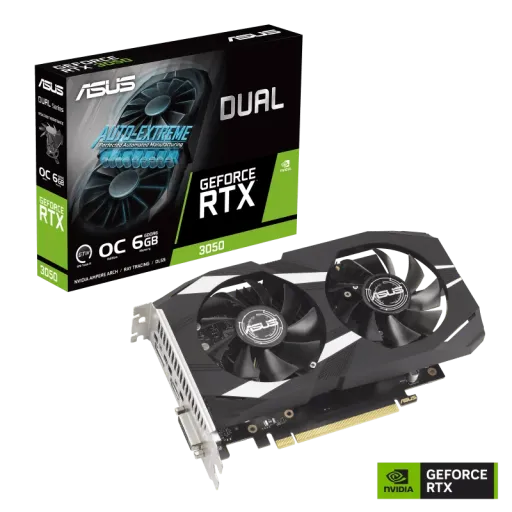

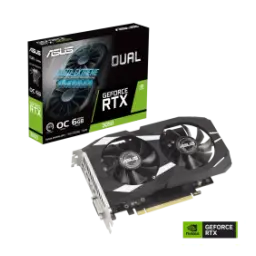
ASUS GeForce RTX 3050


You Might Also Like
The ASUS Dual GeForce RTX 3050 6GB brings RTX features into a practical, everyday build without turning setup into a project. This specific DUAL RTX3050 6G variant stays simple because it needs no external power connectors, so installation asaani se ho jati hai in many mainstream PCs. The compact 2 slot layout keeps compatibility high for smaller cases, choti casing walay builds mein bhi fit tension kam hoti hai. The card targets the RTX 3050 (6 GB) configuration with 6GB GDDR6 memory, which is a balanced starting point for 1080p focused gaming and daily creative work. The design choice of a lower power profile is not just about efficiency, balkay it also helps reduce cable clutter and keeps builds looking clean. The same slot powered approach typically makes troubleshooting easier too, kyun ke power connector loose hona ya adapter issues ka risk kam ho jata hai. The PCI Express 4.0 bus standard supports modern platforms for solid overall responsiveness in gaming loads and asset streaming. The overall identity feels purpose built for daily reliability, jahan performance stable rahe aur heat kam ho, instead of chasing extreme specs
The 2304 CUDA core configuration is tuned for smooth, consistent gaming rather than flashy peak numbers, so frame pacing zyada stable feel hoti hai. The default boost clock is listed at 1470 MHz, which keeps performance predictable for long sessions where heat build up can otherwise cause dips. The ASUS OC mode boost clock reaches 1500 MHz, giving you a small headroom option when you want a bit more push without complicated tuning. The Ampere family positioning matters because NVIDIA’s RTX 30 Series stack includes this RTX 3050 (6 GB) tier specifically for an accessible RTX feature set, rozana ke gaming aur productivity mix ke liye. The real world experience often depends on driver quality as much as silicon, and NVIDIA’s Game Ready Drivers are built around day one optimizations and broad hardware testing. That driver approach helps reduce weird stutters and compatibility surprises, jo aksar new game launches par tension ban jati hain. The card also supports OpenGL 4.6, which helps with compatibility across a wide range of apps and engines. The point of this configuration is a refined mainstream feel, jahan alt tab, quick loads, and responsive input are the daily wins
The ASUS Dual RTX 3050 6GB keeps display connectivity practical for both new monitors and older screens, so setup bilkul straightforward rehta hai. The output selection includes one native HDMI 2.1 and one native DisplayPort 1.4a, which supports modern refresh rate and resolution options for gaming and productivity. The inclusion of a native DVI D port is a small detail that can save money and hassle, puranay monitor ko continue karna ho to extra adapter ki zarurat kam hoti hai. The maximum display support is listed as three simultaneous displays, which is a sweet spot for a dual monitor desk plus an extra screen for chat or tools. The digital maximum resolution is listed up to 7680 x 4320, so high resolution workflows and big screen output remain on the table when you need it. This kind of output flexibility helps students and remote workers too, kyun ke you can keep a clean workspace layout without fighting ports. The HDCP 2.3 support is also specified, which matters for protected playback and common streaming app scenarios on external displays. The overall takeaway is simple usability, jahan cable management clean ho aur switching between work and play feels effortless
The memory setup matters most when textures, maps, and effects start stacking up in modern engines, so bandwidth ka impact real gameplay mein nazar aata hai. The ASUS spec lists 14 Gbps memory speed paired with a 96 bit memory interface, which is a deliberate balance between capability and efficiency. The VRAM capacity is 6GB GDDR6 on this model, which fits a lot of esports and mainstream titles well at 1080p when settings are chosen smartly. The same 14 Gbps and 96 bit combination is commonly summarized as 168 GB/s bandwidth, which helps explain why texture heavy presets sometimes need tuning for best smoothness. This is where practical choices pay off, kyun ke medium to high textures plus clean anti aliasing can feel better than maxing everything and hitting sudden hitching. The 96 bit design also aligns with the RTX 3050 (6 GB) positioning in NVIDIA’s lineup, meaning it’s meant to deliver RTX features with a controlled memory path. The benefit is a predictable experience that stays responsive, jab aap rozana games, browser tabs, and Discord saath chala rahe hon. The goal is not maximum bragging rights, balkay smooth scrolling, stable loads, and fewer annoying micro stutters in everyday play
The standout practical advantage is the low power design that avoids extra PCIe power cables, so upgrading feels asaani se manageable even for first time builders. The RTX 3050 6GB configuration is widely associated with a 70 W total graphics power class, which helps keep heat output controlled during longer gaming sessions. The slot powered approach can also reduce noise under typical loads, kyun ke fans ko aggressive ramp karne ki zarurat kam hoti hai in many cases. The recommended PSU on ASUS’s spec sheet is 450W, which gives a conservative cushion for mixed CPU builds and everyday peripheral loads. The card uses PCI Express 4.0 on the specification page, which supports modern platforms and keeps system responsiveness tight in general use. The GPU itself is commonly listed as PCIe 4.0 x8 in databases, which is still plenty for this performance tier and helps keep the design efficient. The broader point is reduced friction, jahan aapko PSU upgrade ka pressure kam feel hota hai compared to higher wattage cards. The result is a cooler running setup that stays comfortable for long evenings, heat kam aur room ka overall noise level bhi controlled
The ASUS Dual design focuses on sustained stability with a two fan cooling layout, so extended sessions mein clocks zyada steady rehte hain. The 2 slot form factor is explicitly called out for compatibility and cooling efficiency, which helps smaller cases maintain airflow without major compromises. The IP5X dust resistance is a practical durability touch because dust build up can quietly raise temps over time, aur maintenance ka headache barh jata hai. The stainless steel bracket is highlighted for being harder and more resistant to corrosion, which supports long term structural confidence during transport or frequent desk moves. The Auto Extreme manufacturing approach is positioned as a reliability focused process, which matters when you want fewer surprises and more consistent day to day output. The 144 hour validation program is also mentioned as part of ASUS’s testing story, giving buyers a more reassuring baseline for compatibility. The included tuning ecosystem is real too because GPU Tweak III is promoted for clocks, monitoring, and fan control, so tweaking shauk ho to tools available hain. The dimensions are listed at 201 x 120 x 37 mm, which helps you plan case clearance properly and avoid last minute fitting issues
The RTX 3050 platform is not only about games because dedicated features can also simplify content creation, especially jab aap ek hi PC par play aur stream dono karte hain. The NVIDIA NVENC hardware encoder is designed to offload video encoding from the CPU, which can help keep gameplay smoother while streaming or recording. The NVIDIA Broadcast app adds AI effects like noise removal and virtual background, and its GPU requirement starts at GeForce RTX 2060 or higher, meaning an RTX 3050 fits that eligibility. The same Broadcast documentation lists Windows 11 64 bit support and typical system guidance, which helps set expectations for a clean, modern creator setup. The ASUS tech spec page explicitly points users toward Game Ready and Studio drivers alongside GPU Tweak III, so you can choose the driver track that matches gaming or creative stability needs. NVIDIA Studio Drivers are positioned as being tested for creative app reliability, which matters when exports, timeline scrubbing, aur plugins stability are more important than raw FPS. The Game Ready driver approach is also described as developer collaboration plus extensive testing, which supports a smoother day one experience in popular titles. The combined benefit is a flexible daily rig that handles gaming nights and creator tasks, kaam aur fun dono mein switching smooth rehti hai
The reason many people choose RTX at this level is feature depth, so you get modern lighting effects and AI assisted rendering options without jumping to a higher tier. The ASUS product page highlights Ampere streaming multiprocessors plus 2nd gen RT Cores and 3rd gen Tensor Cores, which are the hardware foundations behind ray tracing and DLSS style AI acceleration. NVIDIA explains that dedicated RT Cores accelerate key ray tracing workloads like BVH traversal and ray/triangle intersection, which is why RTX class cards handle these effects more efficiently than shader only approaches. With DLSS Super Resolution enabled in supported games, you can often trade a lower internal render resolution for higher output clarity, aur FPS ka feel bhi better ho sakta hai. The DLSS supported hardware table also makes an important distinction because Frame Generation is not listed for RTX 30 Series GPUs, so expectations clear rehti hain and you focus on Super Resolution and related features. The RTX 3050 (6 GB) placement in NVIDIA’s own spec tables confirms the 2304 CUDA core and 1.47 GHz boost clock class, which matches the mainstream efficiency story of this specific ASUS model. The practical buying conclusion is a balanced daily GPU that fits 1080p first gaming, creator basics, and multi display use, bilkul un logon ke liye jo stable performance chahte hain. The final win is confidence through clarity because you know exactly what this 6GB, 96 bit, 14 Gbps configuration is built to do, and you can tune settings accordingly for a smoother experience
Here's how current offers compare across retailers.
Review current prices and specifications side by side.