





Price Breakdown & Availability
Here's how current offers compare across retailers.
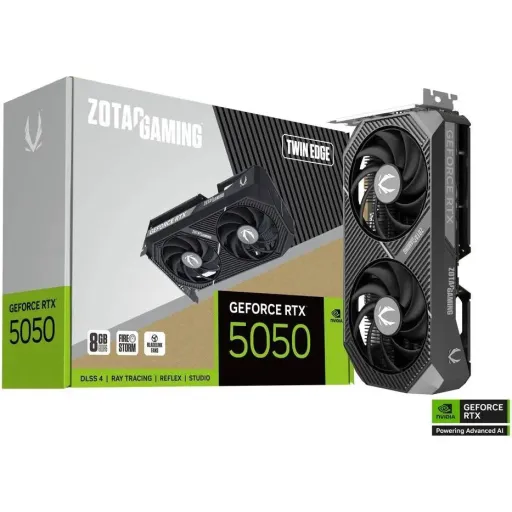
As of , there are 9 offers from 9 stores in Pakistan, priced Rs. 101,999 to Rs. 129,999.


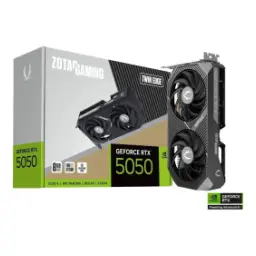
Zotac Gaming GeForce RTX 5050 Twin Edge 8GB Graphics Card, GDDR6 128-Bit Memory, 2572 MHz Engine Clock, 20 Gbps Memory Clock, 2560 CUDA Cores, PCI Express 5.0 x8
Seller: JunaidTech
Updated
Zotac Gaming GeForce RTX 5050 Twin Edge 8GB Graphics Card, GDDR6 128-Bit Memory, 2572 MHz Engine Clock, 20 Gbps Memory Clock, 2560 CUDA Cores, PCI Express 5.0 x8
Seller: JunaidTech
Updated
Rs. 114,999

ZOTAC Gaming GeForce RTX 5050 Twin Edge Graphics Card, 8GB GDDR6, 128-Bit, PCI Express 5.0 x8, ZT-B50500E-10M
Seller: Consumer Express Laptops
Updated
ZOTAC Gaming GeForce RTX 5050 Twin Edge Graphics Card, 8GB GDDR6, 128-Bit, PCI Express 5.0 x8, ZT-B50500E-10M
Seller: Consumer Express Laptops
Updated
Rs. 124,999
ZOTAC GAMING GeForce RTX 5050


You Might Also Like
Built for space conscious PCs, the ZOTAC GAMING GeForce RTX 5050 focuses on practical performance without demanding an oversized case. Designed around NVIDIA’s Blackwell direction, yeh GPU everyday gaming aur AI assisted features ko zyada accessible banata hai, while keeping the overall footprint approachable. Tuned for modern rendering workflows, DLSS 4 Multi Frame Generation ka concept frame delivery ko smoother feel karwata hai, especially jab settings balanced rakhi jayein, and it’s built as part of the RTX 50 Series feature set. Shaped for daily reliability, yeh card “compact but capable” category mein aata hai, so the upgrade feels clean rather than complicated. Balanced hardware choices matter most when builds stay small, kyun ke choti casing mein heat aur cable routing dono sensitive hotay hain, and a dual slot layout helps keep planning straightforward. Built in support for current graphics APIs keeps compatibility wide, rozana ke games, creative tools, aur drivers ke sath generally friction kam hoti hai, which protects the long term feel. Positioned as an efficient step into newer RTX features, yeh GPU un users ke liye fit hota hai jo modern ports, stable clocks, aur controlled power chahte hain, not just raw size
Designed for modern motherboards, the card connects through PCI Express 5.0 x8 to keep bandwidth current and latency low. Built on a newer interconnect generation, PCIe 5.0 per lane signaling scales up to 32.0 GT/s, jo overall link ko faster response aur better headroom deta hai, especially with newer platforms. Planned for typical gaming loads, yeh x8 configuration aksar real gameplay mein bilkul theek rehti hai, because many scenarios lean more on VRAM bandwidth and GPU compute than constant bus saturation. Built in backward compatibility still matters, purane PCIe slots par bhi system boot aur basic function smooth reh sakta hai, though peak throughput naturally matches the platform. Sized for the mainstream PCIe slot ecosystem, yeh x8 card physically x16 slots mein install hota hai, so most builds remain plug and play. Kept efficient by design, fewer lanes can mean simpler routing on compact boards, choti ITX builds mein yeh subtle benefit wiring aur airflow ko asaan banata hai, and troubleshooting stays easier. Tuned for the right balance, PCIe 5.0 x8 is a modern choice that avoids wasted complexity while staying future aware
Built for consistent texture flow, the RTX 5050 pairing of GDDR6 memory and a 128 bit bus targets smooth, stable performance instead of flashy excess. Tuned at a 20 Gbps memory clock, yeh fast VRAM speed assets ko jaldi feed karti hai, which helps reduce those annoying micro pauses when scenes get busier. Anchored by the 128 bit memory interface, bus width aur memory speed ka combo overall throughput ko define karta hai, and this card is clearly built for a balanced mid tier pipeline. Calculated as theoretical bandwidth, 20 Gbps on a 128 bit bus works out to about 320 GB/s (20 × 128 ÷ 8), jo real world mein stable streaming aur predictable frametimes ka base ban sakta hai. Supported by modern GDDR6 development, Samsung has discussed 20Gbps GDDR6 variants and also highlighted lower voltage efficiency options, is liye heat aur power ka behavior zyada disciplined reh sakta hai depending on implementation. Balanced bandwidth usually feels best at 1080p and tuned 1440p settings, rozana ke esports ya story titles mein textures sharp rehti hain, while the system stays responsive. Designed to avoid waste, this memory setup aims for “enough headroom” so gameplay stays smooth without pushing power draw unnecessarily
Tuned for snappy responsiveness, the GPU boost clock is listed at 2572 MHz to keep moment to moment actions feeling quick. Balanced clock behavior matters in real games, kyun ke stable boosts input feel ko tight rakhte hain, and the overall experience feels “smooth” rather than spiky. Built with a defined core configuration, the ZOTAC listing also notes 2560 CUDA cores, jo raster workloads aur mixed tasks mein consistent throughput support karte hain, without overcomplicating the tier. Integrated RTX software features can amplify that smoothness, DLSS 4 Multi Frame Generation ka approach additional frames generate karke perceived motion ko fluid banata hai, when games support it. Tuned settings often deliver the best feel, thori si optimization se aap heat kam rakh sakte ho aur FPS stable, which makes long sessions easier on the system. Designed for practical upgrades, a clearly stated boost clock helps buyers understand the card’s intent without chasing unrealistic numbers. Kept grounded in daily use, this clock and feature mix targets steady play, smooth scrolling in launchers, and quick alt tab behavior that feels less disruptive
Built to stay manageable under load, the ZOTAC RTX 5050 SOLO is listed with a fan + heatsink cooling setup for everyday stability. Designed for straightforward wiring, the card uses a single 8 pin PCIe power input, jo cable management ko simple rakhta hai, especially in tight cases. Kept within a modest power envelope, ZOTAC lists 130W power consumption, is liye PSU sizing aur heat planning zyada predictable rehta hai, and fans don’t have to overwork. Matched to common builds, the recommended power supply is shown as 550W, jo typical mid range systems ke liye realistic target hai, without pushing you into extreme wattage. Supported by GDDR6 efficiency improvements, Samsung has highlighted lower voltage options for certain high speed GDDR6 variants, so memory performance can come with better power characteristics in the broader ecosystem. Balanced thermals improve consistency, jab heat control theek hota hai to boost clocks zyada stable rehte hain, and gameplay feels less “up and down.” Designed for quiet practicality, a single fan compact approach can be ideal for focused setups where noise discipline matters more than aggressive overclocking
Built for modern monitors, the ZOTAC listing includes three DisplayPort 2.1b outputs with UHBR20 support alongside one HDMI 2.1b port. Designed for multi screen workflows, yeh outputs aapko quad display capability tak le ja sakte hain, so streaming, chat, and gameplay can stay separated cleanly. Anchored in DisplayPort 2.1 UHBR20 fundamentals, VESA has described UHBR20 as enabling up to 80 Gbps throughput at the highest tier, jo future high refresh panels ke liye strong pipe provide karta hai. Listed output capability highlights the headroom, with ZOTAC noting DP 2.1b UHBR20 can target extreme refresh/resolution combinations with DSC, which signals a future facing display engine orientation. Balanced real world usage stays simple, 1080p aur 1440p high refresh monitors par aapko asaani se smooth motion milti hai, and cable selection becomes the main planning detail. Kept flexible for TVs and consoles, HDMI 2.1b support helps living room style displays connect cleanly while keeping VRR pathways available where supported. Designed to reduce upgrade friction, modern ports mean the GPU does not become the limiting link when the monitor is the next planned upgrade
Built for today’s game engines, RTX features matter most when they translate into smoother motion and fewer compromises at sensible settings. Designed to scale performance intelligently, DLSS 4 Multi Frame Generation ka idea extra frames create karke motion ko fluid banata hai, while the GPU continues to render core frames for accuracy. Supported by a growing ecosystem, NVIDIA has stated DLSS 4 support is already in the hundreds of games and apps, jo long term adoption ko strong banata hai, and it reduces the risk of “feature you never use.” Balanced VRAM and bandwidth help the experience feel consistent, kyun ke 20 Gbps GDDR6 aur 128 bit bus texture streaming ko stable direction dete hain, especially at mainstream resolutions. Tuned core clocks keep responsiveness sharp, jab boost behavior steady ho to aim aur movement ka feel predictable rehta hai, and that’s where enjoyment stays high. Designed for realistic settings, this tier typically rewards smart presets, meaning shadows, textures, and upscaling options can be mixed for a clean image without overloading the system. Kept practical for daily play, the overall feature set aims at smooth frametimes and modern compatibility rather than chasing extreme, niche scenarios
Built with compact systems in mind, the SOLO model is listed at 164.5mm length in a dual slot design that suits many small and mid towers. Designed for easy installation, yeh dimensions ITX aur mATX builds mein clearance tension ko kam karti hain, and airflow planning becomes more forgiving. Balanced power requirements keep upgrades simple, kyun ke 130W consumption aur 1×8 pin input cable routing ko clean rakhta hai, without needing adapters in many builds. Planned around PCIe’s standardized lane configurations, PCIe links can be x1 through x32, is liye x8 devices ka ecosystem already standard aur well supported hai, and compatibility expectations are clear. Tuned PSU guidance reduces guesswork, because ZOTAC’s 550W recommendation helps buyers avoid underpowered setups and random stability issues. Designed for clean ownership, a smaller card also makes maintenance easier, fan cleaning aur dust management asaani se ho jata hai, and the system stays tidy over time. Kept realistic for most users, this is the kind of upgrade that fits a build plan rather than forcing a rebuild
Built as a balanced choice, the ZOTAC RTX 5050 spec mix targets everyday gamers who want modern ports, modern AI rendering tools, and controlled power behavior. Designed to stay relevant longer, DLSS 4 adoption across a large library means feature usefulness time ke sath barhta rehta hai, rather than fading after launch hype. Tuned memory choices keep performance grounded, kyun ke 20 Gbps GDDR6 aur 128 bit bus ka goal stable throughput hai, and it supports mainstream settings without feeling fragile. Anchored by a 2572 MHz listed boost, this card aims to feel responsive in real use, rozana ke tasks, casual creation, aur gaming sessions mein, without constant manual tweaking. Supported by current interconnect standards, PCIe 5.0 signaling rates and standardized lane counts give this tier a clean platform story, so upgrades don’t feel outdated too quickly. Designed for display forward setups, DP 2.1b UHBR20 readiness helps high refresh plans stay open, especially for users thinking about a monitor upgrade next. Kept practical from end to end, this is a sensible RTX 50 series entry where the spec choices convert into daily smoothness, less hassle, and clearer upgrade logic
As of , the lowest ZOTAC GAMING GeForce RTX 5050 price in Pakistan is Rs. 101,999 at PakByte. We found 9 offers from 9 stores, priced from Rs. 101,999 to Rs. 129,999.
Here's how current offers compare across retailers.
Review current prices and specifications side by side.