












Price Breakdown & Availability
Here's how current offers compare across retailers.
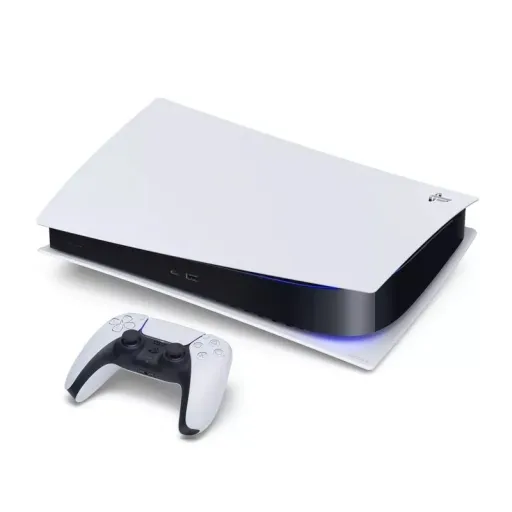
Sony PlayStation 5



You Might Also Like
The Sony PlayStation 5 is designed for momentum. Daily sessions feel less interrupted from the first boot, rozana wali gaming mein, because the system is built around fast data access and predictable performance. The custom CPU uses eight AMD Zen 2 cores with variable frequency up to 3.5GHz, so menus, matches, and open world traversal stay responsive under pressure. The graphics engine is an AMD RDNA 2 based design with ray tracing acceleration, which translates into richer lighting and more grounded reflections when games choose to use it, bilkul cinematic feel ke saath. The system memory is 16GB of GDDR6, and that bandwidth focused approach helps scenes load cleanly with fewer texture hiccups, especially when you move quickly through detailed areas. The overall hardware direction favors consistent frame pacing over short bursts, so controller input feels tight and the on screen result stays smooth, lag nahi hota in normal play. The PS5 also leans into modern display standards like 4K 120Hz and VRR support, which helps your TV and console sync better for fluid motion. This is the kind of console that fits both weekend marathons and quick nightly sessions, asaani se
Modern TVs reward consoles that output stable signals. Sony lists PS5 video out support for 4K 120Hz TVs, 8K TVs, and VRR (specified by HDMI 2.1), so the platform is ready for high refresh gaming when your screen supports it. Fast motion gameplay looks clearer at higher refresh, aur camera pans mein blur kam hota hai, because frames update more frequently and input to image delay can feel tighter. The “4K/120” idea is best understood as capability, meaning supported games can target high frame rates while your display accepts the 120Hz signal. HDMI 2.1 features like VRR matter for real living room setups, kyun ke frame drops happen, and VRR can smooth out judder when the game frame rate fluctuates. Gaming TV guidance commonly highlights 4K 120Hz and VRR as key next gen features, which aligns with what PS5 is built to output. 8K support should be treated as display compatibility and output potential rather than an everyday target, because native 8K gaming content remains rare in the broader market. Coverage has noted that Sony removed the “8K” mark from some PS5 packaging over time, which is a practical reminder to prioritize 4K high refresh results first. When you buy PS5 for visual smoothness, the biggest everyday win is stable 60fps or 120fps in supported titles, bilkul clean motion ke saath
Real performance is measured by consistency, not just peaks. The PS5 uses an x86 64 AMD Ryzen “Zen 2” CPU with 8 cores and 16 threads, running at a variable frequency up to 3.5GHz. That CPU headroom helps modern game engines manage physics, AI, streaming assets, and background systems, aur multiplayer fights mein stability improve hoti hai. The PS5 GPU is an AMD RDNA 2 based graphics engine with variable frequency up to 2.23GHz, and Sony lists around 10.3 TFLOPS peak performance in its spec chart. Many outlets also cite the same GPU capability as 10.28 TFLOPS with 36 compute units at up to 2.23GHz, which matches the commonly repeated technical framing around this console. This combination is what makes fast traversal and dense combat feel “locked in,” jahan input responsive hota hai and the game doesn’t feel sluggish. Hardware ray tracing acceleration is part of the GPU feature set, so when developers enable it, reflective surfaces and shadows can look more natural without needing fake tricks. Long sessions also benefit from the variable frequency strategy because performance aims to remain stable rather than spiking and dropping, heat aur noise control karna asaan hota hai. When you shop for a PS5 console, you are essentially buying a tuned platform where CPU, GPU, and storage are balanced for practical gameplay outcomes
Memory is the quiet hero behind seamless play. Sony specifies 16GB of GDDR6 system memory with 448GB/s bandwidth, which is designed to keep high resolution assets moving quickly through the pipeline. That bandwidth matters when you’re rotating the camera fast, tab textures ko catch up karna hota hai, and the goal is to avoid muddy surfaces or late loading details. A 16GB pool also supports modern engine demands like larger worlds, denser crowds, and more complex materials, while still leaving room for system level overhead. In everyday terms, this means fewer “wait for it” moments during gameplay transitions, and a cleaner feel when games jump between areas or load detailed environments. The PS5 also benefits from developer optimization, kyun ke console ecosystems are fixed targets, so studios can tune memory use to hit stable outcomes instead of guessing across thousands of PC configurations. When you pair that with 4K output goals, the memory system plays a major role in keeping image quality stable while the game engine manages effects and shading. Sony’s published spec chart makes it clear that memory bandwidth is a core pillar of the platform design, not an afterthought. If you want a console that feels consistent across genres, yeh 16GB GDDR6 approach is a big part of that daily smoothness
Fast storage changes what games can feel like. Sony’s PS5 technical specs highlight an internal SSD with 5.5GB/s raw read bandwidth, which is explicitly positioned to reduce load times and enable richer streaming of game data. The original published specs list an 825GB SSD, which gives a balanced starting point for large modern installs while prioritizing speed. In practical gameplay, this speed helps scenes appear with less “pop in,” aur fast travel ya restart moments zyada painless lagte hain, because the console can fetch textures, geometry, and audio assets quickly. Wired’s reporting on the PS5 reveal also emphasizes the custom SSD as a major leap, describing how faster throughput is central to the system’s overall next gen pitch. This matters beyond convenience, because developers can design levels with fewer artificial bottlenecks and less forced corridor walking that only exists to hide loading. For competitive players, quicker re queue and shorter downtime helps you stay in rhythm, bilkul time waste kam hota hai. For story players, faster transitions keep emotional pacing intact, so the narrative doesn’t get punctured by long waits. The PS5 SSD approach is one of the most “felt” improvements in daily use, because every genre benefits from faster access. When you want next gen gaming that respects your time, yeh storage speed is a core reason PS5 stands out
Control is where immersion becomes personal. Sony describes the DualSense wireless controller as offering immersive haptic feedback, dynamic adaptive triggers, and a built in microphone, all integrated into the PS5 experience. Haptics can deliver more nuanced surface feel than old rumble motors, jaisay rain, gravel, ya recoil ka sensation zyada detailed lagta hai, which makes simple movement more engaging. Sony’s DualSense introduction also explains how adaptive triggers can vary tension, so actions like pulling a bowstring or braking in a car can feel physically different in your hands. This is not just a “cool feature” for demos, because games that use it well can communicate gameplay states without cluttering the screen with extra meters. In shooters, trigger resistance can hint at weapon behavior, aur sports games mein subtle feedback timing ko improve kar sakta hai, which helps you react faster. The built in microphone and integrated design also make quick party chat or in game communication more convenient for casual setups. When you upgrade to a PS5 console, you are also upgrading the feel of play, because the controller becomes part of the storytelling and feedback loop. The end result is a more “present” experience where hands and eyes agree, bilkul connected feel ke saath, without needing extra accessories
Audio can sell the illusion of space instantly. Sony lists “Tempest” 3D AudioTech as a core PS5 audio feature, which is meant to enhance spatial cues and make game environments feel more layered. This matters in competitive play because directional hints help you react, aur footsteps ya reload sounds ko place karna asaan hota hai, especially with a decent headset. It also matters in cinematic titles because weather, crowds, and ambient layers feel more believable when sound has depth rather than being a flat stereo track. Coverage of Sony’s PS5 spec reveal also highlights 3D audio as part of the platform’s next gen leap, placing it alongside the SSD and compute upgrades as a big pillar. In everyday living room use, better spatial mix can make scenes feel bigger without forcing you to crank volume, so fatigue kam hoti hai across longer sessions. When games pair 3D audio with controller feedback, the overall experience becomes more cohesive, kyun ke sound and touch cues reinforce each other. This helps even non technical players notice the “upgrade,” because it feels like you are inside the scene rather than watching it. Sony’s published spec chart keeps Tempest 3D AudioTech in the same category as video out and storage specs, which signals it’s not optional flavor. If you care about atmosphere and awareness, yeh audio layer is a strong reason PS5 gaming feels more alive
Daily convenience matters as much as raw power. Sony’s later PS5 specification post lists front USB C (SuperSpeed 10Gbps) plus additional USB ports, Ethernet, and Wi‑Fi support including 802.11ax, which helps the console fit modern routers and accessories without friction. That connectivity makes downloads and updates feel less painful, rozana ke use mein, especially when you are juggling big game patches and online play. Storage expectations also evolve, and Sony’s 2023 specs list a 1TB SSD for newer PS5 models while the earlier technical chart lists an 825GB SSD, so capacity can vary by revision while the high speed approach remains central. HDMI 2.1 related support like 4K 120Hz output and VRR is also reiterated in these official specs, keeping your setup ready for smoother motion on compatible TVs. The practical benefit is simple: you spend less time troubleshooting cables, ports, and compatibility, aur zyada time actual gaming mein hota hai. If you stream, share, or keep multiple controllers charged, the port layout and modern standards help everything stay organized. A console can be powerful yet annoying, but PS5 aims to feel straightforward in real homes and apartments. When a device supports modern IO and networking standards, it stays relevant longer, bilkul future friendly feel deta hai
A great console is a complete ecosystem choice. Wired’s comparison framing has often described PS5 as “nimble,” highlighting how Sony uses smart optimization and a notably fast SSD system rather than relying on brute force GPU numbers alone. That philosophy shows up in everyday wins like faster loading, consistent responsiveness, aur a smoother flow between play sessions, which adds up over months of ownership. The PS5 spec chart anchors the platform around an 8 core Zen 2 CPU up to 3.5GHz, an RDNA 2 based GPU around 10.3 TFLOPS, and 16GB of GDDR6 memory, which collectively place it in a competitive flagship tier for modern 4K gaming. The video out support for 4K 120Hz TVs and VRR also helps you take advantage of high refresh displays without buying a separate box or adapter, asaani se plug and play feel milta hai. 8K capability is best treated as compatibility and output headroom rather than the default target, because even Sony’s own packaging and messaging has evolved around what “8K” practically means. When you combine fast storage, modern output standards, and a distinctive controller experience, the PS5 feels like a cohesive platform rather than a spec sheet. The result is a console that supports both serious play and casual downtime, bilkul stable and refined
Here's how current offers compare across retailers.
Review current prices and specifications side by side.
 Current
Sony
Sony PlayStation 5From Rs. 226,999
Local price
Lowest current price28 offers
Updated 1 day ago