Price Breakdown & Availability
Here's how current offers compare across retailers.

Current Price
-
Lowest (30d)
-
Highest (30d)
-
30-Day Change
-
Showing daily prices
You Might Also Like
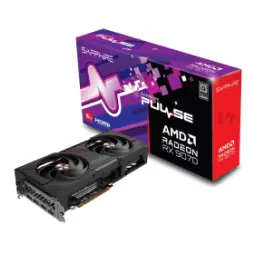
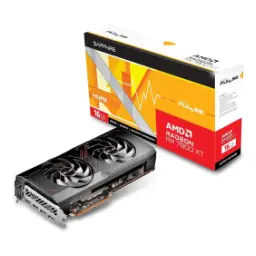
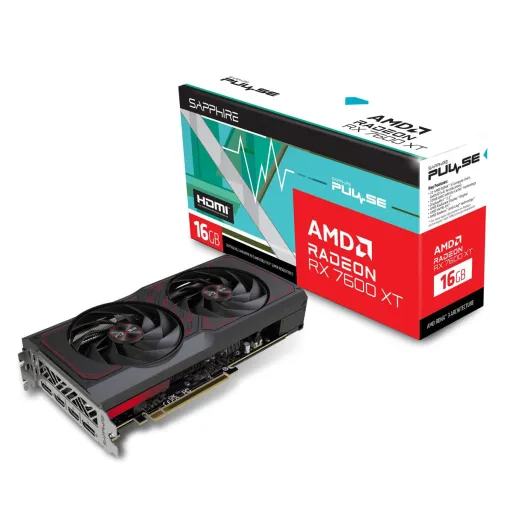
The Sapphire AMD Radeon RX 7600 XT PULSE GAMING OC is designed for modern, everyday PC gaming where smoothness matters more than drama. This factory overclocked PULSE edition is positioned as “1080P Ultimate,” so competitive shooters and story titles feel stable, rozana ke sessions mein bhi. The GPU foundation stays genuinely current with AMD RDNA 3 architecture, which helps you step into newer engines without feeling outdated. The core configuration includes 32 Compute Units and 2048 stream processors, so the performance profile stays consistent across today’s big releases. The 16GB GDDR6 memory is the quiet advantage here, kyun ke texture heavy games mein headroom milta rehta hai. The PCI Express 4.0 x8 interface keeps it aligned with mainstream platforms, and install bilkul straightforward rehta hai. The dual fan cooler choice makes sense for daily rigs, because it aims for low fuss thermals instead of oversized bulk. The overall vibe is practical performance with a gamer finish, jahan upgrade ka impact instantly feel hota hai
The visual experience improves most when frames arrive consistently, aur yahan RX 7600 XT ka balance kaam aata hai. The hardware includes 32 Ray Accelerators, letting supported games add ray traced lighting and reflections without turning your setup into a heater. The card also supports DirectX 12 Ultimate, which keeps modern rendering features available as engines evolve. The biggest “feel” upgrade often comes from sync, because stutter aur tearing dono immersion break kar dete hain. AMD FreeSync technology is built to reduce tearing and stuttering by synchronizing display refresh with GPU frame output, so motion stays clean at many frame rates. The PULSE Gaming OC also includes DisplayPort 2.1 with DSC support listed by Sapphire, which helps future monitor upgrades feel less constrained. The dual HDMI plus dual DisplayPort layout is convenient for mixed setups, jahan ek side monitor aur ek main high refresh panel hota hai. The result is a cleaner, calmer picture in real play, because micro hitches kam hotay hain and panning looks controlled
The PULSE Gaming OC tuning focuses on responsive clocks that help moment to moment gameplay feel snappier. Sapphire lists a boost clock up to 2810 MHz and a game clock up to 2539 MHz on this model, which supports that “no lag” feeling in busy scenes. The same Sapphire spec page confirms 2048 stream processors and 32 Compute Units, so the silicon configuration stays true to RX 7600 XT class. The AMD baseline for RX 7600 XT is also 32 Compute Units with a game clock of 2.47 GHz and boost up to 2.76 GHz, so Sapphire’s OC headroom is easy to contextualize. The practical benefit shows up during fast swaps and quick turns, jahan frametime stable rehta hai and input feels more direct. The Navi 33 based RX 7600 XT family is also widely documented as a PCIe 4.0 x8 design, which fits mainstream boards without any special tuning. The PULSE OC profile aims to keep performance predictable, kyun ke random spikes se experience messy ho jata hai. The end result is a GPU that feels quick in real games, not just in a spec sheet
The power profile matters when you want performance without constant fan noise, aur PULSE ka target yahi balance hai. Sapphire rates this card at 192W Total Board Power, which is a clear planning number for cable setup and case airflow. AMD lists the RX 7600 XT family as starting at 190W TBP, so the PULSE Gaming OC figure sits in the expected range for an OC partner card. Sapphire also specifies two 8 pin power connectors for this model, which keeps power delivery stable under load, bilkul no surprise way mein. Sapphire’s guidance calls for a minimum 600W power supply, so builders can avoid instability during long sessions and future upgrades. The PCI Express 4.0 x8 interface helps keep the platform requirements modern but not extreme, especially on current AMD and Intel boards. The real win is lower stress in daily use, kyun ke power planning sahi ho to heat spikes kam hotay hain. This makes the card easier to live with in mid tower builds where airflow is good, but space and acoustics still matter
The connectivity mix matters when your PC does more than gaming, aur yeh PULSE edition surprisingly flexible hai. Sapphire lists support for up to four displays, which is ideal for a main gaming panel plus side screens for Discord, maps, ya timelines. The output layout is 2x HDMI and 2x DisplayPort, so you can pair different monitors without dongle tension. Sapphire also lists DisplayPort 2.1 with DSC and 7680×4320 max resolution for both HDMI and DisplayPort, which keeps high res display options open. The AMD software side is where responsiveness can improve, especially when your aim is competitive and reactions matter. AMD’s Anti Lag feature is positioned to improve click to response and reduce input lag for low latency gaming, jo esports walon ko instantly feel hota hai. AMD HYPR RX is also described as a one click profile that can enable multiple features together, so setup time kam hota hai and tuning feels less intimidating. The combined experience supports smooth play plus clean desktop usability, which keeps the system feeling refined
Thermal design matters most during long gaming marathons, jab heat build up se clocks aur noise dono affect hotay hain. Sapphire confirms this model uses a 2 fan cooler and its Dual X Cooling Technology feature set, which targets steady airflow and practical noise levels. Sapphire also highlights Intelligent Fan Control and Precision Fan Control, meaning fans can ramp more smoothly instead of jumping aggressively. The hardware durability angle is supported with Two Ball Bearing Fans and a metal backplate listed by Sapphire, so daily use feels more reliable over time. Sapphire specifies an optimized composite heatpipe approach, which helps move heat away efficiently, heat kam rehti hai and boosts hold longer. The physical fit stays reasonable at a 2.2 slot ATX design with 250mm length, which works for many mid towers without blocking everything. The end result is a card that stays composed under typical load, kyun ke cooling ka goal stability hai rather than showy excess
VRAM headroom is what keeps modern games feeling future friendly, especially when texture packs and high res assets become the norm. AMD’s RX 7600 XT reference specifications include 16GB of GDDR6 memory on a 128 bit interface with 32MB Infinity Cache, which frames this GPU as a memory ready midrange choice. Sapphire’s PULSE Gaming OC listing matches that memory configuration at 16GB/128 bit GDDR6 and 32MB Infinity Cache, so you get the full class experience without compromise. Sapphire also lists 18 Gbps effective memory speed, which supports quick asset streaming and keeps hitching lower in texture heavy moments. The Infinity Cache concept is directly emphasized by Sapphire as a way to reduce latency and power consumption, which helps performance stay stable over longer sessions. The practical benefit shows up in open world traversal, jahan sudden texture pop in annoying lagta hai and immersion break hoti hai. The extra memory also helps multitasking workflows like gaming plus recording, because background buffers ko thoda breathing room milta hai while your game stays responsive
Choosing the right tier is easier when the differences are concrete, aur yahan VRAM and clocks clear story banate hain. AMD positioned the RX 7600 (non XT) with 8GB GDDR6 while keeping 32 Compute Units and a 128 bit bus, making it a lighter option for purely 1080p focused budgets. AMD’s RX 7600 XT keeps 32 Compute Units but moves to 16GB GDDR6 and higher clocks, which is a meaningful step when modern titles start leaning into bigger texture footprints. Ars Technica also notes that RX 7600 XT retains the same 32 CUs/2048 shaders as RX 7600 while doubling memory from 8GB to 16GB, which aligns with the idea of smoother “next year” game behavior. Sapphire’s PULSE Gaming OC adds partner level cooling and a modest power uplift, so you get a tuned daily driver rather than a bare reference card. The real value is fewer compromises over time, kyun ke settings ko constant down karna frustrating hota hai. This tier lands well for 1080p high refresh play and sensible 1440p tuning, where stability matters as much as peak FPS
A good GPU feels complete when the software and hardware work together, aur yahan Sapphire plus AMD dono ka stack kaam karta hai. Sapphire lists TriXX support and TriXX Boost on the PULSE RX 7600 XT, giving you a built in path to tune performance without heavy manual tweaking. Sapphire explains TriXX Boost as intelligently lowering rendering resolution and then upscaling with Radeon Image Sharpening for smoother gameplay, jo practical FPS uplift de sakta hai in demanding scenes. AMD Smart Access Memory is also described by AMD as enabling Ryzen processors to access Radeon graphics memory more directly for higher performance in select titles, so an all AMD platform can feel extra cohesive. AMD FreeSync remains a simple daily quality of life win, because it targets tear free and smoother playback without complex tuning. Sapphire’s 192W TBP rating and 2x 8 pin requirement set clear expectations for power planning, jis se build time par surprises kam hotay hain. The final takeaway is straightforward: this PULSE Gaming OC variant is meant to be installed once and enjoyed daily, with stable thermals, modern ports, and enough memory headroom to stay comfortable
Here's how current offers compare across retailers.