
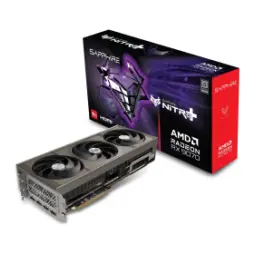
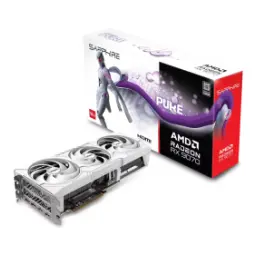
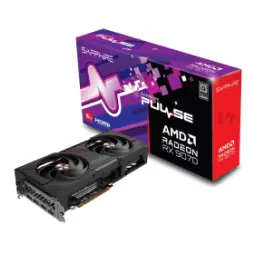
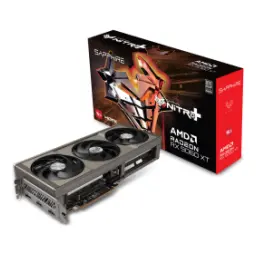
Price Breakdown & Availability
Here's how current offers compare across retailers.
You Might Also Like
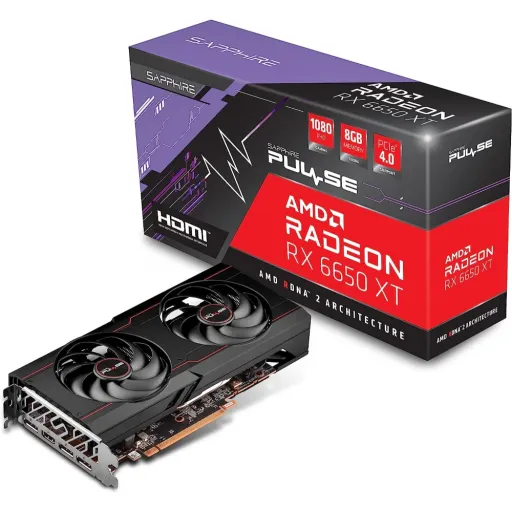
This PULSE Gaming OC RX 6650 XT targets fast 1080p gaming. The core tuning hits up to 2410 MHz Game Clock and up to 2635 MHz Boost, so fights feel responsive and aim tracking rehta hai steady. The Radeon RX 6650 XT class is repeatedly positioned as a strong 1080p performer, and that “sweet spot” shows up in real benchmark averages across modern titles. The overall experience feels balanced because raster performance is the focus, yani most esports aur AAA games mein smooth frames milte hain without constant setting anxiety. The PULSE design keeps the build practical, so you get a clean dual fan solution without showpiece bulk. The 1080P game index callout aligns with how this GPU is meant to be used, especially if you prefer high refresh panels and low latency feel. The best part for daily gaming is consistency, kyun ke stable performance makes your settings predictable and your sessions stress free
This graphics card keeps multi monitor setups straightforward and flexible. The output layout includes 1x HDMI and 3x DisplayPort, which suits a dual monitor workspace plus an extra panel for chat or OBS, bilkul hassle free. The card supports up to four displays, so expansion is easy when your setup grows. The maximum listed resolution reaches 7680×4320 over both HDMI and DisplayPort, making high resolution media playback and productivity layouts feel future friendly. The DisplayPort spec includes DP 1.4 with DSC support in the feature list, which is helpful when you want higher resolution or refresh with efficient compression, especially on modern monitors. The everyday benefit is cleaner cable planning, kyun ke you can keep your main gaming display on DisplayPort and reserve HDMI for a TV or capture chain. The setup feels upgrade ready because you are not forced into adapters right away, and that keeps the desk look clean
This RX 6650 XT build uses AMD RDNA 2 architecture. The shader array includes 2048 Stream Processors, giving you the kind of throughput that keeps 1080p high settings smooth, aur frametimes zyada jumpy nahi hotay. The GPU design is part of the Navi 23 family, and the typical spec profile shows 32 compute units paired with 32 RT cores for hybrid workloads. The clocks on this PULSE model are listed up to 2410 MHz Game Clock and up to 2635 MHz Boost, which helps maintain snappy game feel during fast camera pans and quick flicks. The real world uplift versus the RX 6600 XT is often measured in the single digits, but that still translates into a little more headroom when you want higher refresh targets, especially in optimized engines. The practical win is fewer compromises, kyun ke you can keep textures and effects sensible while still chasing smooth motion. The overall profile stays midrange efficient, so you get performance without turning your case into a heater
This PULSE RX 6650 XT ships with 8GB GDDR6 memory. The memory runs at 17.5 Gbps effective, which supports strong bandwidth for 1080p textures and keeps loading micro hitches kam in many mainstream titles. The GPU also carries 32MB Infinity Cache, designed to help reduce latency and power consumption by keeping more data closer to the compute blocks. The cache matters most when scenes are changing quickly, yani open world traversal aur fast respawns mein the GPU can pull frequently used data with less back and forth. The 8GB capacity is best treated as a smart 1080p buffer, so ultra texture mods at higher resolutions may need tuning, but normal high settings remain realistic. The day to day benefit is smoother asset streaming, kyun ke the memory plus cache combo keeps the experience feeling composed. The end result feels responsive because the pipeline spends less time waiting on data and more time pushing frames
This PULSE Gaming OC edition focuses on practical thermals. The cooler uses SAPPHIRE Dual X Cooling Technology, which is built around a dual fan design for steady airflow across the heatsink, heat kam aur noise controlled. The feature list highlights an optimized composite heatpipe approach and intelligent plus precision fan control, helping the card react smoothly to load changes instead of ramping aggressively. The metal backplate with a thermal pad is part of the design, which adds stiffness and can assist with heat dissipation from the PCB side during longer sessions. The physical footprint stays 2 slot ATX, so compatibility remains friendly for most mid tower builds, aur installation mein drama nahi hota. The listed dimensions are 240(L) × 119.85(W) × 44.75(H) mm, which makes case planning easier when you are balancing front radiator space. The overall benefit is sustained clocks under gaming load, kyun ke cooler stability usually means fewer dips during extended matches. The card feels “set and play” because you are not constantly managing temps, and that is real comfort
This RX 6650 XT PULSE is easy to power. The rated power consumption is 176W Total Board Power, which fits nicely into sensible midrange builds without PSU upgrades har dafa. The system guidance calls for a minimum 500W power supply and a single 8 pin power connector, keeping cable management clean and build cost controlled. The RX 6650 XT is also described as efficient in comparative testing, with review power notes showing modest changes versus the RX 6600 XT while delivering slightly higher performance. The daily comfort is cooler case behavior, kyun ke lower board power generally means fans don’t have to fight constant heat soak. The 8 pin requirement is especially convenient for older but quality PSUs, so you can upgrade graphics without re wiring the whole rig. The end result is predictable power draw under gaming load, and that predictability helps stability during long nights. The build feels balanced because performance and power are matched sensibly, bilkul practical
This PULSE model uses a PCI Express 4.0 x8 interface. The connection is designed to drop into a standard x16 motherboard slot, so physical compatibility remains normal, bas lanes internally x8 hoti hain. The practical question is older platform performance, because PCIe 3.0 boards will run it at PCIe 3.0 x8 bandwidth. A large PCIe scaling test on the closely related RX 6600 XT class shows only about a 2% average drop at 1080p when moving from PCIe 4.0 x8 to PCIe 3.0 x8, which suggests the x8 design is usually not a deal breaker. The same analysis also highlights that a few specific titles can show bigger deltas, so it is smart to pair the card with a modern platform when possible, warna worst case dips aa sakte hain. The benefit of PCIe 4.0 support is straightforward on new systems, because you get the intended bandwidth ceiling with no special tuning. The overall takeaway is simple: platform compatibility is broad, but newer boards keep performance margins safest. The experience stays smooth because most games are not constantly saturating the bus, bilkul common case
This RDNA 2 GPU includes 32 Ray Accelerators for hardware ray tracing. The broader Navi 23 spec profile also ties DirectX 12 Ultimate capability to features like hardware ray tracing and variable rate shading, which helps you access modern rendering options when games offer them. The smartest way to use ray tracing here is selective settings, kyun ke RT reflections or shadows can look great but may need upscaling or reduced intensity to keep frame pacing stable. The review consensus for this tier often notes that ray tracing performance loss is heavier than on comparable NVIDIA cards, so expecting “RT ultra” at high refresh is not realistic. The good news is that raster performance remains the priority, so you can keep your core visual clarity strong and only add RT where it matters, jaise indoor scenes ya night city shots. The card also lists AMD Radeon Image Sharpening and Radeon Anti Lag support in its feature set, which can help the game feel crisp and responsive when you are tuning visuals. The overall experience feels flexible because you decide the balance, and that control keeps your gameplay smooth
This RX 6650 XT supports AMD FidelityFX Super Resolution features. The FSR framework offers multiple quality modes like Ultra Quality, Quality, Balanced, and Performance, so you can choose the right balance when you need more FPS, rozana ke gaming pattern ke hisaab se. The driver level alternative is AMD Radeon Super Resolution, described by AMD as an in driver upscaling feature powered by the same algorithm found in FSR, which helps in games that do not ship with built in FSR toggles. The setup benefit is quick experimentation, kyun ke you can test lower internal resolution plus upscaling and often land on a smooth feeling preset without major blur. The platform level extra is Smart Access Memory support in the listed AMD features, which is meant to unlock higher performance by giving the CPU access to the full GPU memory on compatible all AMD systems. The practical result is more tuning freedom, so even heavier titles can feel smoother with less compromise. The best workflow is simple: start native for clarity, then enable upscaling when you want headroom, bilkul asaani se
This PULSE Gaming OC card fits gamers who prioritize 1080p excellence. The official spec sheet positions it as a 1080P focused card, which aligns with how most players will get the best blend of sharp visuals and high FPS. The physical sizing stays compact for the class, with the PULSE model listed around 240 mm length and a dual slot design that installs easily in many mainstream cases, cable routing bhi easy rehti hai. The power and PSU requirements remain simple, so upgrading from older midrange GPUs is less stressful and usually avoids a full rebuild. The performance positioning in reviews often shows the RX 6650 XT averaging a modest uplift over the RX 6600 XT and competing well in the RTX 3060 class depending on the title mix, which makes it a sensible “performance per complexity” upgrade. The smartest buyer profile is high refresh esports players and casual AAA fans, kyun ke you can run high settings at 1080p and reserve upscaling for heavier scenes. The decision becomes clear when you want a clean dual fan GPU with modern outputs, stable raster performance, and practical software features. The final experience feels balanced because everything is tuned for real daily gaming, bilkul no nonsense
Here's how current offers compare across retailers.