

Price Breakdown & Availability
Here's how current offers compare across retailers.
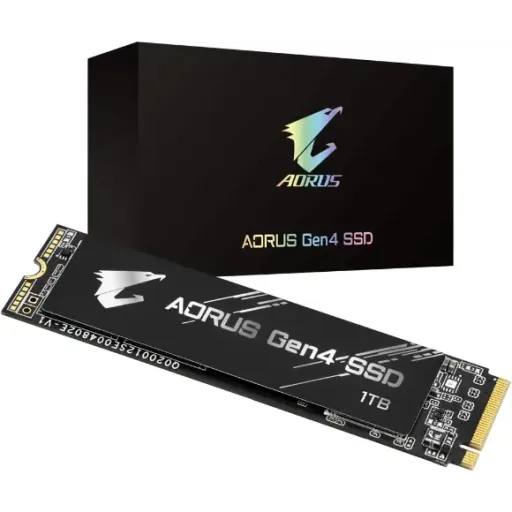
Gigabyte Aorus NVMe Gen4 SSD 1TB


This Gigabyte AORUS NVMe Gen4 SSD is designed for speed first builds, jahan boot time aur app launches ka farq foran feel hota hai. This 1TB variant is listed as 1000GB total capacity, so your library planning stays clean and predictable. The PCIe 4.0 x4 and NVMe 1.3 pairing targets low latency responsiveness for daily workflows, rozana ke tasks mein bhi snappy feel aati hai. The Phison PS5016 E16 controller is called out as the Gen4x4 NVMe controller used here, which matters when you want sustained transfers rather than short bursts only. The platform story stays simple because it’s a standard M.2 2280 drive, meaning most modern desktops and many laptops can accept it with minimal hassle. The practical benefit shows up when games and projects stop feeling “heavy,” kyun ke storage bottleneck soften ho jata hai. Gigabyte rates this 1TB model up to 5,000 MB/s sequential read and up to 4,400 MB/s sequential write, which is the kind of headline throughput that supports large installs and quick file pulls. The experience becomes more consistent when DRAM caching is part of the design, multitasking asaani se hoti hai and background loads feel less disruptive
This PCIe 4.0 x4 interface gives the SSD more link bandwidth to work with, especially when multiple queues are active. This generational jump effectively doubles bandwidth per lane over PCIe 3.0, so x4 Gen4 has room for higher real world throughput. The NVMe design goal focuses on low latency and scalability compared to older interfaces, which is why modern OS and apps feel more direct. The NVMe 1.3 revision was released to expand features while keeping high performance, which fits enthusiast and power user storage behavior, bilkul modern workload style. The difference becomes obvious during big copy operations where small pauses feel annoying, aur yahan motion smooth rehta hai because the pipeline stays wider. The AORUS Gen4 1TB rating includes up to 750,000 random read IOPS and up to 700,000 random write IOPS, which maps well to lots of small file activity like game assets and project caches. The sequential rating up to 5,000/4,400 MB/s also indicates this drive aims at high volume transfers without needing exotic add in cards. The real win is reduced waiting friction across the day, rozana ke use mein time bach jata hai without changing how you work
This drive uses the Phison PS5016 E16 controller as its Gen4 brain, jo overall responsiveness aur queue handling ko define karta hai. This controller is described with eight NAND channels and 32 CE targets, which helps the SSD parallelize access instead of relying on one narrow path. This same E16 platform is commonly summarized as PCIe 4.0 x4 with NVMe 1.3 support plus DDR4 DRAM, which matches the caching approach used on early enthusiast Gen4 drives. This DDR4 DRAM cache is important because mapping tables and metadata lookups stay faster, aur random workloads mein stutter kam hota hai. This Phison press release positions E16 as an early Gen4x4 NVMe controller, which explains why many first wave Gen4 SSDs share similar behavior. This architecture includes LDPC style error correction mentions on the AORUS page, which matters for data integrity over long term writes. This is the kind of platform that fits gaming + creation mixes, jahan ek minute assets load hotay hain and next minute exports run. The rated performance numbers align closely with the E16 spec tables shown in independent coverage, so expectations stay grounded in known Gen4 limits
This AORUS Gen4 SSD is built around 3D TLC NAND, which is a practical middle ground for performance and longevity. This product family is also described with high speed 3D TLC NAND running at 800MT/s on the AORUS page, which supports higher parallel throughput when the controller can feed it. This global AORUS listing calls out Toshiba BiCS4 96 layer 3D TLC at 800MT/s, giving more context about the type of flash used in the Gen4 lineup. This layer density and interface speed help when you want large installs and quick updates, rozana ke game patches mein waiting kam hoti hai. This TLC approach typically behaves better than cheaper flash strategies when write pressure rises, so performance bohat stable rehti hai for normal creator and gamer cycles. This same controller family is described as having enough compute power for ECC processing alongside 3D TLC, which is part of why sustained usage stays safer. This matters most when you move from “benchmark thinking” to real storage life, jahan thousands of small writes happen quietly. This is also why pairing TLC with controller side reliability features feels more dependable over time, not just fast on day one
This AORUS Gen4 SSD is marketed with a full body copper heatsink design, jo heat ko sirf controller se nahi balkay NAND side se bhi manage karta hai. This same coverage describes copper heatsinks with finned surface area to improve thermal transfer, which is exactly what helps reduce thermal spikes in tight M.2 zones. This TechPowerUp release also highlights full body copper heatsinks and the idea of quickly transferring heat away from the device during operation. This thermal approach matters because NVMe drives can throttle when temperatures climb, aur phir speed drop annoying lagta hai in long file moves. This heatsink style also helps in builds where the GPU sits close to the M.2 slot, jahan airflow limited hota hai and heat kam rakhna zaroori hota hai. This is why a “bigger heatsink” is not just aesthetics, it’s a performance consistency tool for long sessions. This design language is part of the AORUS identity for enthusiasts, lekin practical benefit yeh hai ke sustained workloads feel smoother. This drive’s Gen4 throughput targets are easiest to hold when thermals stay controlled, so cooling becomes part of the speed story
This SSD supports TRIM and S.M.A.R.T. according to the official feature list, which is essential for long term maintenance and health visibility. This TRIM behavior helps the drive understand what data blocks are no longer needed, allowing cleanup to happen more efficiently during idle time, bilkul background mein quietly. This drive also lists wear leveling and over provision technologies, which are classic controller strategies for keeping performance consistent and NAND wear more evenly distributed. This Kingston breakdown explains how over provisioning keeps spare blocks available to reduce write amplification and support garbage collection, which helps under random write stress. This combination matters when the drive gets fuller over time, kyun ke full storage par bhi smoothness retain karna goal hota hai. This S.M.A.R.T. system is widely described as a reliability monitoring method designed to detect and report indicators of drive health, which supports proactive backups. This is how an enthusiast SSD stays “easy to live with,” asaani se monitoring ho jati hai and you get fewer surprises. This software and firmware care stack complements raw speed, so performance is not the only story
This 1TB capacity is ideal for modern mixed workloads where games, creative files, and apps compete for space. This model is presented as 1000GB total capacity, so you can plan partitions and libraries with clarity even before installation. This headroom matters when game installs cross 100GB and updates keep coming, rozana ke patches storage ko jaldi fill kar dete hain. This Gen4 sequential rating up to 5,000 MB/s read supports faster large file pulls, which helps when you copy big archives or move video assets between folders. This random IOPS rating up to 750k/700k can translate into snappier “lots of small files” behavior, jaise plugin libraries, caches, and shader compilations. This is why a storage upgrade can feel like a system upgrade, because everyday friction drops in a way CPU upgrades sometimes don’t. This NAND + controller platform is explicitly positioned around 3D TLC with the E16 controller and DDR4 caching, so capacity is supported by a performance minded layout. This 1TB size also keeps your drive from living at 95% full, which helps avoid that “system slow ho gaya” feeling during heavy weeks
This SSD uses the M.2 2280 form factor, which is the common slot style on most modern consumer motherboards. This PCIe 4.0 x4 interface remains mechanically compatible with typical M.2 PCIe slots, so installation usually feels like a clean, cable free upgrade, bilkul straightforward. This PCIe generation behavior is commonly explained as backward and forward compatible at the physical layer, but performance will be limited by the platform’s supported PCIe version. This means a PCIe 3.0 system can still use the drive, lekin top Gen4 speeds ke liye Gen4 support chahiye hoti hai. This NVMe protocol family is standardized for SSD communication over PCIe, which is why OS support and driver maturity are usually strong. This official spec ecosystem focus is one reason NVMe has become the default for performance storage, aur SATA wali limitation se kaafi aage nikal jata hai. This model’s official listing ties interface and protocol clearly to PCIe 4.0 x4 and NVMe 1.3, making compatibility checks easy before you buy. This is the kind of upgrade that keeps builds clean and airflow friendly, because data cables ki zarurat hi nahi hoti
This Gigabyte AORUS Gen4 1TB drive sits in the early flagship style Gen4 tier, delivering high throughput without forcing you into niche hardware. This rating up to 5,000 MB/s read and 4,400 MB/s write defines a clear performance target for large file users, especially when your workflow includes installs, exports, or frequent backups. This Phison E16 platform is widely covered as an 8 channel Gen4 controller with DDR4 DRAM support, so the foundation is familiar and well understood, performance bohat stable rehti hai within its class. This is complemented by TLC NAND positioning and the official mention of wear leveling and over provisioning, which are the quiet features that keep long term behavior smoother. This full body copper heatsink story is not only about looks, because thermal control directly impacts sustained NVMe performance when the M.2 area gets hot. This TRIM and S.M.A.R.T. support makes ongoing maintenance more practical, so you can monitor health and keep the drive running efficiently without guesswork. This is the right choice when you want Gen4 responsiveness with enthusiast grade cooling, aur daily use mein “fast feel” consistently deliver ho. This upgrade closes the gap between CPU/GPU power and storage speed, so your whole system feels more balanced
Here's how current offers compare across retailers.